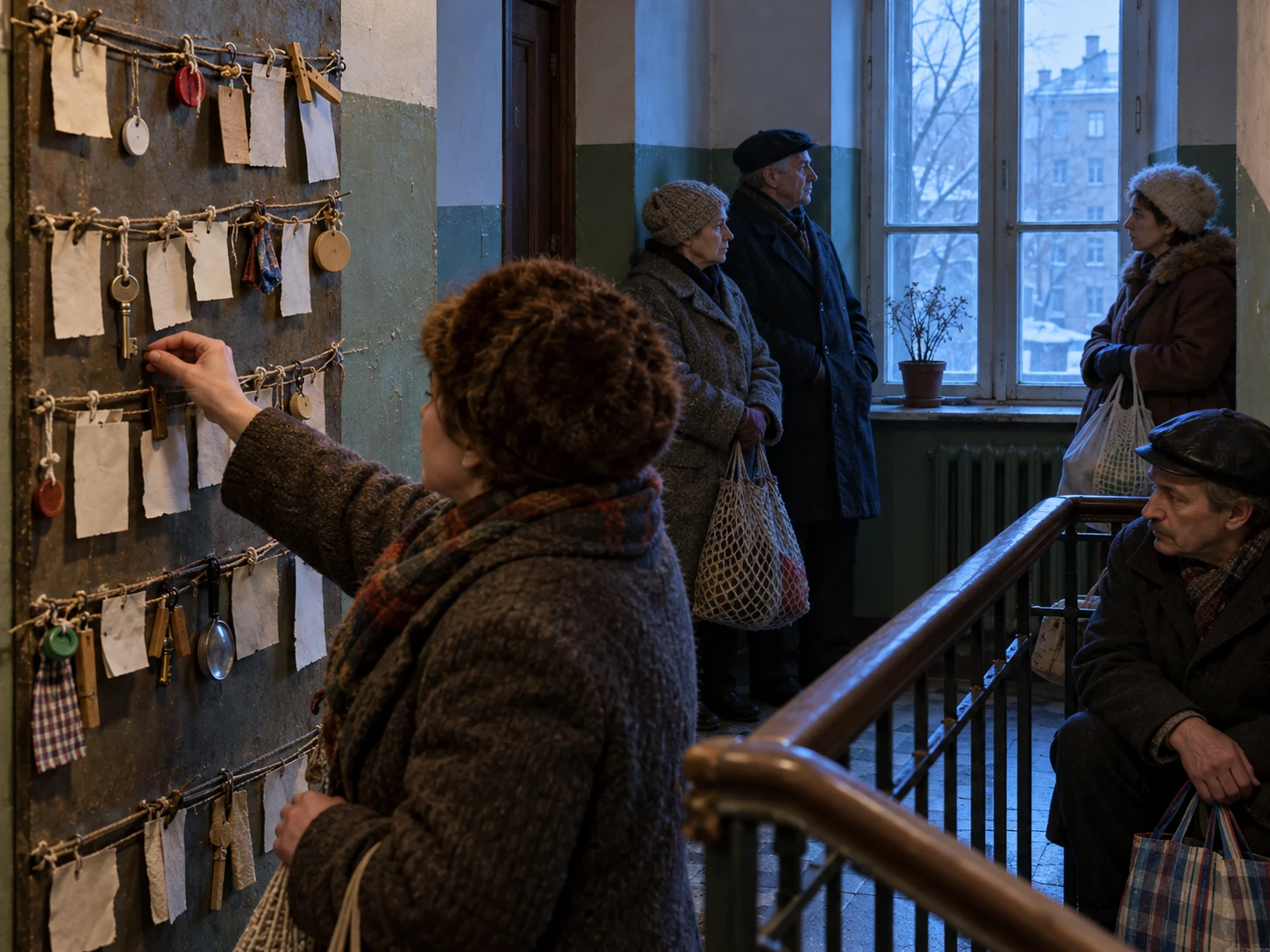
In 1980s Poland, shop queues could begin at night or even days before a delivery. A Polish government education resource reproduces a 1981 photograph of people holding places outside shops in Warsaw and explains that shortages and rationing extended from sugar and meat to detergent, petrol, shoes and toilet paper.
Word that goods had been delivered became valuable information. Paid professional queue holders appeared, and relatives or friends took turns preserving a place. Possessing money and a ration card still did not guarantee a purchase.
What circulated first in this line was not merchandise but uncertain news. Cash and coupons were insufficient; the ability to wait for an arrival whose time was unknown became a third qualification for obtaining ordinary goods.