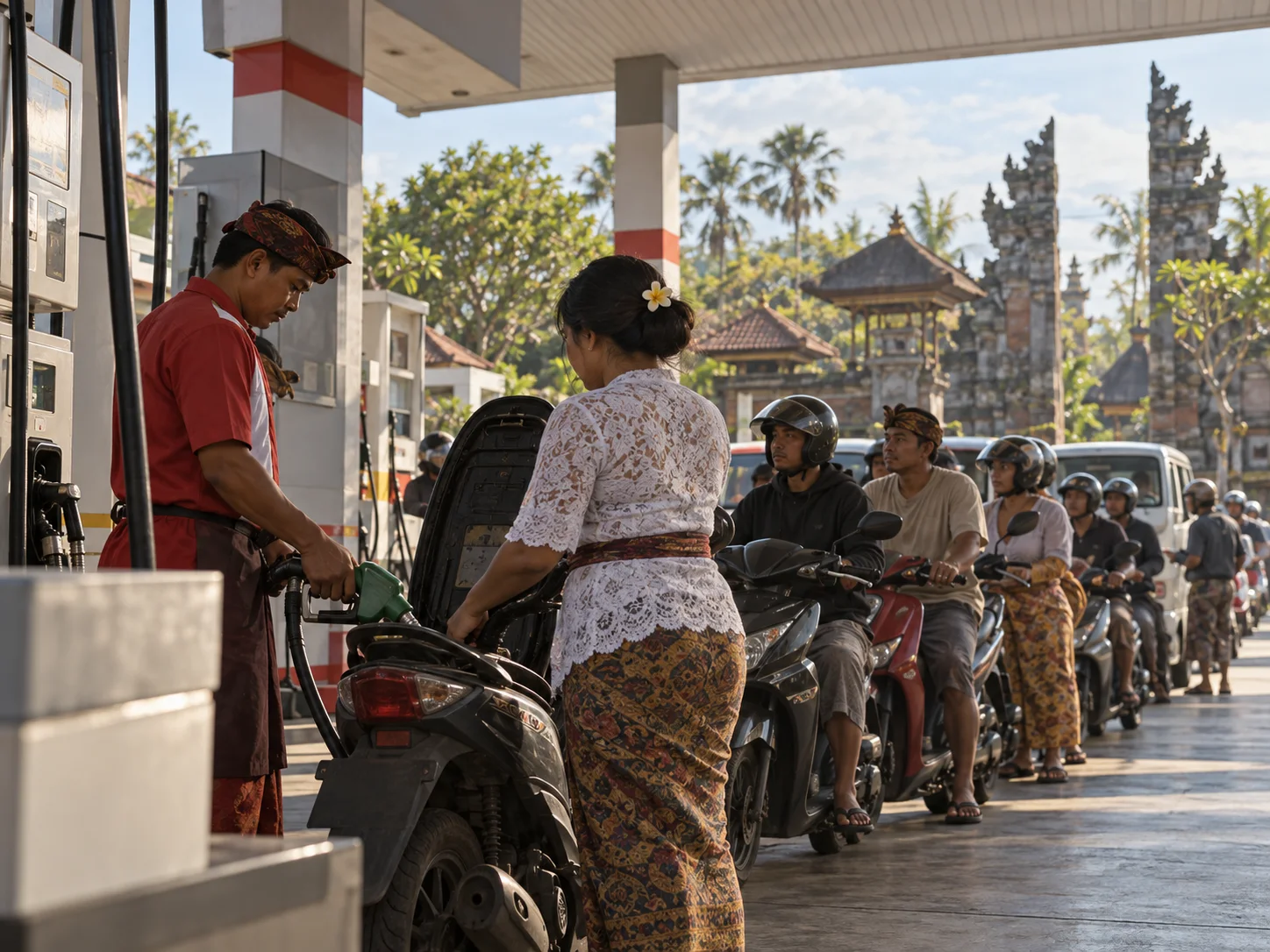
In October 2026, vehicle queues stretched beyond petrol stations across Bali. Indonesian officials attributed the disruption to a combination of technical trouble, bad weather and surging demand that interrupted deliveries. Pressure was especially strong for Pertalite, the government-subsidised grade priced well below nonsubsidised fuel.
The lines did not simply mean that Indonesia lacked petroleum. On an island, a bottleneck in delivery can quickly affect road travel and the movement of everyday goods. A large price gap also makes another grade at the pump an imperfect substitute. Distribution problems and subsidy design therefore reinforced each other, turning demand for cheaper petrol into days of visible vehicle queues.