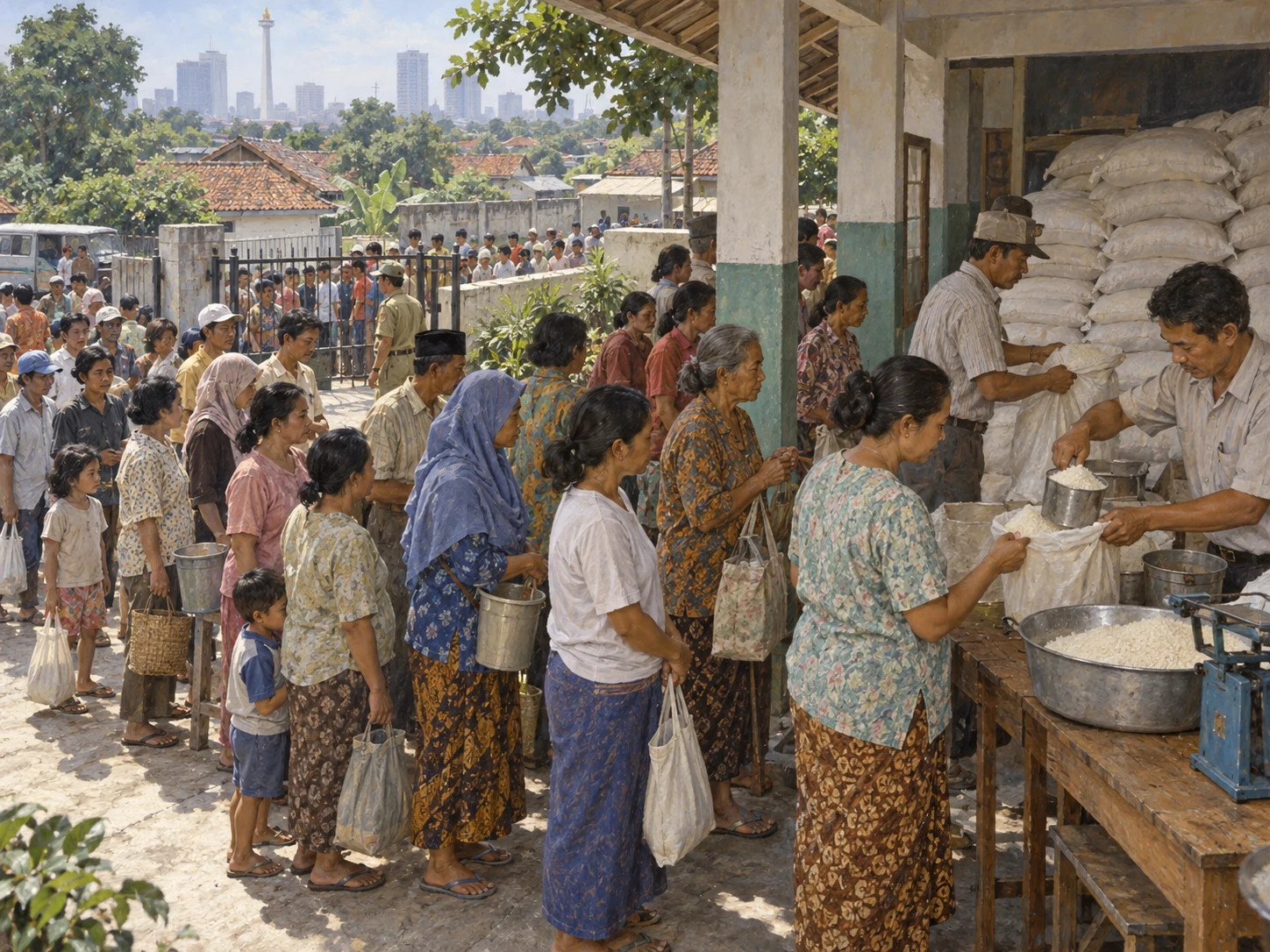
On 2 April 1998, during Indonesia's economic crisis, residents queued outside a community centre in Jakarta. A Reuters caption records people waiting to buy subsidised rice, sugar, noodles and cooking oil.
Prices had risen sharply as the currency crisis deepened, putting ordinary staples beyond the comfortable reach of many households. The line was not for a luxury but for the ingredients of daily meals. With limited supplies and quantities, a person's turn mattered.
Everyone faced the same sacks of rice, yet each place in line represented a different family table. A vast economic crisis became something immediate: one person's position and one bag of food.