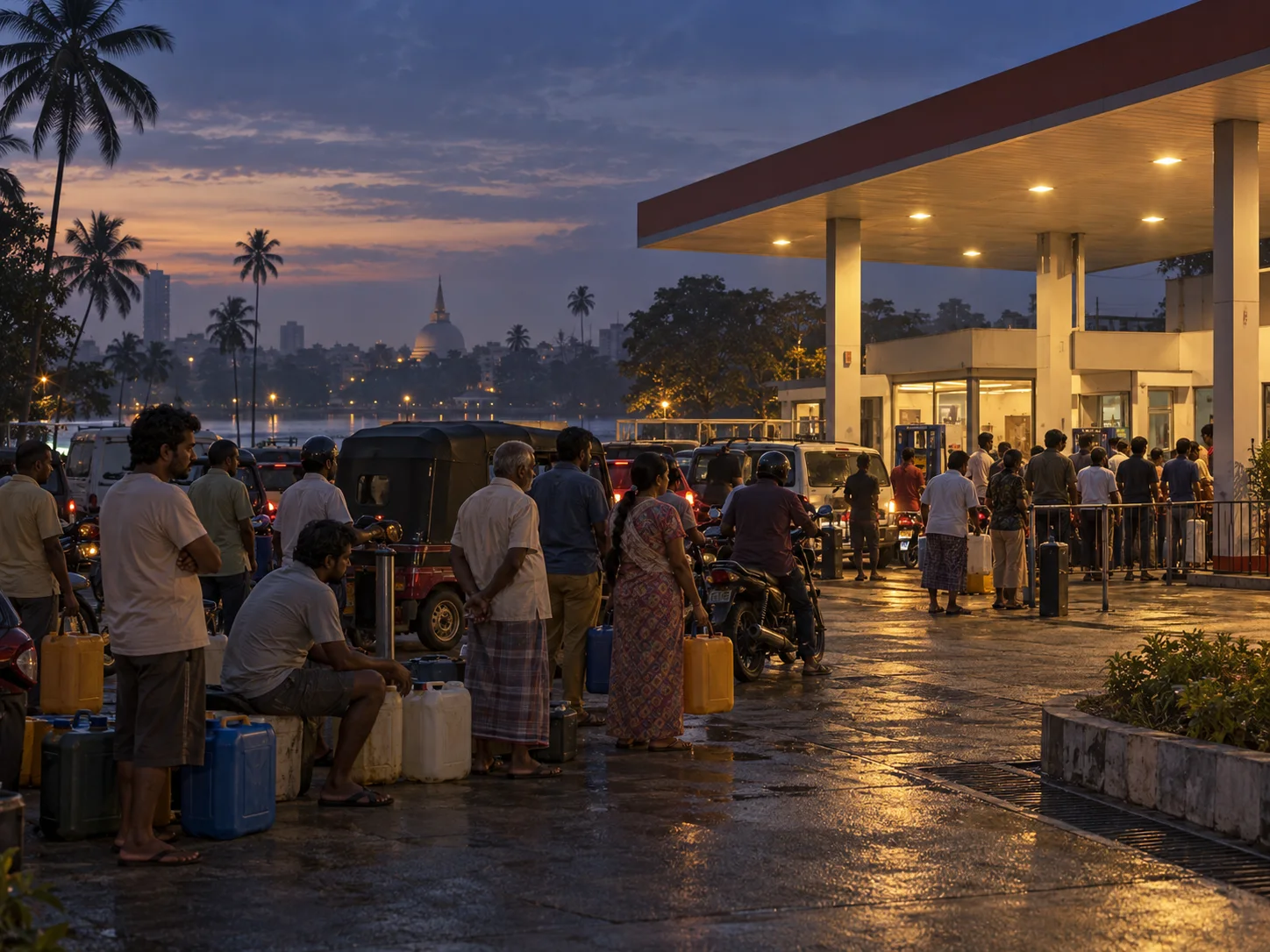
On 27 June 2022, Sri Lankan air force personnel were handing out tokens to people queuing for fuel in Colombo. A Reuters photograph recorded the scene. At an ordinary petrol station, a place in line generally leads to a purchase. In this crisis, a token was not necessarily a promise that fuel would still be there. It was, at most, a way to establish who was waiting and in what order.
Sri Lanka was struggling with a severe shortage of foreign exchange, leaving it unable to pay for essential imports. Petrol and diesel had to be bought abroad, but the dollars needed to buy them were scarce. The government moved to close schools in Colombo and asked public employees to work from home in an effort to conserve fuel. A shortage at the pump could quickly become a shortage of journeys to work, deliveries of food and days in school.
Reuters reported that the remaining fuel could run out within days. These queues were not formed because a product had suddenly become fashionable. They formed because the supplies required to keep ordinary life moving could no longer reliably meet demand. Counting the hours spent waiting would miss the harder question: why could people not simply go home?
In many queues, a numbered ticket is a small victory for fairness. When the underlying goods are scarce, however, it solves only the order of service, not the availability of the service itself. Colombo's fuel tokens exposed the gap between two questions that often appear to be the same: whose turn is next, and will there be enough for everyone?
A token distributed no fuel; it distributed the right to return. By moving sequence onto numbers, the station shifted the vehicle queue from the road to a future date.