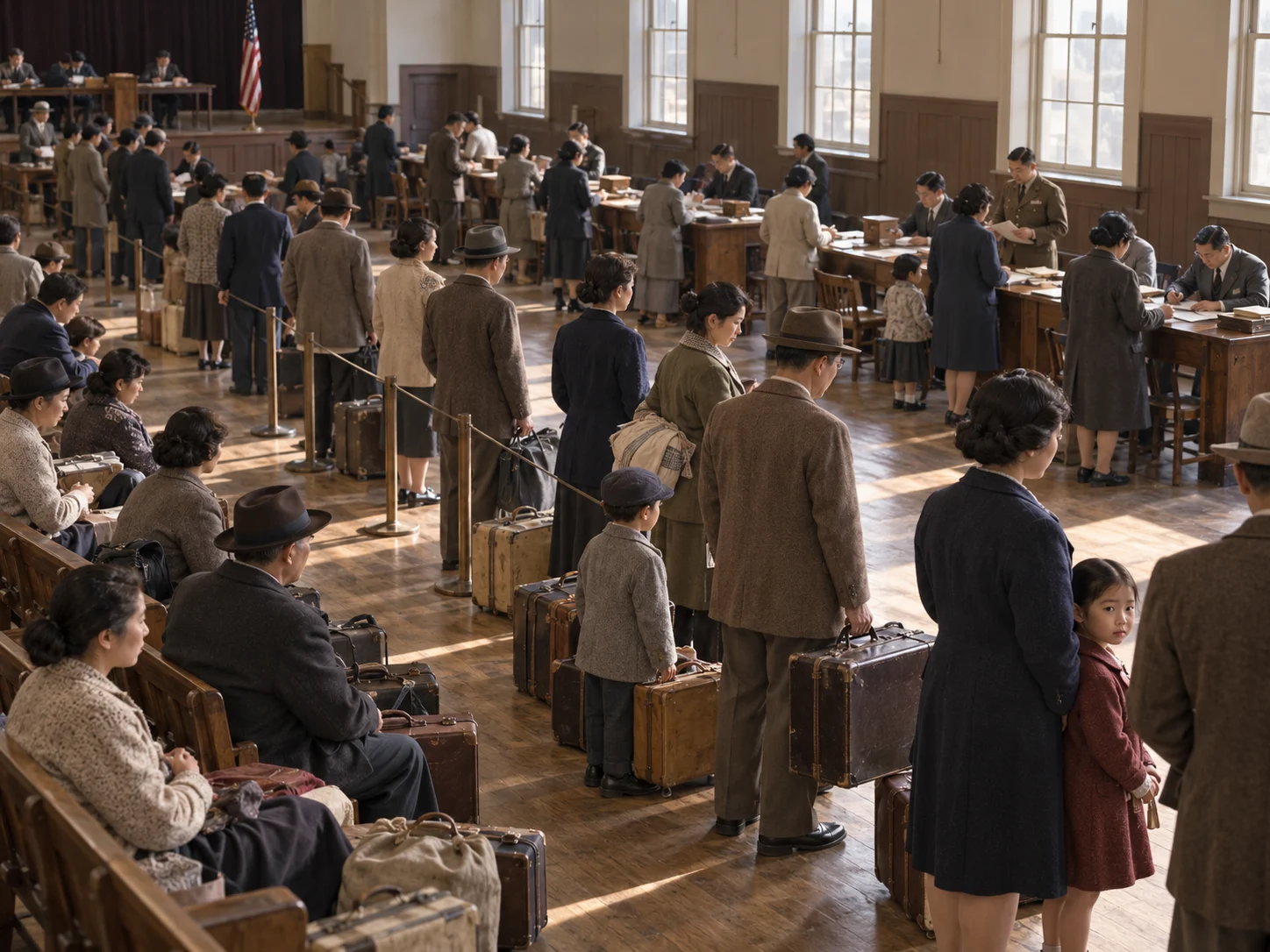
In 1942, Japanese Americans were forcibly removed from their homes and confined in detention facilities. Waiting for registration, housing assignments or access to dining facilities was not a matter of freely choosing to join a line. Administrative procedures reached into the most basic aspects of daily life, reducing people to numbers and allocations. An orderly-looking queue can conceal coercion unless we ask why people had to stand there. The exact site and procedure depicted in the underlying record require verification.
Numbers helped administrators process people, but they could not capture the lives behind those numbers. Calling forced removal an orderly registration process obscures who had no choice about being there. Waiting itself formed part of a system that stripped people of freedom.
A line formed under forced removal cannot be narrated as though it were an ordinary service counter. Following an assigned order was not evidence of freely choosing to participate; it was part of a coercive system. An orderly photograph establishes neither consent nor the legitimacy of the policy. The legal and administrative compulsion that produced the waiting must remain visible in the account.
The Library of Congress identifies the 1942 Puyallup scene as Japanese Americans waiting to register for housing and mess assignments during forced removal. The number assigned at the counter was not a convenience; it placed a family inside a system of confinement.