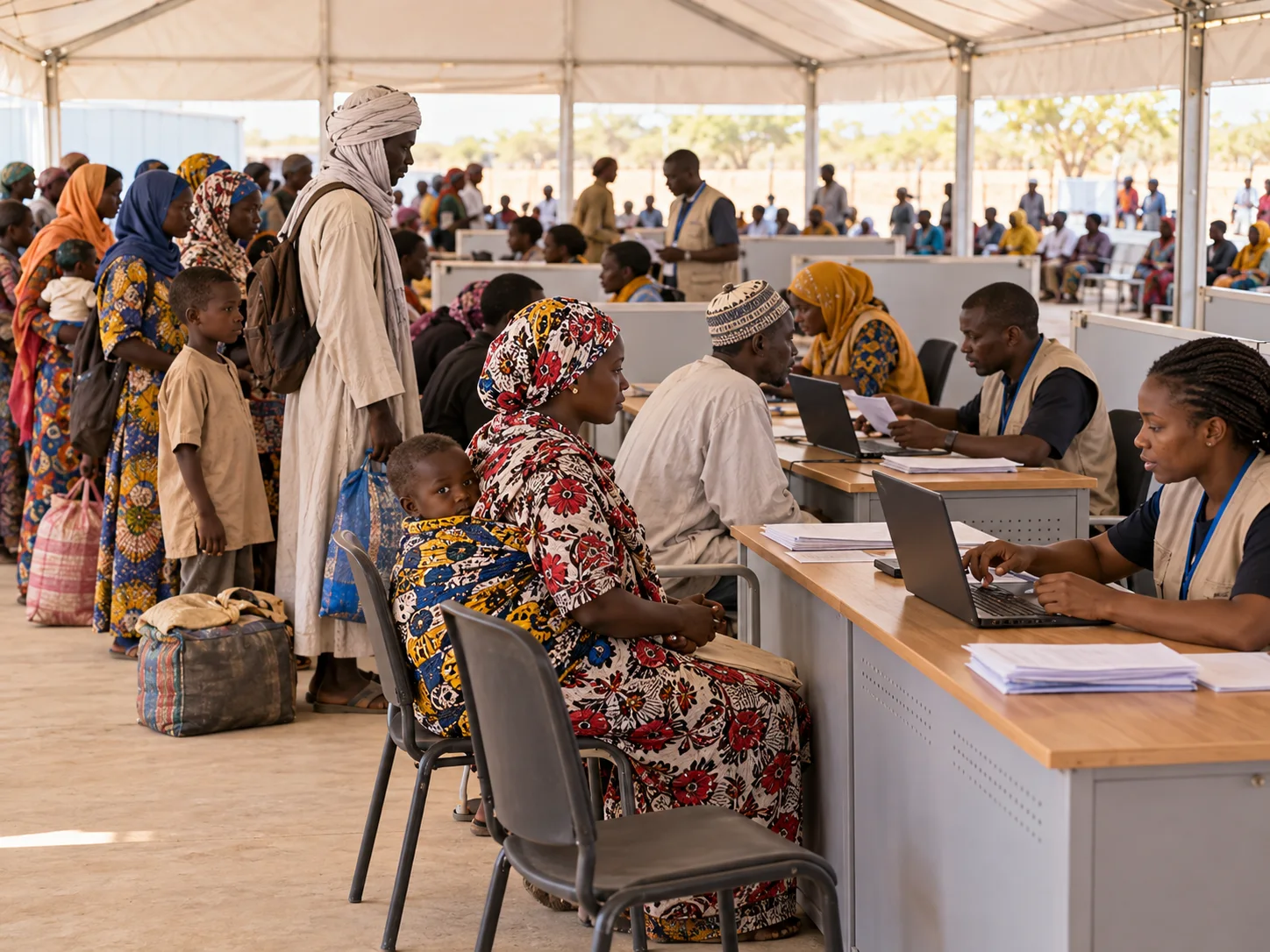
In a photograph published by UNHCR in July 2023, newly arrived people from Burkina Faso wait to register in Dapaong, northern Togo. A line has formed in front of staff seated at tables. Nobody is waiting for a concert ticket or a popular meal. They are waiting to have their presence recorded in a country to which they have fled.
Violence and insecurity in Burkina Faso had driven people across borders, including into neighbouring Togo. Togolese authorities, supported by UNHCR, were registering refugees. The photograph establishes a particular queue at Dapaong; it cannot tell us the private story of everyone standing in it. It would be a mistake to turn their different experiences of displacement into one reassuring tale.
Registration is more consequential than entering a name on a form. It can help authorities identify who has arrived, where protection is needed, and how assistance might reach people. Yet paperwork alone cannot deliver safety. Towns receiving displaced families also need schools, healthcare, water and sanitation for both newcomers and established residents. UNHCR's contemporaneous reporting stressed support for host communities as well as the registration process.
On a map, a national border is a narrow stroke of ink. Living after crossing it is considerably more complicated. The documented queue at Dapaong sits between two different events that are easily confused: arriving somewhere, and being able to build a secure life there.
Crossing a border did not by itself begin protection. Only when a name entered the register did a displaced person become countable within the assistance system.