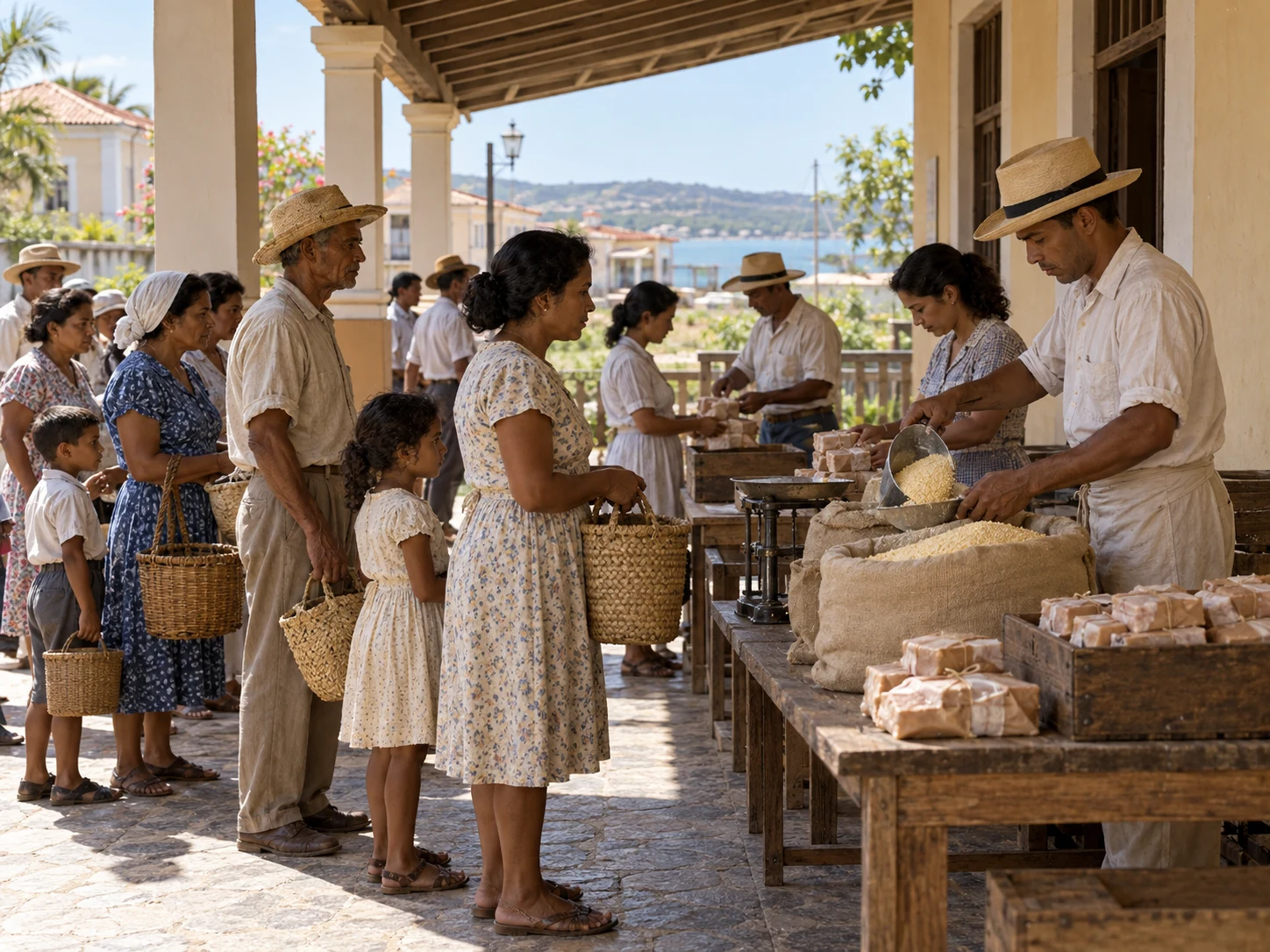
In January 1942, people waited in line at the surplus commodities office in Cabo Rojo, Puerto Rico. A Farm Security Administration photograph records not only the queue but the specific goods distributed that day: fatback and meal.
Relief photographs are often catalogued only with broad terms such as “food” or “commodities.” This record identifies ingredients that recipients could take home and use in household cooking. That detail connects the administrative line to an ordinary meal. The catalogue does not give the number waiting, the duration, the individual allotment or the eligibility rules, and none is inferred.
The surplus commodities office was not a shop offering a range of consumer choices. It was a point where designated goods were issued in sequence. The line therefore documents more than scarcity. It shows the final stage of a public distribution system, where bulk commodities became portions of fatback and meal handed to individual households.