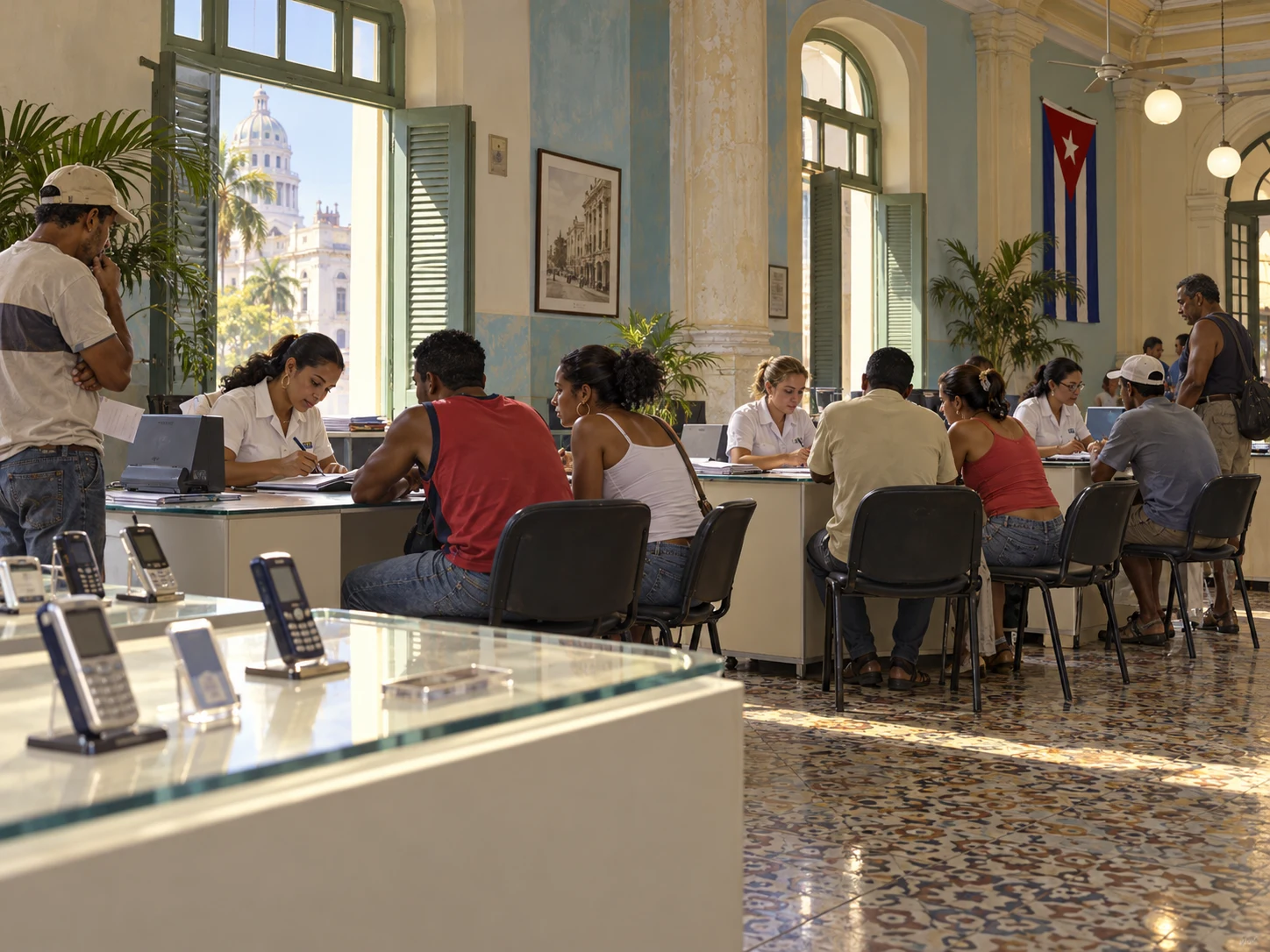
On 14 April 2008, ordinary Cubans were allowed to contract mobile-phone service in their own names. Outside a state telecommunications shop in Old Havana, the queue blocked both sides of the pavement; another contemporary account described about a hundred people waiting. Until then, many Cubans could use a mobile only by arranging for a foreigner to hold the formal contract.
The line was not simply for a new device. People were waiting on the first day that they could pay for service and be recognized as the subscriber themselves. Yet the connection fee and handset cost were extremely high relative to ordinary wages, so legal permission did not make access immediately equal.
This queue was where technological desire met a change in rules. Mobile phones already existed on the island, but who could hold the account had changed. Those waiting sought not only a handset, but also their turn to become the named customer.