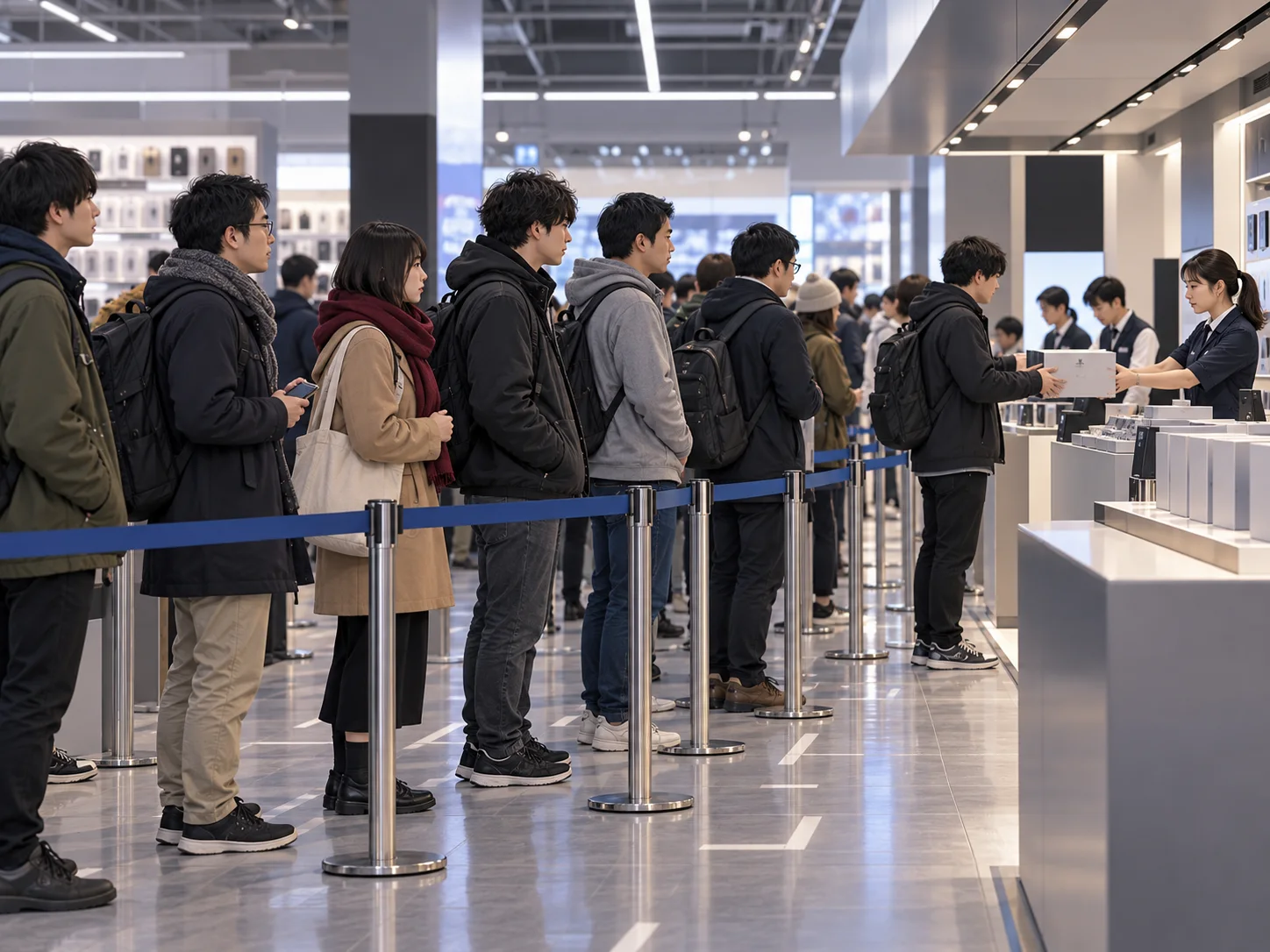
Nintendo Switch launched on 3 March 2017, and Japanese electronics retailers had customers waiting before opening. ITmedia documented launch-day store lines; Nintendo later apologised that shortages had persisted across the domestic market from the beginning. A device designed to move between television and portable play was first encountered by many buyers while standing still.
Retailers often separated reserved collection from walk-in stock. The two lines could look alike but carried different uncertainty. One led to a console already allocated to the customer; the other depended on inventory lasting until that person's turn. Although the product's promise was freedom of place, the purchase process was controlled by store tickets, allocation rules and queue position.
Nintendo shipped 2.74 million units worldwide by the end of that fiscal year, yet supply remained tight for months. The launch line was not a one-day publicity image. It was the first form of a shortage later managed through lotteries and restock notices. Entry to a machine that could be played anywhere depended intensely on being at a particular shop, in a particular category of line, with a particular number.
Demand was strengthened by anticipation for The Legend of Zelda: Breath of the Wild, but the game could not be played without the hardware. Software availability did not remove the production ceiling imposed by components, assembly and transport. The queue formed at the boundary between enthusiasm for a game and the physical supply of machines.