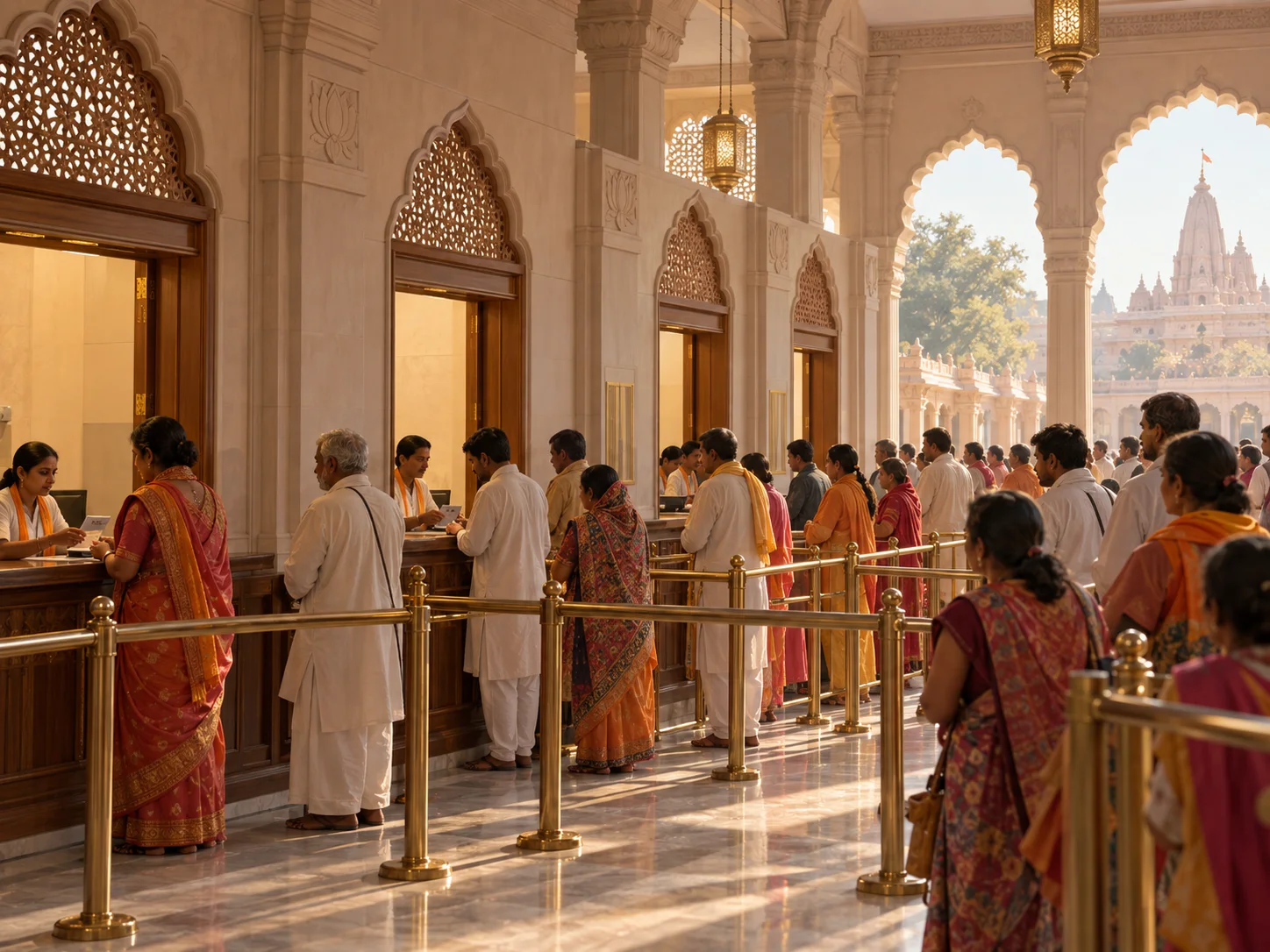
On 23 January 2024, the Ram temple in Ayodhya, northern India, received the general public. A day after the consecration of its principal image, large numbers gathered from early morning. The Indian Express recorded security personnel asking people to form a queue and, when the gates reopened in the afternoon, organizing the order for admission.
The purpose of the line was not simply to see a new building. For many devotees, it was a religious opportunity to worship the image of Lord Ram. Yet the temple was built on the site of a mosque demolished in 1992, and its history cannot be separated from profound religious and political conflict. Treating the line only as a festive spectacle would erase that background.
Welcoming a very large number of worshippers into one sacred place required turning devotional urgency into an order of entry. The queue was both a route toward prayer and an operating system for moving people more safely. When many people seek the same holy place, religious meaning and ordinary queue management can occupy the same line.