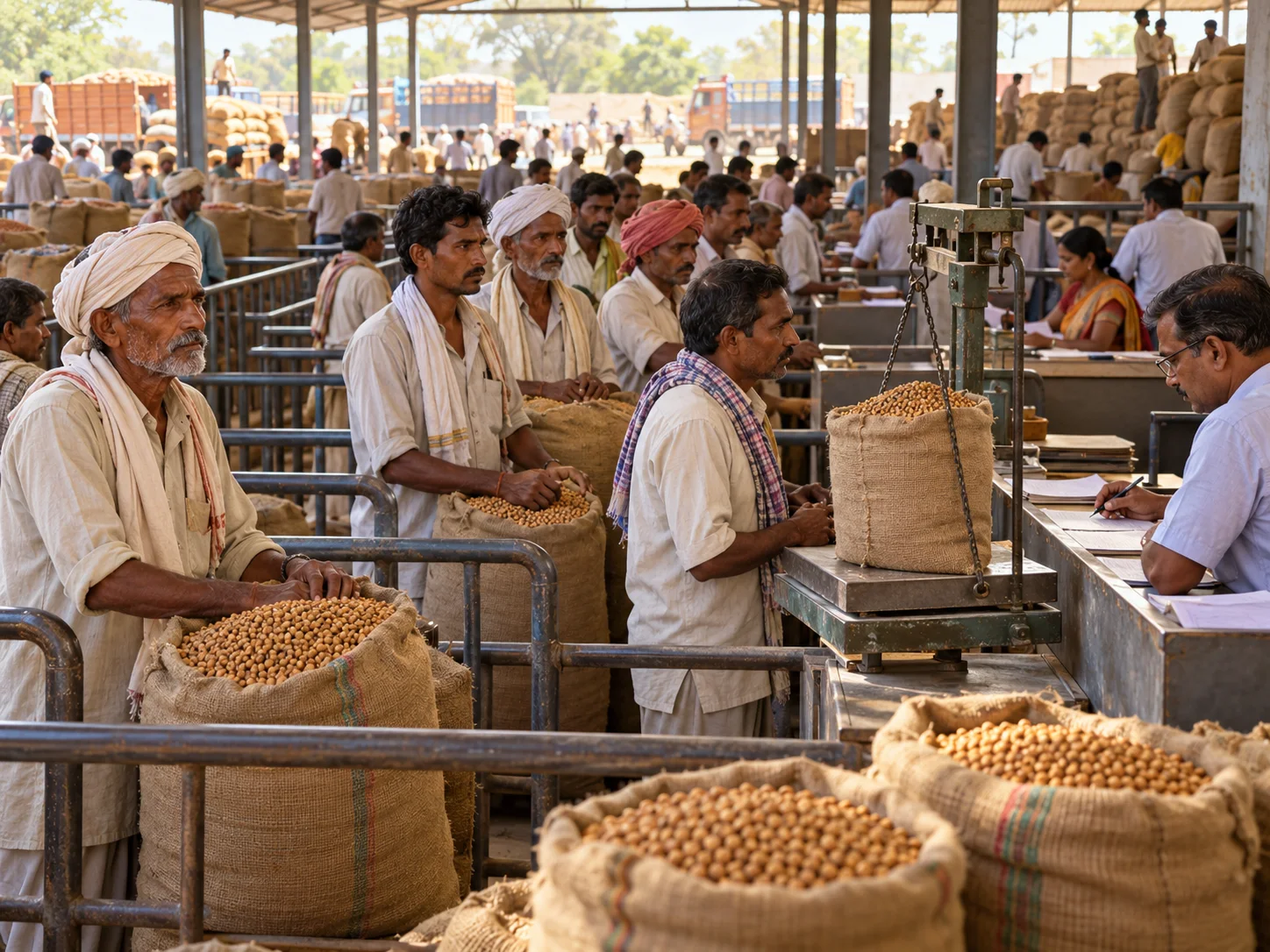
In June 2018, Than Singh and his son Roop slept on a tractor-trolley loaded with chickpeas outside the government grain market at Lateri in Madhya Pradesh. They had travelled 18 kilometres from their village after receiving an SMS from their cooperative. At the mandi they were given token number 234. There were 233 farmers ahead of them, while the facility could weigh no more than forty trolleys a day. Their turn was therefore at least five days away. The queue had been created by a bumper crop, falling market prices, and a government decision to buy chickpeas directly from farmers at 4,500 rupees per quintal. Lateri's small mandi could not absorb the rush. Unloading, bagging, weighing, and sealing forty quintals took about eighty minutes. Going home would consume diesel and risk losing their place, so the father and son remained in the fairground behind the market. Six days after arriving, they managed to sell the contents of only one of their two trolleys. The basic unit of this line was not a person but a vehicle carrying a harvest and a household's time. The numbered chit offered access to a protected price, yet the costs of waiting—food, vehicle rental, heat, and uncertainty—remained with the farmer. A policy intended to stabilize income had turned a tractor bed into temporary accommodation because the administrative capacity behind the promise was too small for the demand.
India · 2018-6
India | Number 234: Six Days to Sell a Load of Chickpeas