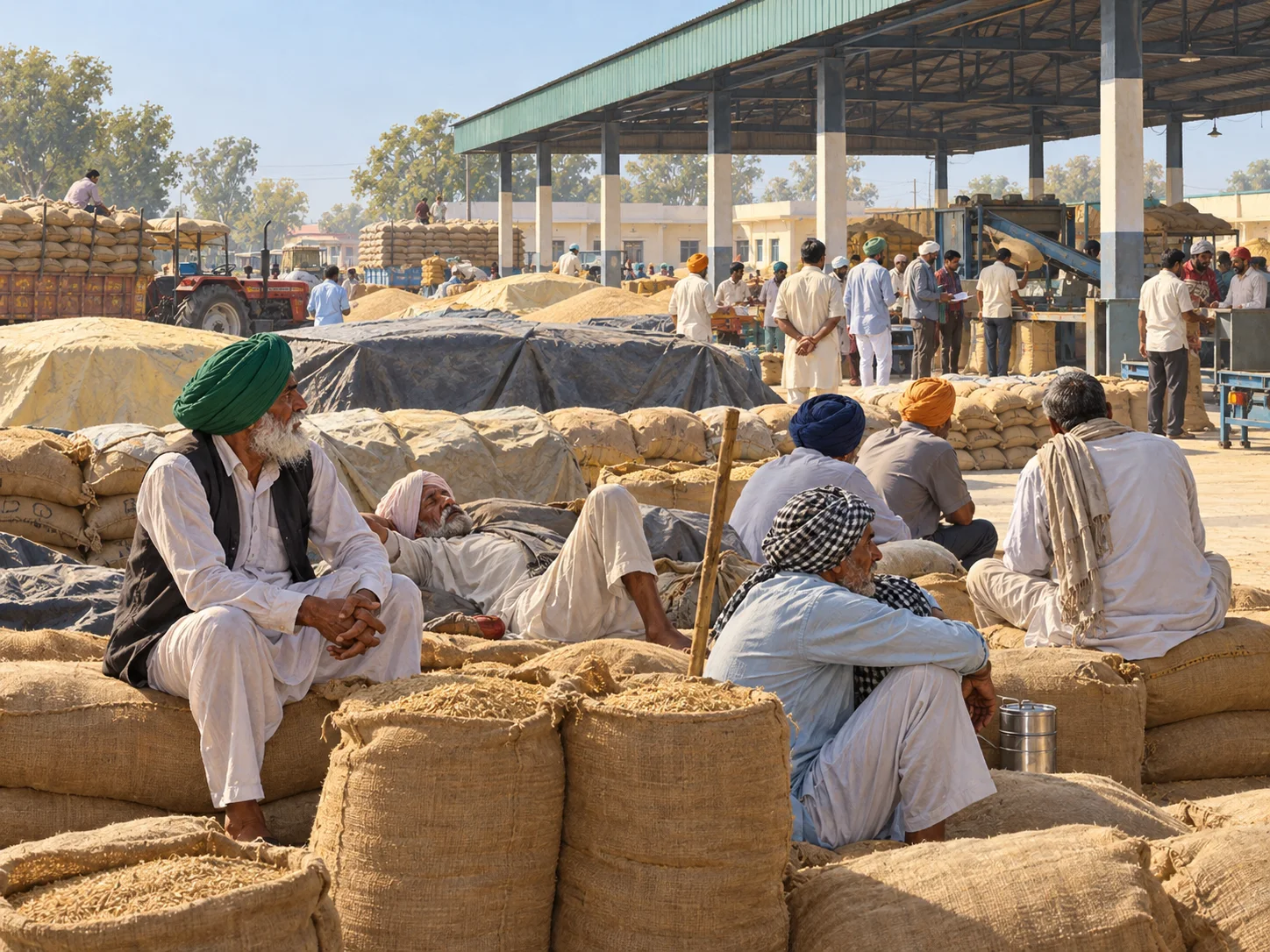
In October 2020, Aman Rana and his father camped in shifts for five days at Barwala Mandi in Haryana’s Panchkula district, guarding 350 quintals of paddy. Rana had registered online but had not received the SMS assigning a government procurement date. Another farmer had remained at the market for more than a week; even after spending three or four days drying his crop, he was still waiting because of registration problems and the limited issue of procurement slips.
The e-procurement system was intended to call farmers on scheduled dates and prevent mandis from being overwhelmed. Yet registration, scheduling, gate passes, auction, dispatch, and payment became separate stages. When one stage stalled, waiting extended from field to market and then into the bank account. This queue is distinctive because it was not a single visible line. Piles of paddy, phone notifications, and electronic slips together determined order. Digitization did not abolish the queue; it divided it into several less visible waits, while farmers continued to bear the cost of protecting a perishable harvest.