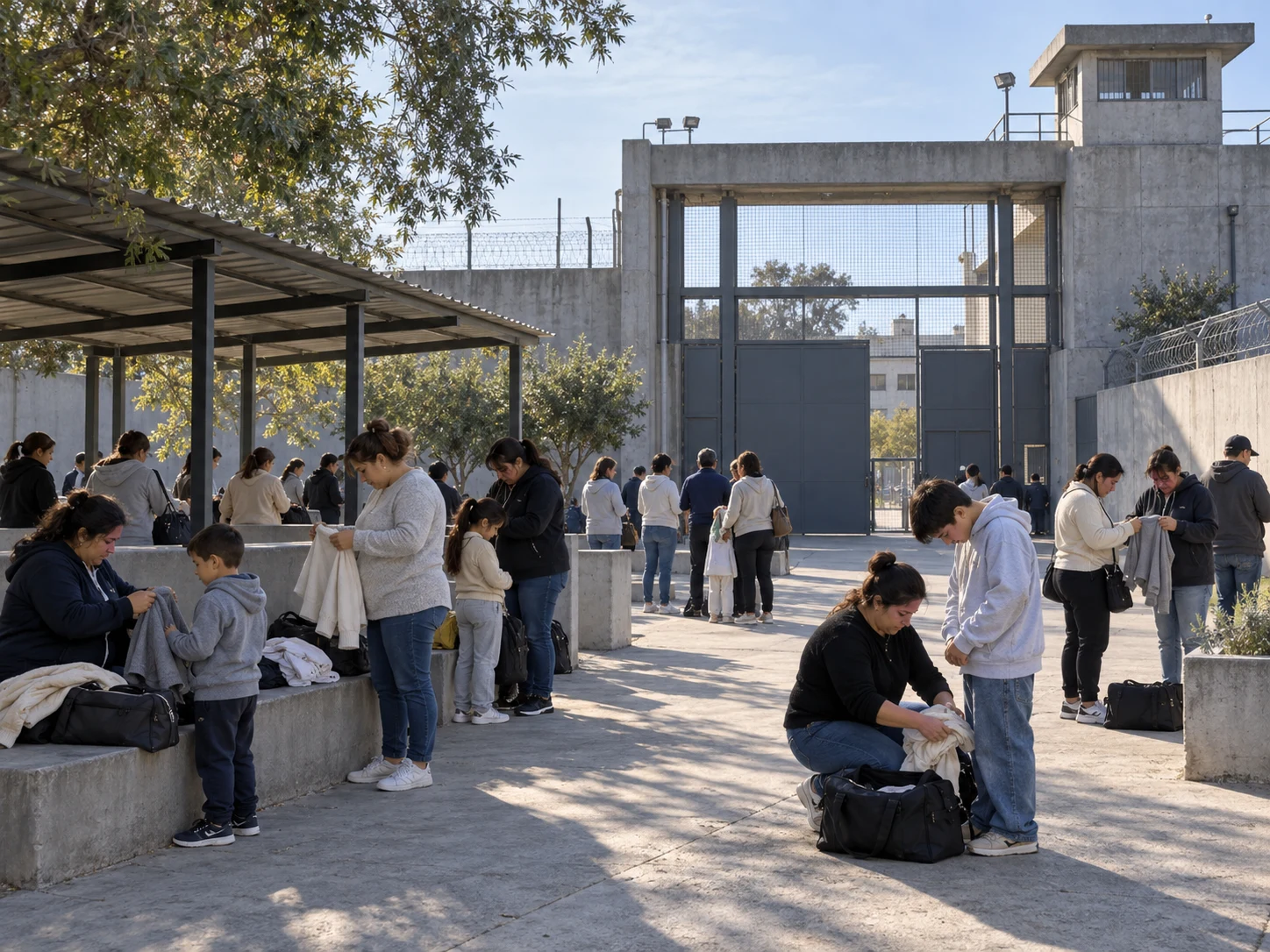
On a visiting day in 2005, about 200 people waited outside the gates of Uruguay's Santiago Vázquez prison, widely known as COMCAR. Women and men stood in separate lines carrying bags of food for relatives inside. Entry was scheduled for 1 p.m., but the gate did not open until 1:40 that day. Each time it appeared about to open, mothers lifted children, people took elderly relatives by the arm, and visitors rearranged themselves into lines for the different prison blocks.
Beyond the queue were searches and clothing rules. A girl initially refused entry because her top was considered too short borrowed a longer garment nearby and returned, yet ultimately did not get to visit. Because visiting ended at 4 p.m., time lost outside the gate directly reduced time with family.
What distinguishes this line is that the people waiting are not serving the sentence. Food parcels, childcare, clothing requirements and the discretion of guards accumulate at the entrance to a family visit. There is an order, but those standing in it cannot decide when it will move.