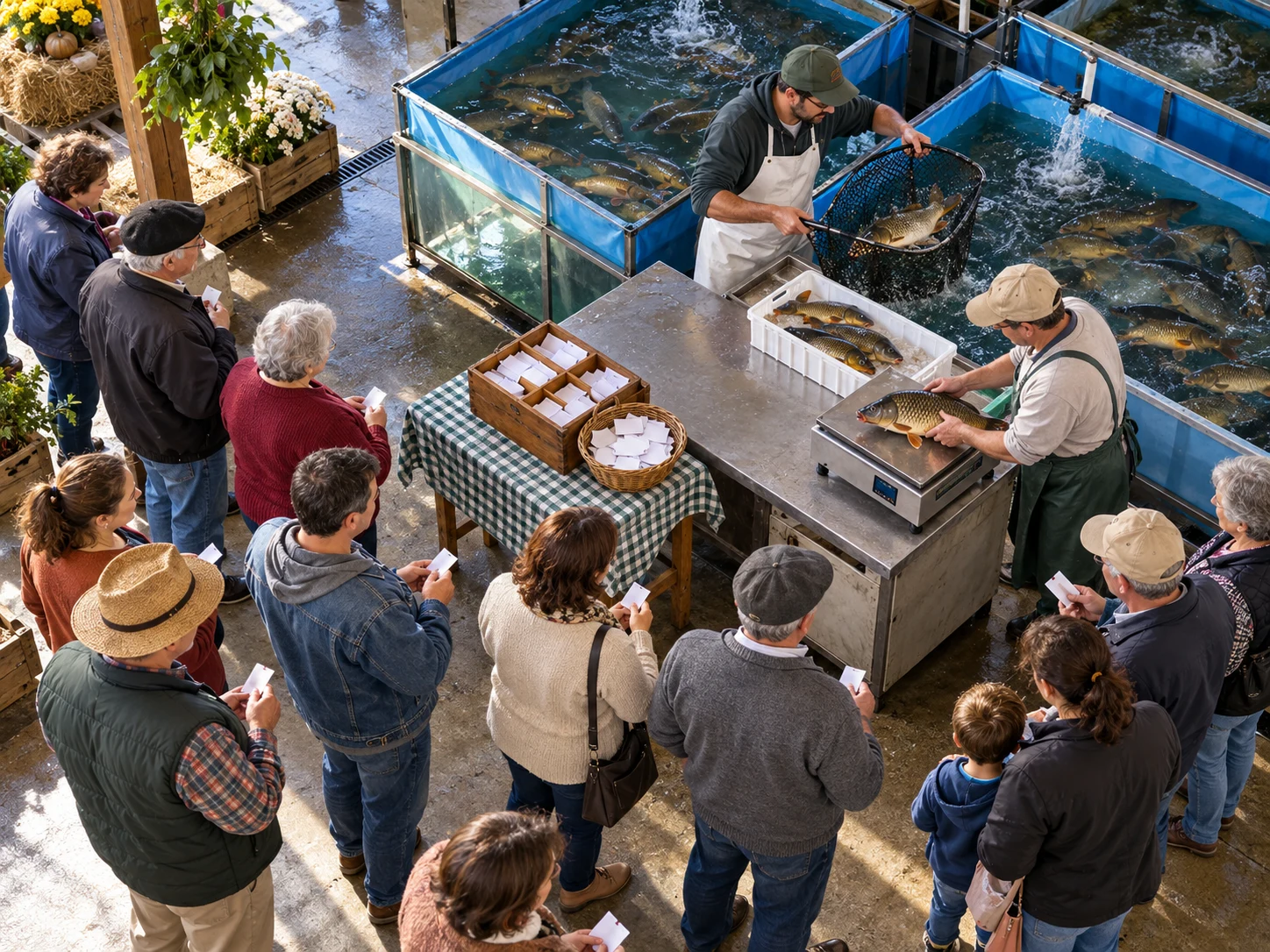
In April 2014, customers arrived early at the farmers' market in Getúlio Vargas, southern Brazil, to buy fish for Good Friday. A local report describes farmed carp carried in a water tank installed on the bed of a truck. About 500 kilograms were expected to be sold. Demand produced a long line, and organizers distributed numbered tickets to control the order of purchase. This was not simply a queue for a popular product. The Good Friday practice of eating fish rather than meat had been linked to a seasonal sale by local producers. Selling live fish from a tank required more handling than taking packaged goods from a shelf. The numbered ticket converted a limited quantity and a limited rate of service into an arrival order. What distinguishes this line is the meeting of a religious calendar, regional farming, and perishable logistics around a single truck. The total supply—five hundred kilograms—was visible, but customers could not know how far through the numbers it would last. They waited not only for carp but for the practical chance to prepare the expected holiday meal.
The source review records an ordered wait tied to this candidate's date and place. The article was re-edited against that direct evidence without adding unverified crowd sizes or waiting times.