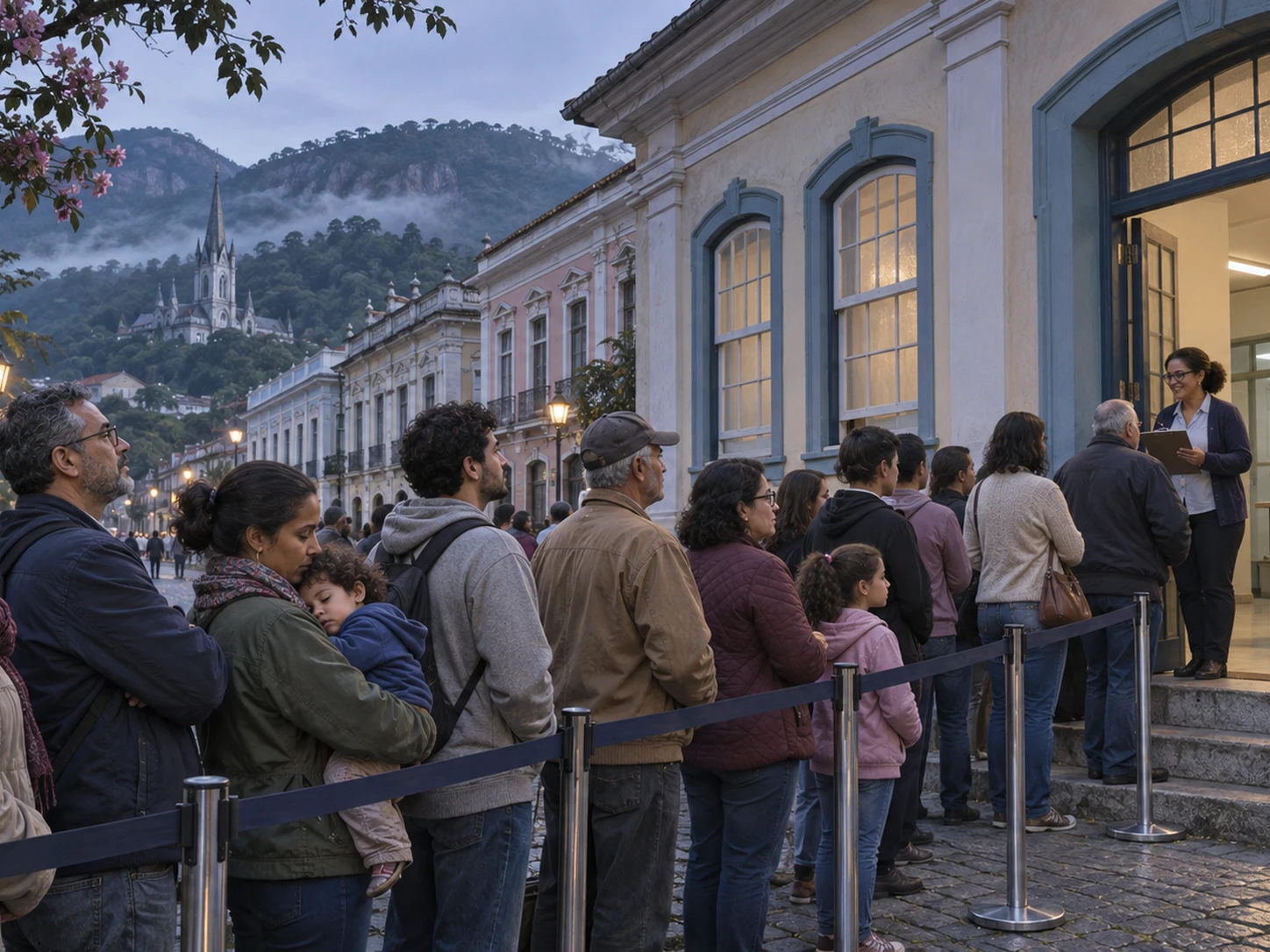
In Petrópolis, a mountain city in southeastern Brazil, a local report about people lining up for vaccination points to a part of healthcare that is easy to overlook: the time before the injection. A shot may take only minutes. Reaching it can require travel, registration, confirmation of supply and a wait whose length is not always known in advance. Someone who arrives early is not necessarily impatient. They may need to return to work or caring responsibilities, or they may simply hope to reduce uncertainty. Those individual motives, however, cannot be assigned to people in a photograph or report without testimony.
It would also be too easy to describe a vaccination queue as a simple demonstration of faith in medicine. Supply, eligibility, the number of clinics and the way information circulates all shape the experience. A long line can reveal not only strong demand but also a narrow entrance to a public service. Two residents of the same city may face very different costs in time and travel to obtain the same protection.
For this atlas, the original article must establish the publication date, vaccine, location and any claim about how early the queue began. There is no need to invent a waiting time or a quotation. The central fact is already revealing: to protect their future health, people may have to surrender the earliest hours of the present day.
The local report specifies that the line began at 5 a.m. Giving up the first hours of the day before vaccination began shows that access to healthcare can start well outside the treatment room.
Source check: Local reporting from Petrópolis in 2017 directly records a yellow-fever vaccination queue beginning at 5 a.m.