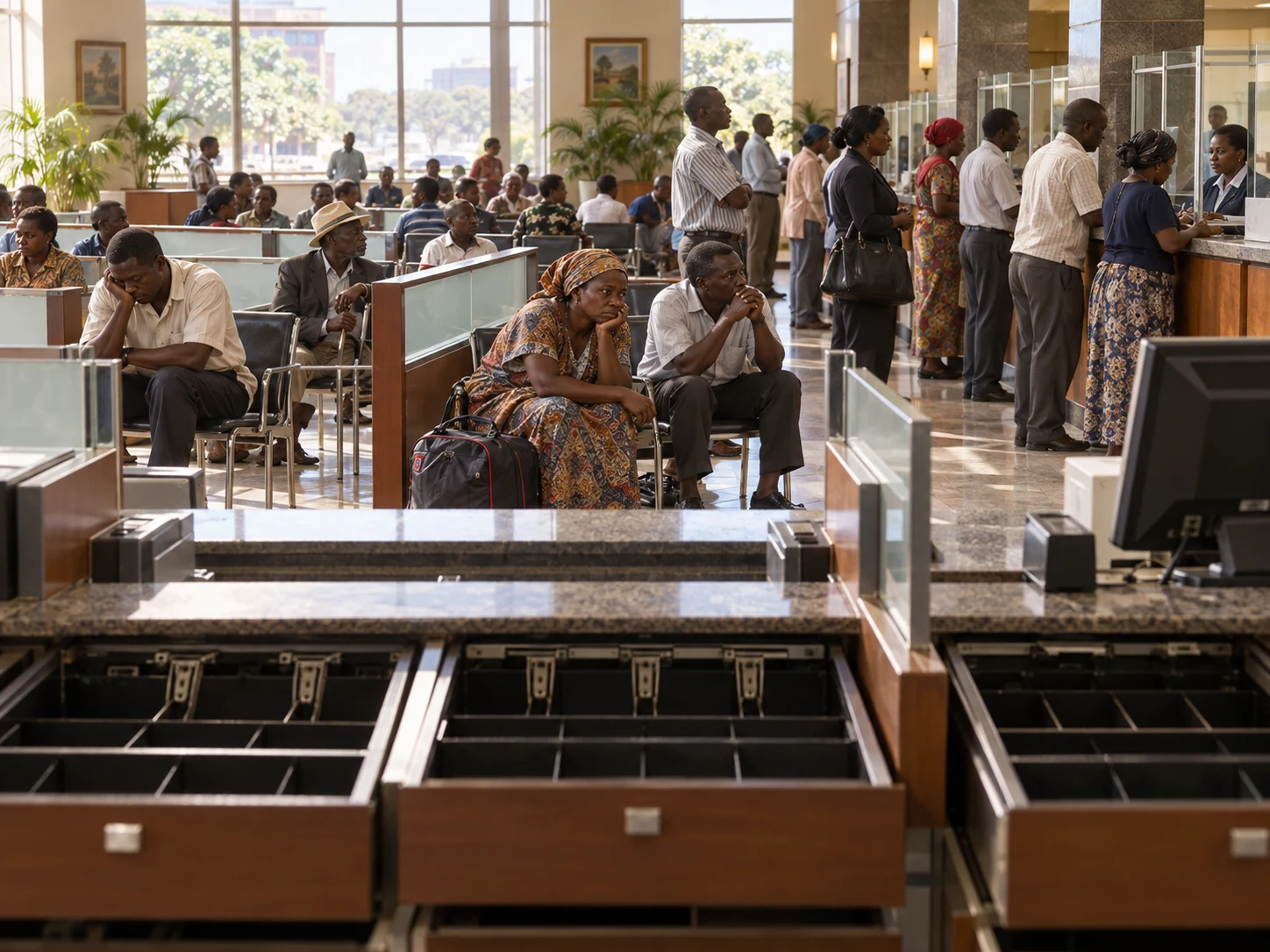
At Christmas in 2007, Kennedy Tsambo, a mechanic working in Harare, wanted to travel home to his family in Zimbabwe’s eastern Nyanyadzi district. He needed enough cash for the bus fare. The money was his, already held in a bank account. Yet three days of queuing failed to produce the notes he needed. His experience was recorded in an AFP report published on 13 January 2008.
This was more than a slow bank counter. Amid soaring prices, Zimbabwe was also running short of physical banknotes. Long lines formed outside banks; new, larger denominations did not make the shortage disappear. Another worker interviewed in the report described depositing the earnings of a good month, only to discover that withdrawing them was another struggle. The state of an account and the contents of a cash drawer had become painfully different kinds of information.
Tsambo was not seeking a handout or a prize. He was trying to turn earnings he already owned into a journey he could actually make. A bank deposit depends on a modest but essential promise: the depositor should be able to retrieve the money when it is needed. Once that promise becomes uncertain, the effect outlasts the day’s queue. Tsambo said he was considering taking his money out and avoiding further deposits until the disruption ended.
From across the street, a bank queue may look like people waiting for money. In this case, that description is incomplete. At the far end of the line stood a bus journey, a family visit, and holiday hours that could not be put back into an account. The wait consumed something that no bank could later dispense.
Three days of waiting bought no ticket home, only a position from which cash might become available. The bank queue became another border between an account balance and the ability to travel.