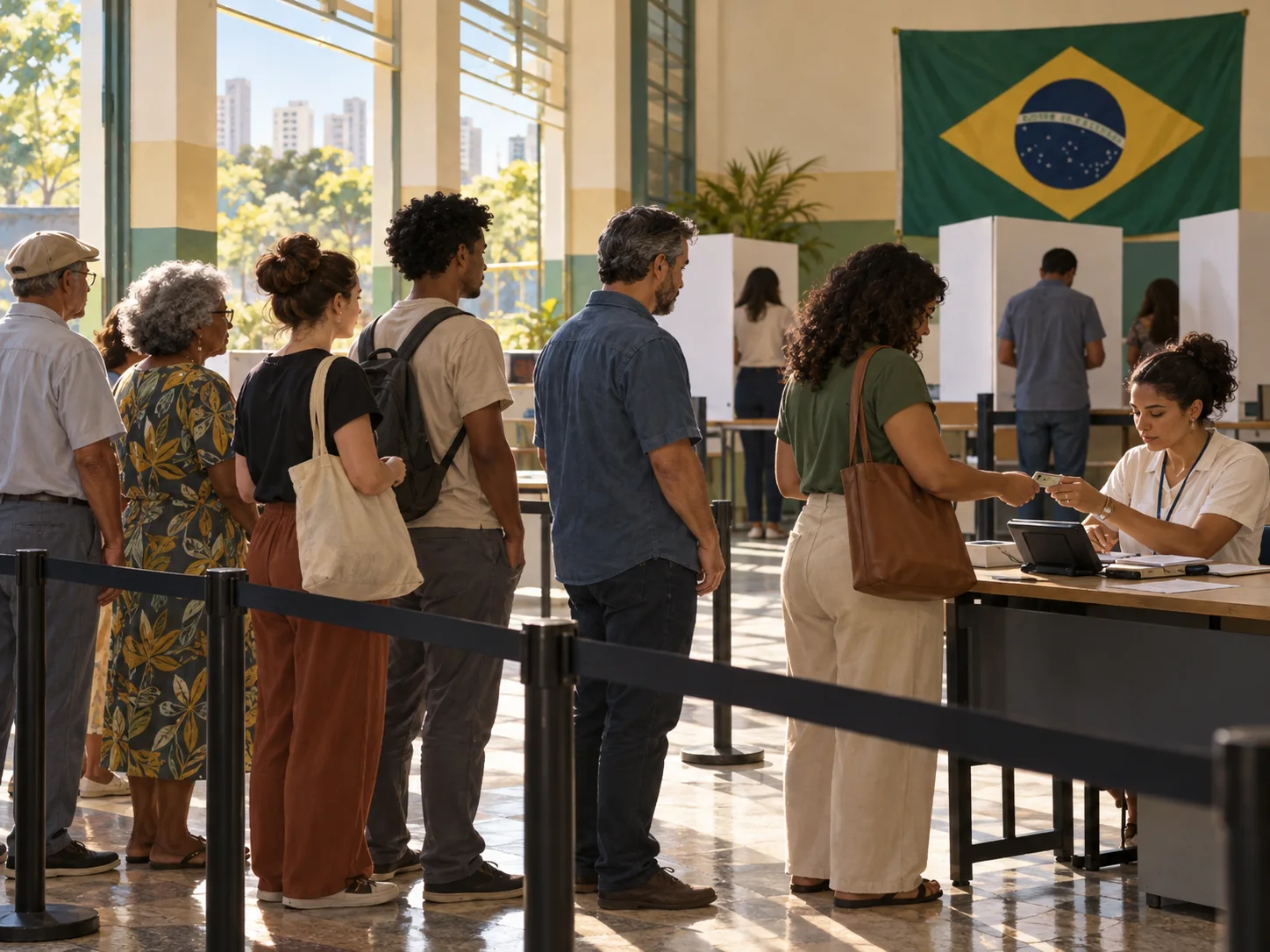
On election days in Brazil, reports of voters lining up outside polling places are a reminder that electronic voting does not eliminate waiting. A machine may record a choice quickly, but people must still arrive, establish their eligibility and take turns using the available booths. Reporting cited in this candidate describes voters encountering substantial lines during the 2026 general election.
Voting is compulsory for many Brazilian adults, making election day a widely shared civic obligation as well as an expression of political preference. Yet the length of a queue cannot be read as a simple measure of enthusiasm or administrative failure. Staffing, the distribution of polling stations and the times people arrive all affect the experience. Those waiting may disagree profoundly about the candidates, even while observing the same order at the door.
Once counted, votes become numbers on a national map. Before that, they belong to people with errands, jobs and families, spending part of their day waiting for a private moment at a voting machine. Even a highly digitized democracy still depends on the stubbornly physical act of taking turns.
Waits exceeding an hour were not uniform nationwide; they marked polling sections where capacity lagged behind turnout. A burden invisible in the final turnout figure appeared on the clocks of individual stations.