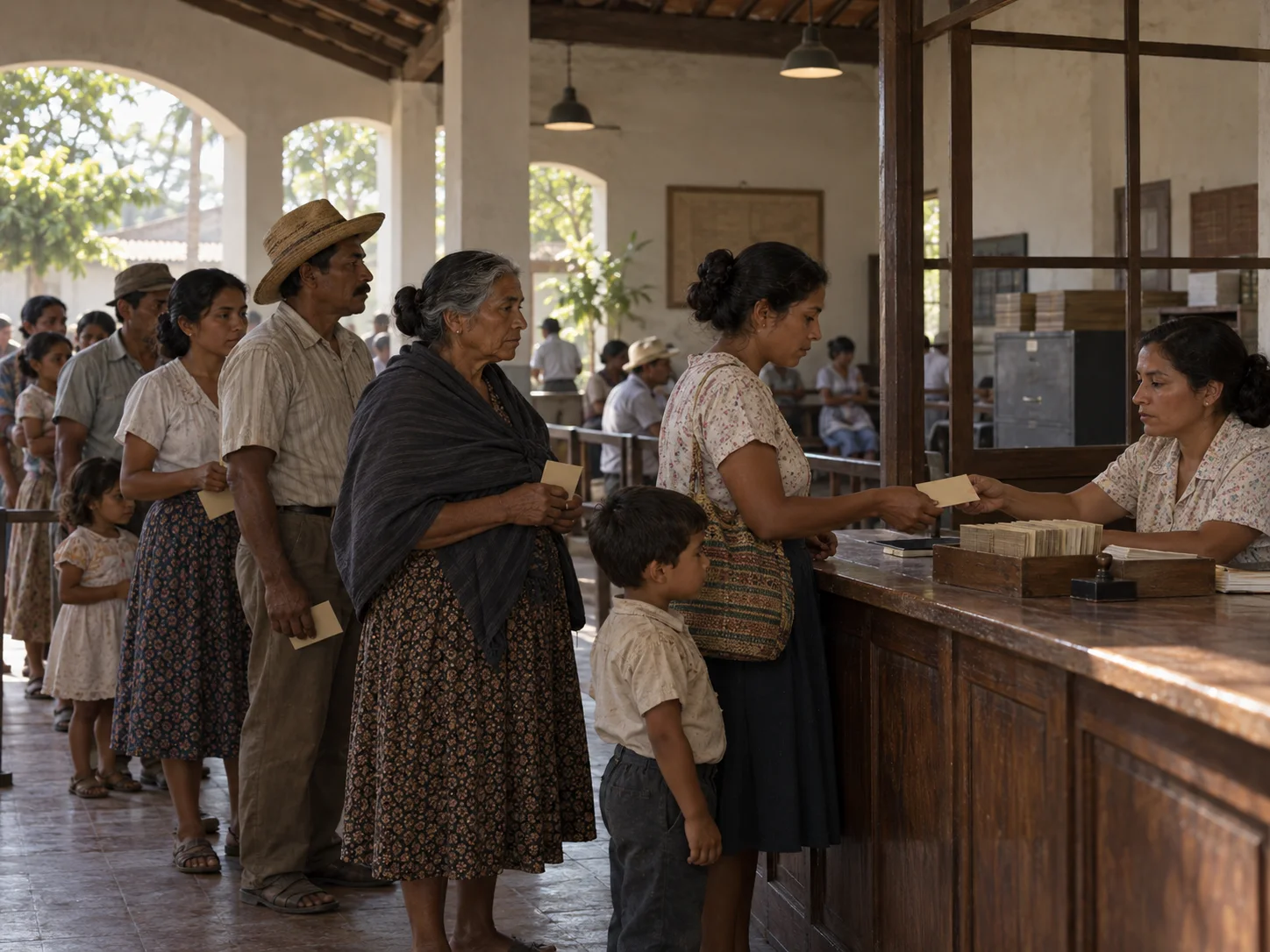
In post-revolutionary Nicaragua, shortages and hoarding led the government to introduce ration cards in stages for sugar, rice, cooking oil, soap and other basics. Revista Envío recorded both the shop queues and the expansion of the card system in the early 1980s. One card was not a universal ticket; each arriving commodity could generate its own wait.
Rationing tried to spread scarce goods according to household size, but it could not eliminate delays or regional differences. People heard that a product had arrived, brought their cards and sometimes watched stock disappear before their turn. The line managed scarcity while also displaying it publicly every day.
A stamp could prevent one household from buying twice, but it could not print the date of the next delivery. A system might design equal shares while time remained unequal: an hour away from paid work did not cost every family the same. The ration queue distributed not only goods, but part of the burden of shortage in units of waiting.
The ration card did not end scarcity; it recorded who could receive each item. Finishing the rice queue did not settle the wait for oil or soap, so one card divided household provisioning into several separate lines.