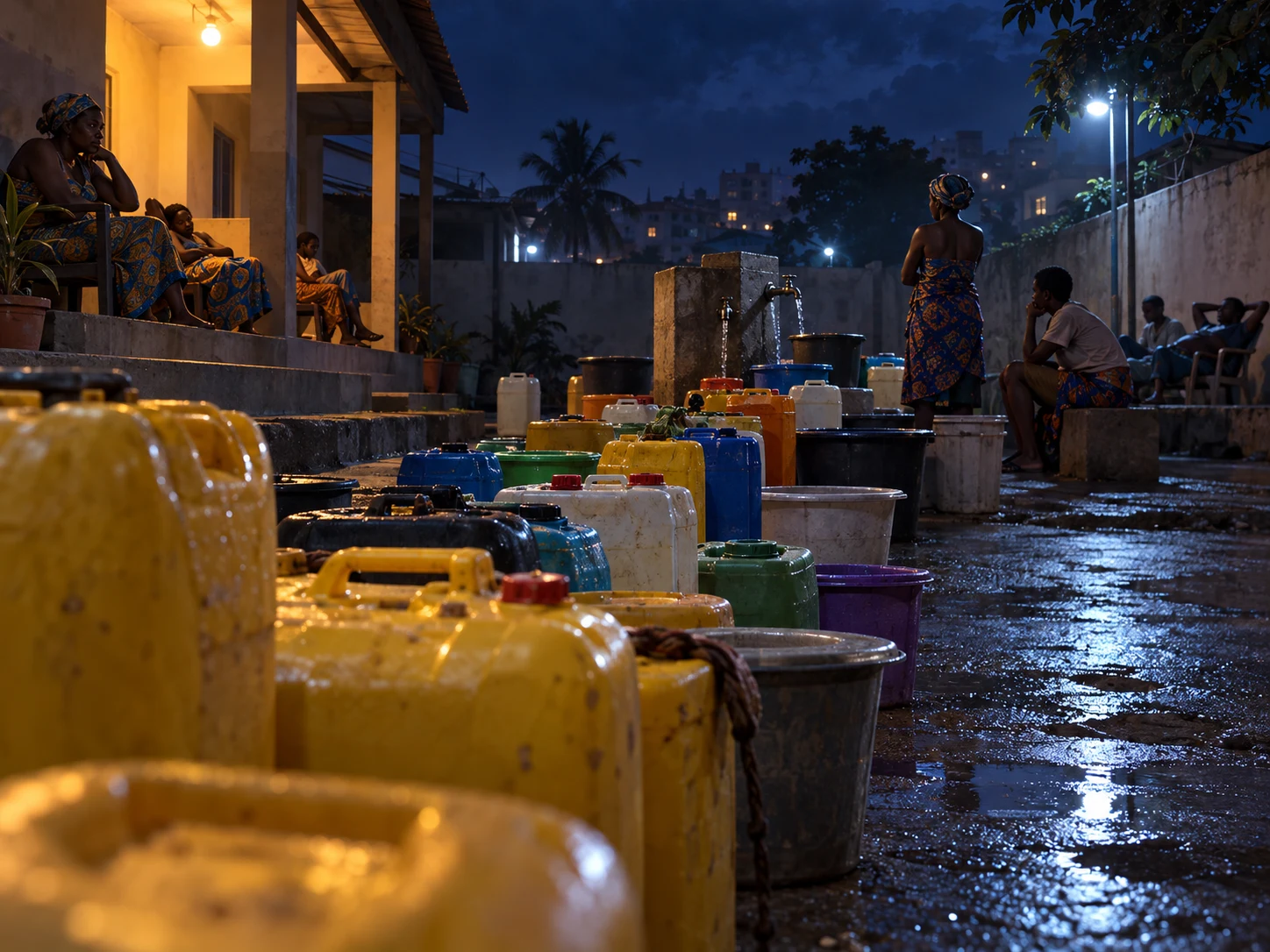
In July 2018, residents of water-starved neighbourhoods in Accra, Ghana, joined queues while it was still dark, some as early as 3 a.m. Dansoman had gone more than a week with little or no supply, and people waited with buckets and other containers so they would not miss the brief flow from low-pressure taps. In Bubuashie, long lines also formed at places where water was sold.
The shortage affected more than household drinking water. In Adabraka, one food seller reduced the amount she cooked and sent some daily-paid workers home because there was not enough water for the business. A fault in the supply network reorganised the day from kitchens to workplaces.
The clock governing this queue was not a shop's opening time but the uncertain moment when water passed through a pipe. People surrendered sleep to fill containers before the pressure faded. An unreliable tap joined rest, work and domestic necessity in the same line.