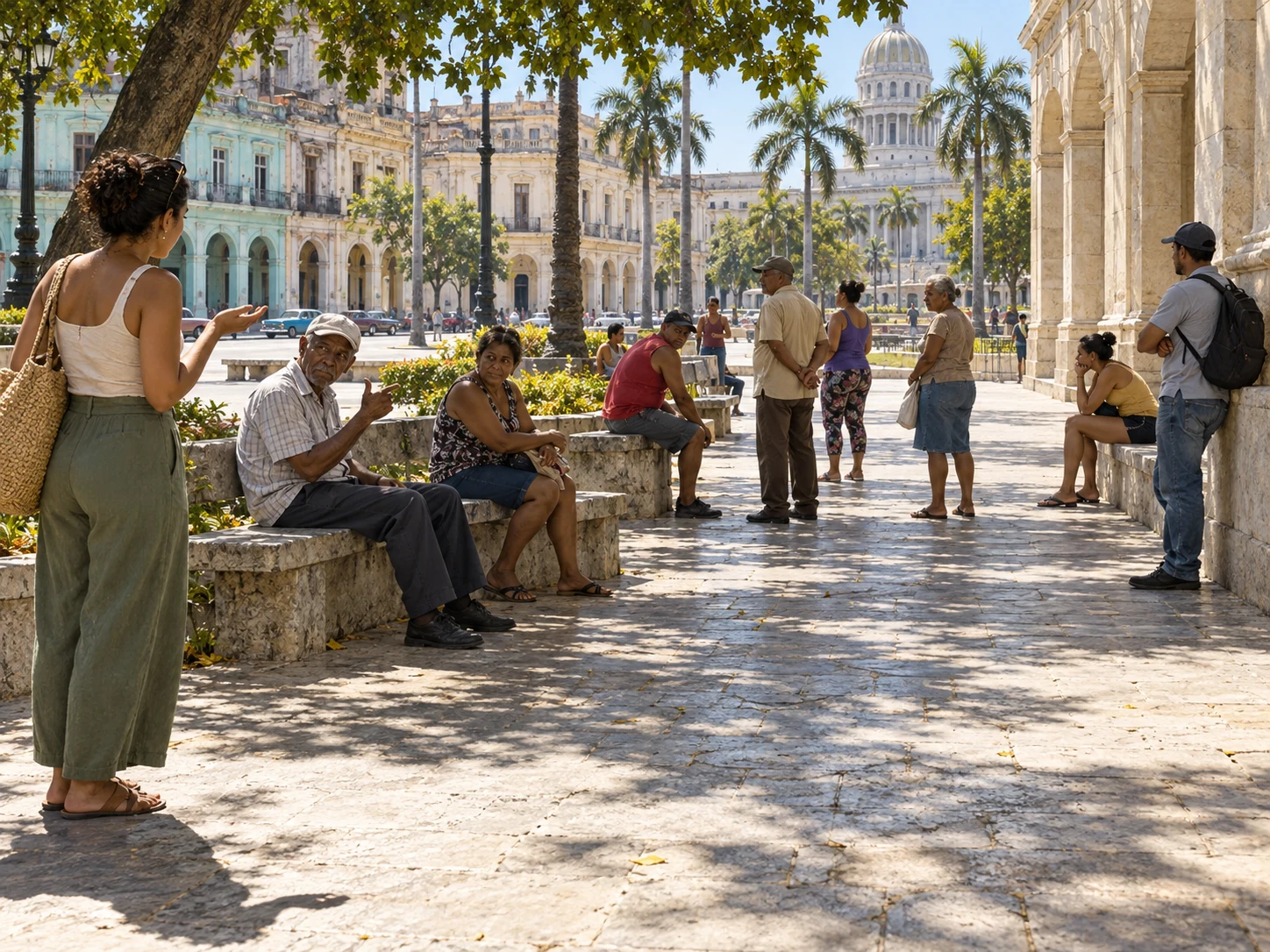
In Cuba, one small question can locate the end of a queue: “¿Último?”—“Who is last?” The person who answers becomes your point of reference. You remember that person, and your turn follows theirs. The arrangement can work without everyone remaining in a perfectly straight line. To someone who thinks a queue must be a visible row of bodies, this may look like an absence of order. In fact, the order is held in a set of relationships: who arrived before whom. People may be able to sit nearby or step out of the sun, although the system depends on remembering and recognizing the people ahead. Conversation becomes part of the infrastructure of waiting. Accounts of everyday Cuban queues often describe this practice alongside the pressures of shortages and lengthy waits. It should not be assumed that every shop or office follows the same convention. The revealing detail is that a queue does not always need a line painted on the ground—or even a line of standing people. Sometimes it exists in shared memory.
The defining feature of A Queue You Can Leave Without Losing is the way a specific procedure turned 『¿Último?(最後は誰?)』で最後尾の人を確認して列から離れる into ordered waiting. The line was not background scenery: it determined access, timing and the burden placed on the people involved. The revised account keeps those mechanics visible and separates the documented scene from assumptions that the source does not support.