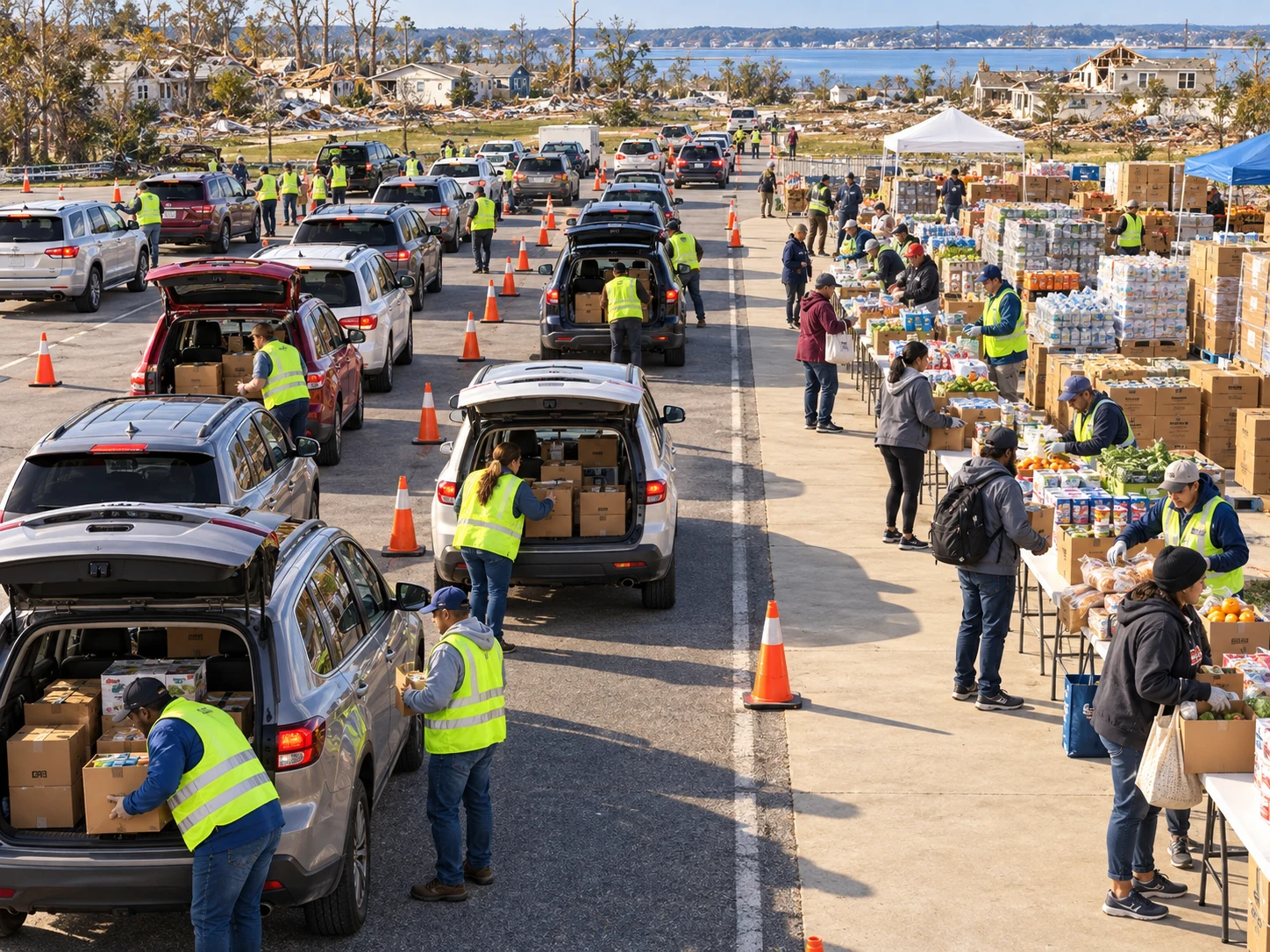
In April 2020, people who had lost income during the COVID-19 outbreak lined up in their cars at an emergency food distribution in the parking lot of Wright State University’s stadium in Dayton, Ohio. TIME reported that thousands joined the vehicle queue and that 1,381 households—more than 4,500 people—were served that day. Similar drive-through food lines in Las Vegas stretched as far as five miles.
In a crisis requiring physical distance, the car became a waiting room. The form differed from a pedestrian line, but drivers still waited for the vehicle ahead to move and received essentials in order. Private cabins intended for separation became one long queue of shared uncertainty.