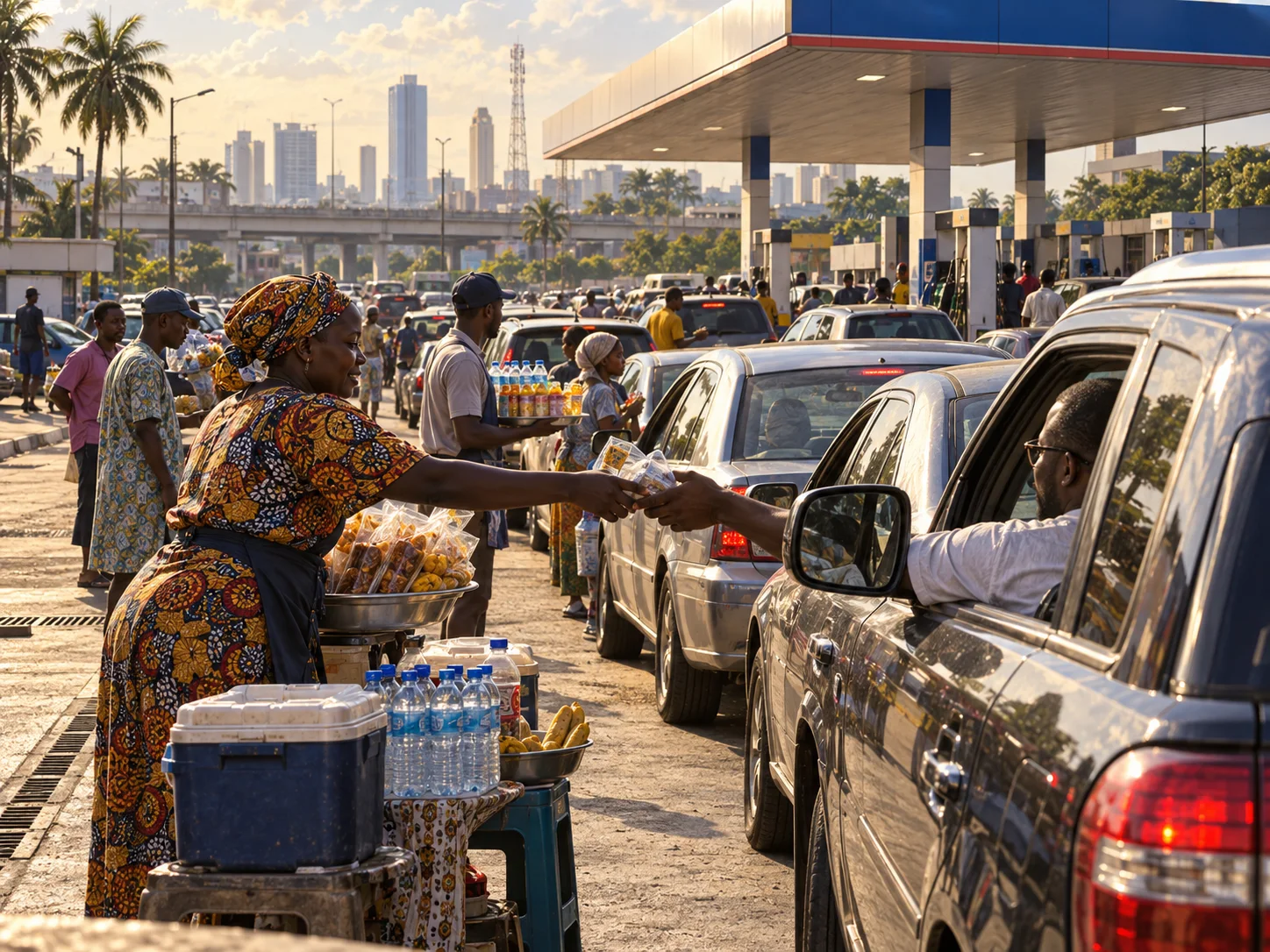
During Nigeria's 2016 fuel shortage, long lines at filling stations along Abuja's Airport Road became temporary marketplaces. Vendors walked among drivers waiting for petrol, selling food, confectionery and sachets of water. One seller said she expected people who had spent the night in the queue to be hungry and made more sales there than she would have at her usual stand.
A fuel queue does more than immobilise vehicles. It fixes drivers' time to the roadside and creates demand for food and water. In the heat, a water seller said even unchilled sachets sold quickly, while a vendor carrying akara, fried bean cakes, sold out in a short time.
What distinguishes this line is the secondary economy created by scarcity. While the filling station could not reliably move petrol to motorists, breakfast changed hands beside the queue. A line of vehicles that could not move set a working day in motion for people who traded on foot.