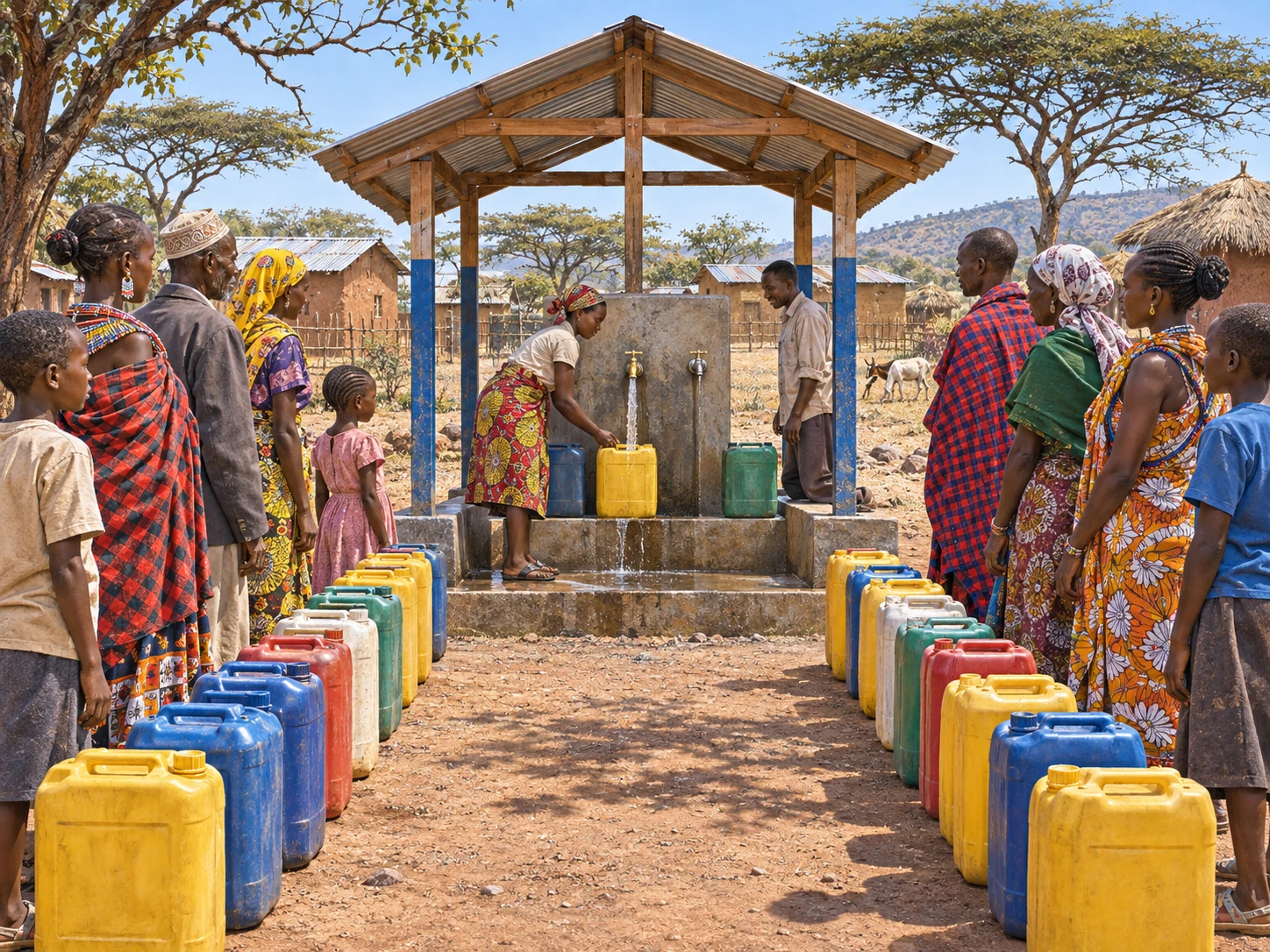
In water-stressed parts of Kenya, people are not the only things that form a queue. Jerrycans are placed in order beside a water point, and when filling begins the container at the head of the line is served first. A local account from Kenya describes neighbours arranging their containers neatly along a curb before water is dispensed from the front of the sequence. Separate reporting from Kitengela recorded more than one hundred jerrycans ‘on queue’ at a single kiosk. The container becomes a visible place marker, allowing its owner to step away rather than remain standing throughout the wait. That does not make the waiting disappear. Someone must return when water becomes available, carry the heavy container home and live within the limits of an uncertain supply. In a city with dependable pipes, the order in which households receive water is nearly invisible. Under shortage, it appears as a long line of yellow vessels. This is a documented form of object-based queueing: an everyday tool takes the person’s place and makes a shared order for access to water legible to the surrounding community.
Kenya · Present day
Kenya | A Water Queue Marked by Jerrycans