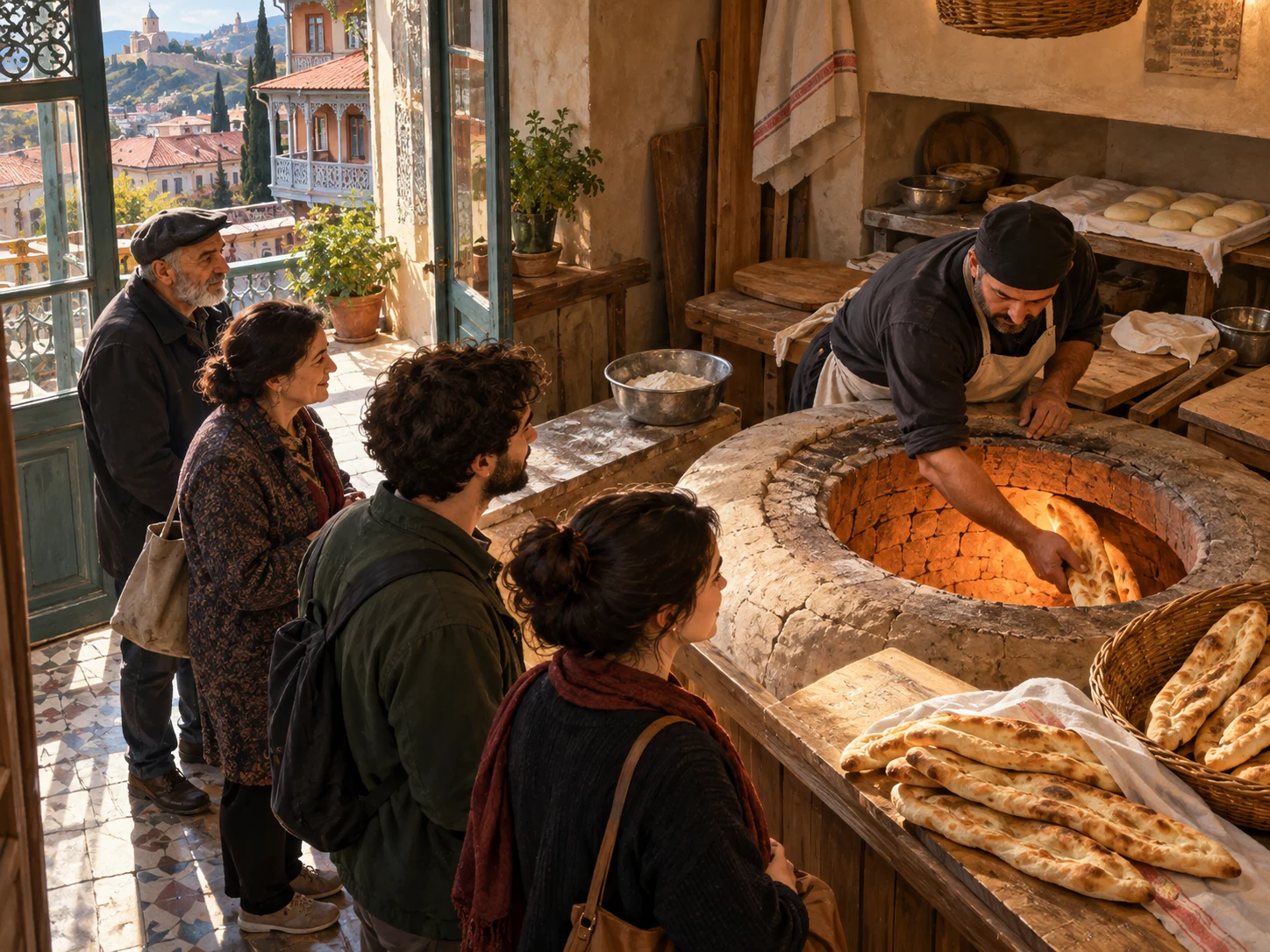
In Tbilisi bakeries, the long Georgian loaf known as shoti is baked against the inner wall of a clay tone oven. Local food guides describe neighbours queuing for loaves straight from the oven and advise that a bakery with a line is likely to be selling bread only minutes after it was baked.
Shoti is an everyday bread, yet its production remains tied to a visible oven and a baker's hands. Only a limited number of loaves can be baked at once, so customers wait for the next batch. The queue is created not only by popularity but by the rhythm of baking itself.
Each time a hot loaf is lifted from the oven wall, the line advances a little. The technique may be particular to Georgia, but the desire behind the wait—to carry warm bread home—is familiar in bakeries everywhere.