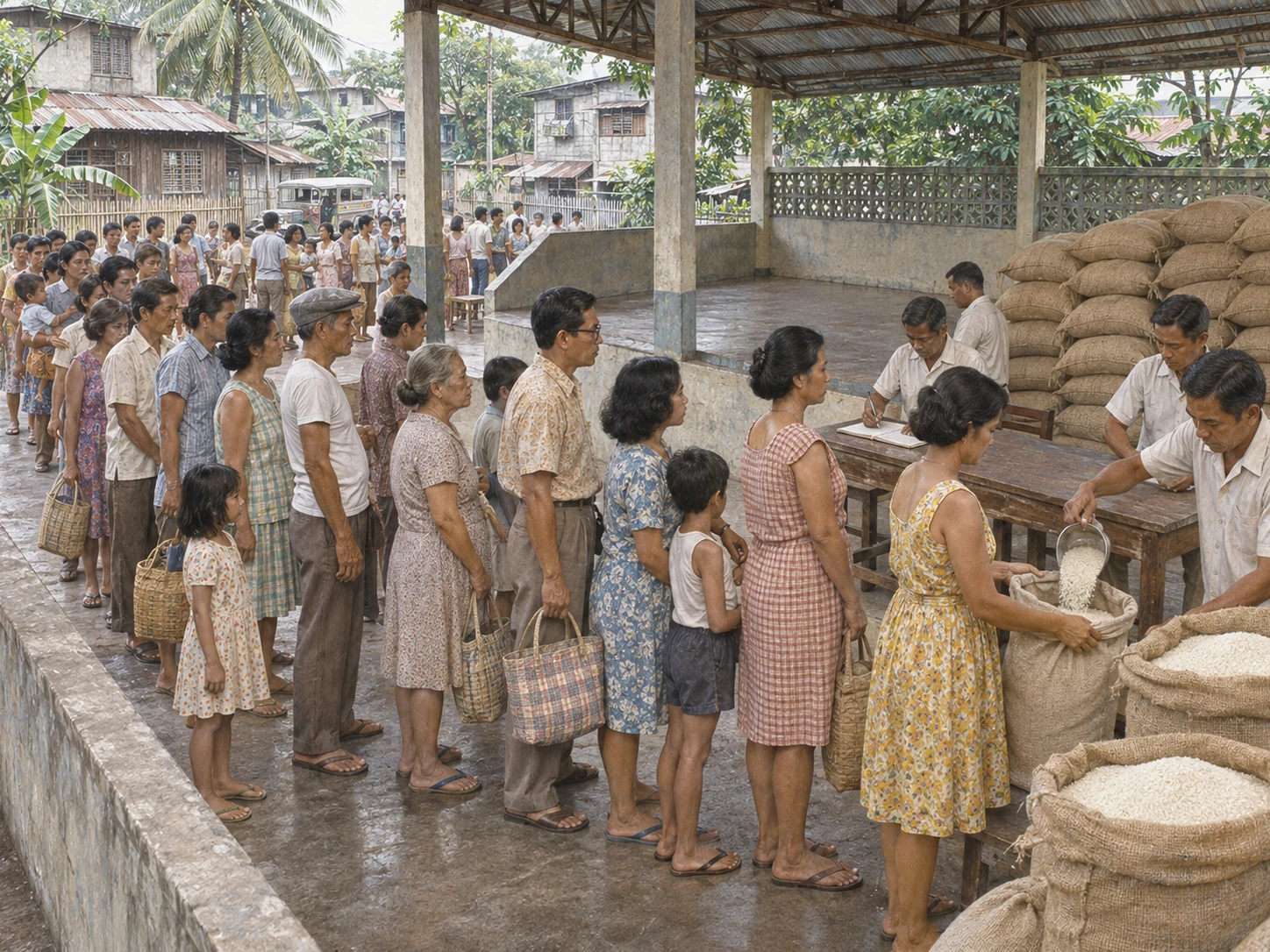
Long lines formed for rice in Metro Manila in 1972. In a later retrospective report by GMA News, a regional official of the food authority recalled that he himself had queued for rice sold at gasoline stations during the crisis. Poor weather, pest damage, and flooding in Central Luzon sharply reduced local output, and the government responded with large imports. The roadside line translated a national shortage into a sequence of individual bodies.
Rice sits at the centre of the Philippine table, so restrictions on quantity and place of sale immediately affected household meals. People waited without knowing how much stock would remain when their turn came. The same report describes a later crisis in 1995, when subsidized government rice was limited to three kilograms per buyer, showing how a similar ordering mechanism reappeared in another shortage.
The inherited candidate placed the event in postwar Manila in the 1940s, but no candidate-specific ordered line from that period was verified. The country, metropolitan location, and waiting target—obtaining rice—remain intact, while the date has been corrected to the directly reported 1972 crisis. The article therefore rests on a recorded participant’s experience rather than a reconstructed postwar scene.