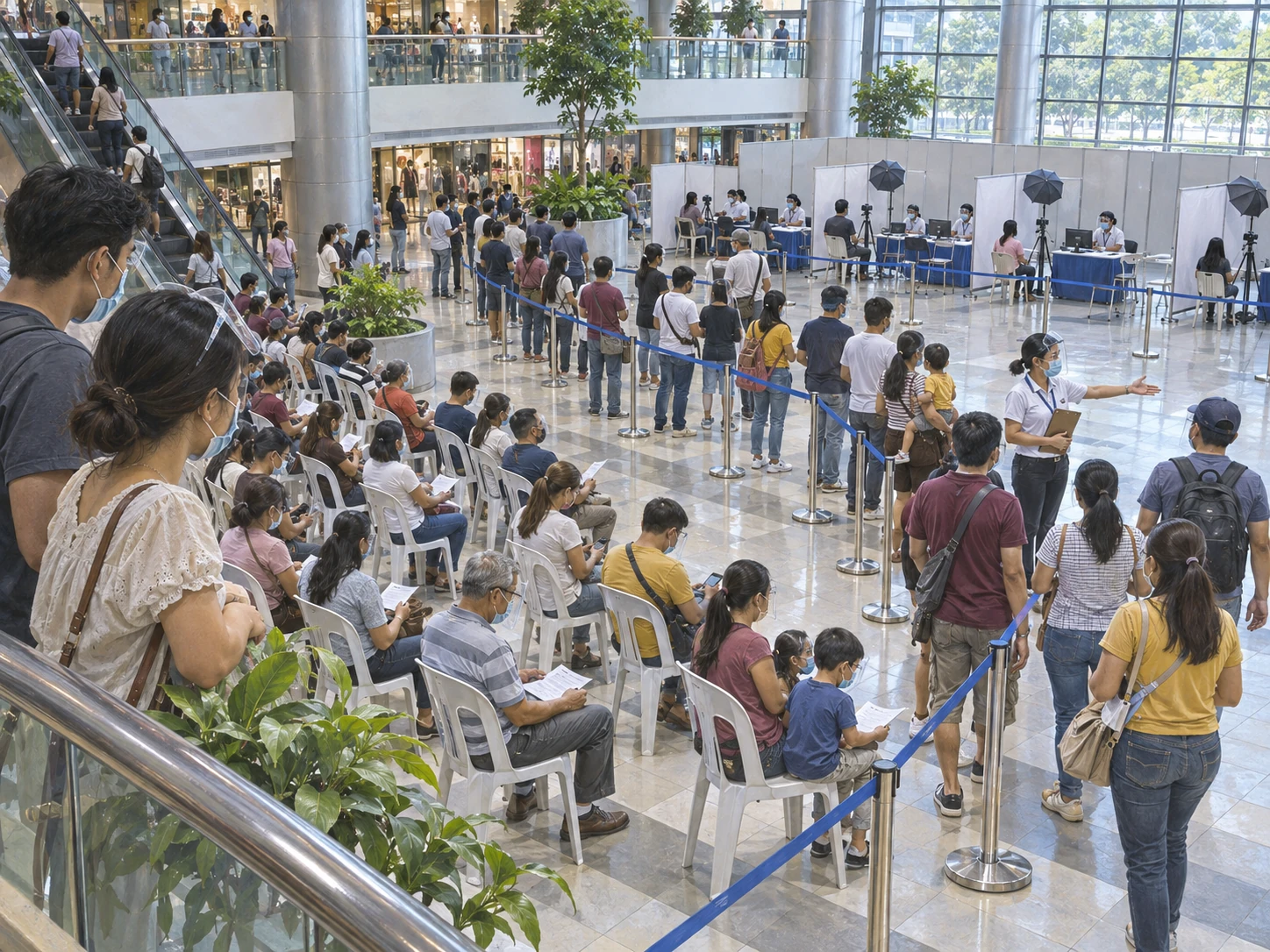
On 19 May 2021, a large crowd lined up for Step 2 registration in the Philippine Identification System, or PhilSys, at Starmall in San Jose del Monte, Bulacan. According to an official statement by the Philippine Statistics Authority (PSA), false claims had circulated that it was the last registration day for a particular barangay and that opening a bank account would bring a cash grant. People without appointments joined scheduled registrants, and a process designed to control numbers during the pandemic instead became overcrowded.
Step 2 was not merely a form-drop counter. It involved validating identity documents and capturing fingerprints, iris scans and a facial image. The PSA had created a three-step system with assigned dates and times so that each center could limit attendance. Rumors linking registration to a deadline and cash assistance created a different kind of urgency outside that appointment order. Operations at the site were suspended, and affected registrants were told that the PSA would notify them by SMS when registration resumed.
The line therefore showed more than the time required to obtain an identity credential. It revealed the public expectations attached to registration, anxiety about access to assistance, and the power of unofficial information to move people into one place. In response, the PSA reminded registrants to keep their Step 2 appointment and to verify claims through official channels. The queue made the entrance to a national system visible, while showing that reliable information is itself part of delivering a public service.