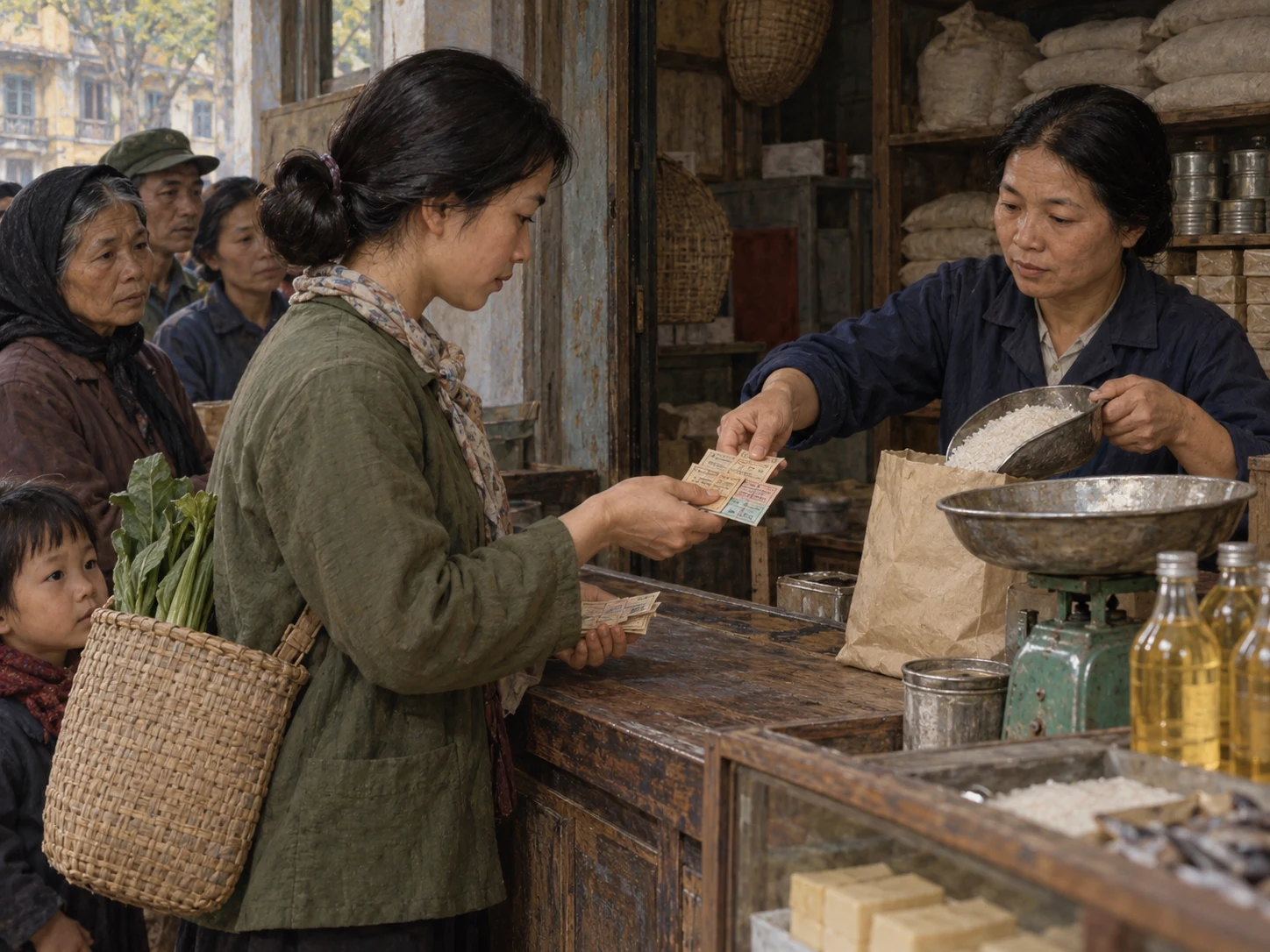
In post-reunification Vietnam, during the period remembered as the thời bao cấp, or subsidy era, a wallet alone did not determine what a household could buy. A VietNamNet memoir of the period records people lining up with ration coupons to purchase food. The system shaped everyday life from the years after 1975 until the Đổi Mới economic reforms began in 1986.
Coupons linked a household or workplace to fixed amounts of rice, meat, cloth, and other necessities. Deliveries were not always predictable, and memories of the period describe people using stones, baskets, or other place-holders to preserve a position in line. Knowing how to manage the queue was therefore part of managing a household: someone had to exchange working time and waiting time for the next meal.
The surviving coupons look like modest scraps of paper, but they governed more than the contents of a shopping bag. They influenced when a person went to the shop, who waited on behalf of a family, and what had to be postponed when supplies ran short. The ration line makes an economic system visible at the scale of a single day.