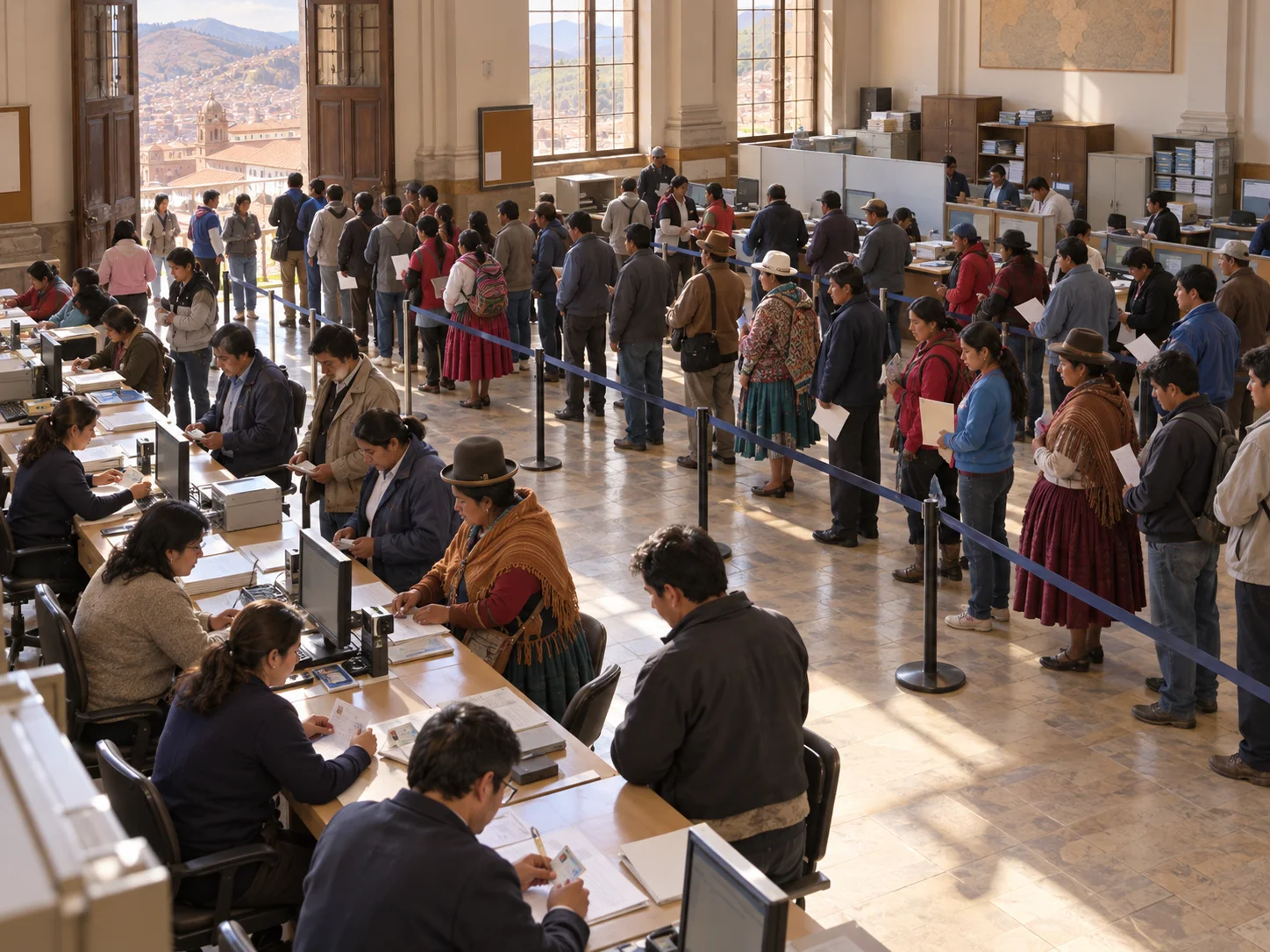
In 2009, Bolivia rebuilt its voter roll around biometric registration. Contemporary reporting from the first day in Cochabamba department described citizens waiting about an hour in a line extending at least a block and a half. Fingerprint capture caused delays, and registration moved slowly until another machine was added.
The new roll was designed to secure the principle of one citizen, one registration and one vote. But technical precision also meant processing fingerprints person by person. Casting a ballot may take only a moment; establishing the identity behind that vote required machinery, patience and a very visible queue.