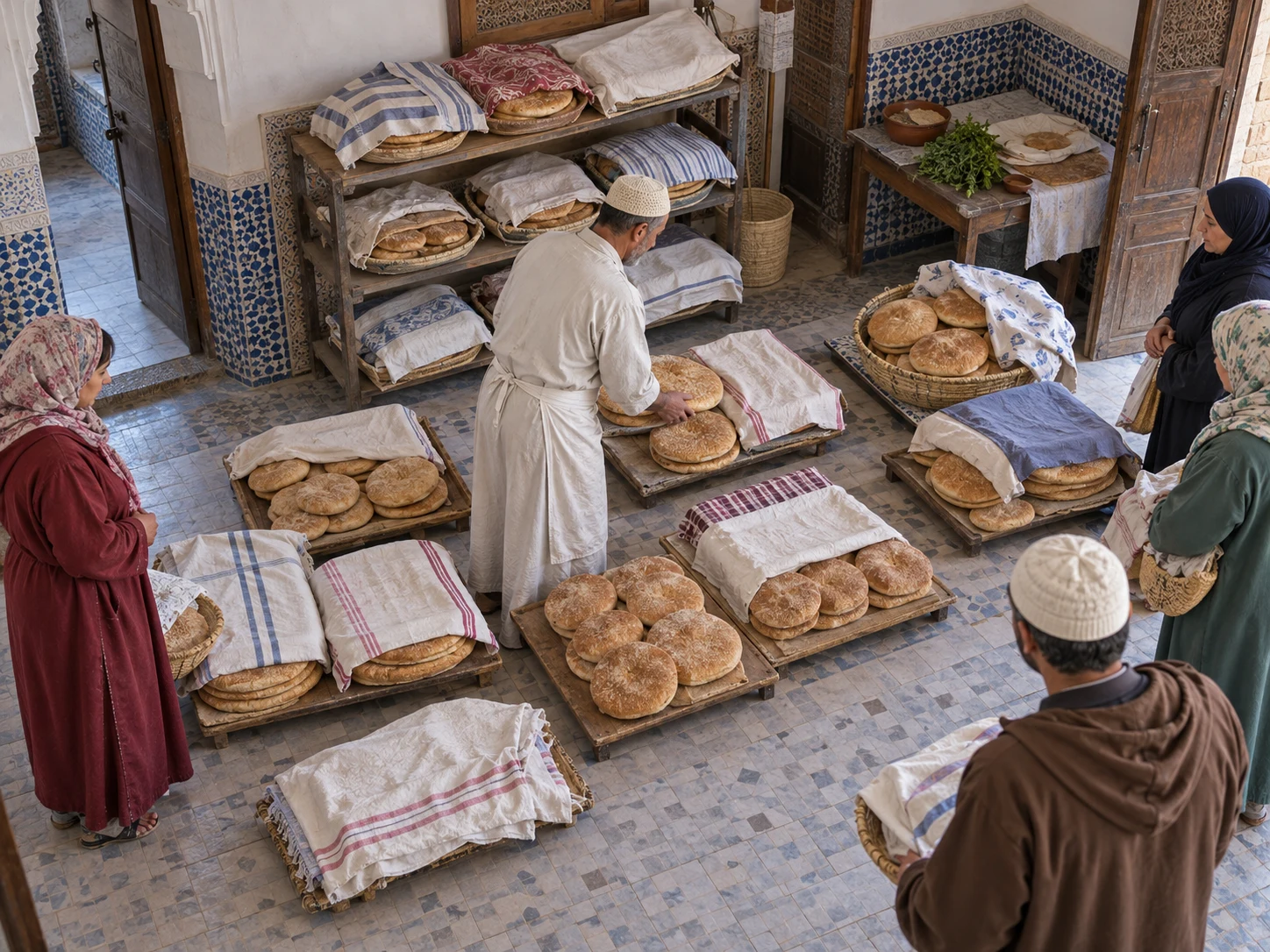
In Fez, Morocco, households have long carried bread shaped at home to a communal ferran for baking. In the morning, boards of dough arrive at the oven and the baker distinguishes one family's loaves from another's. Local reporting documents customers waiting in turn to collect the baked bread.
When dough from many kitchens shares one oven, identification and order are essential. Small cuts and differences in shape act like name tags, allowing each batch to be returned to its owner. The queue therefore organizes not only people but the movement of household bread.
Between the private kitchen and the neighbourhood oven lies a brief act of cooperation. People hand over something they made, trust the order and wait for its return. Despite the particular tradition, that feeling is remarkably familiar.