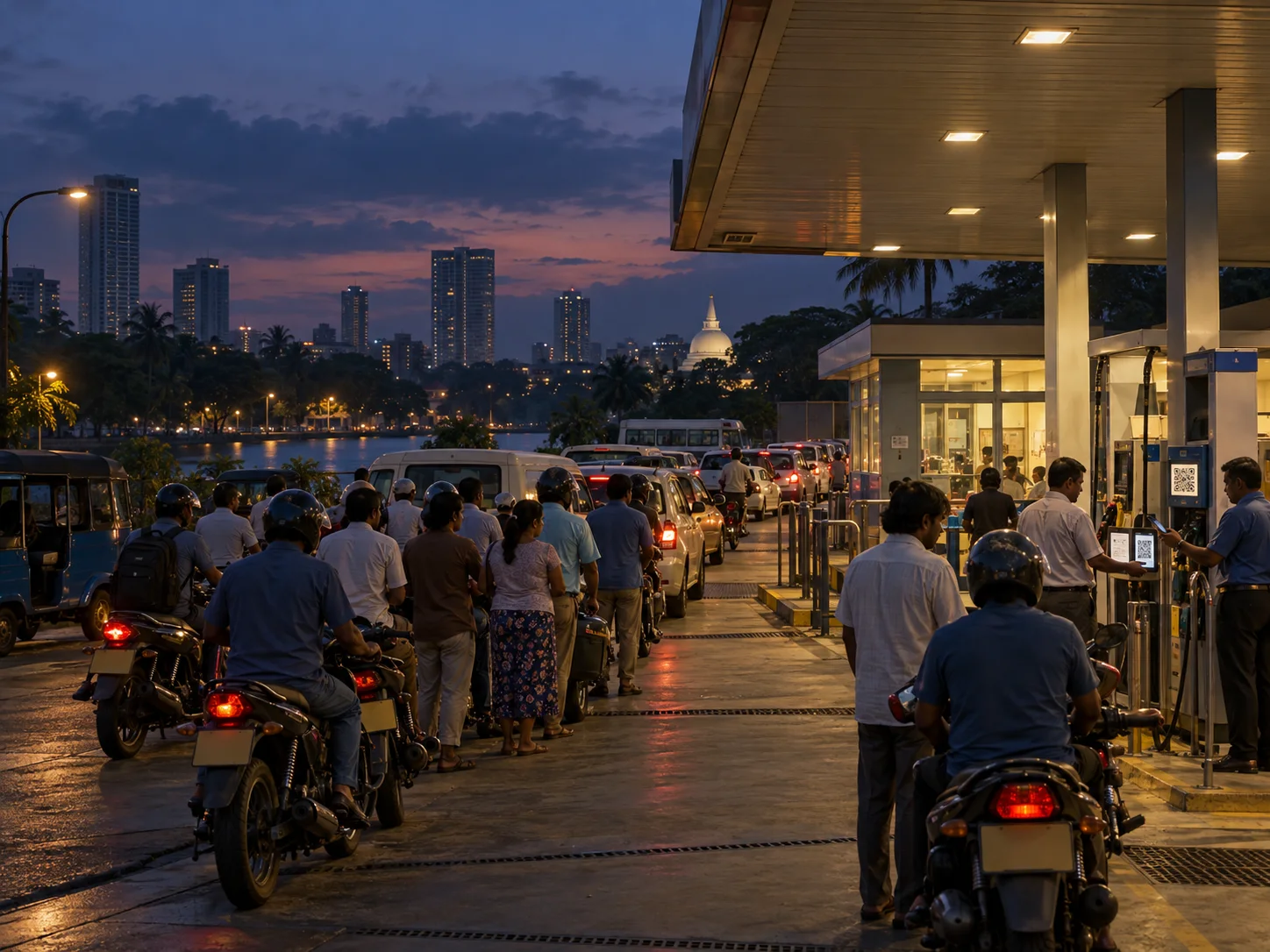
In 2022, lines for petrol and diesel stretched for days outside filling stations in Sri Lanka. A shortage of foreign currency prevented the country from securing imported fuel. Auto-rickshaws waited without success in Colombo, and the government temporarily stopped sales to non-essential vehicles. The state petroleum storage company's annual report also records that the crisis produced hoarding and long queues at fuel stations.
In August, the government introduced the National Fuel Pass nationwide, using a QR code to administer a weekly quota for each registered vehicle. Sri Lanka's central bank records that quota-based issuance began on 1 August. The policy attempted to change the meaning of the line: from an unlimited race to arrive early into an ordered distribution of a defined quantity to registered vehicles.
This queue shows both the power and the limit of converting a waiting problem into a digital entitlement. A QR code cannot create more fuel. It can, however, translate time accumulated on the road into a vehicle-based quota, compressing a national argument about distributing a scarce import into a screen that must be presented at the pump.