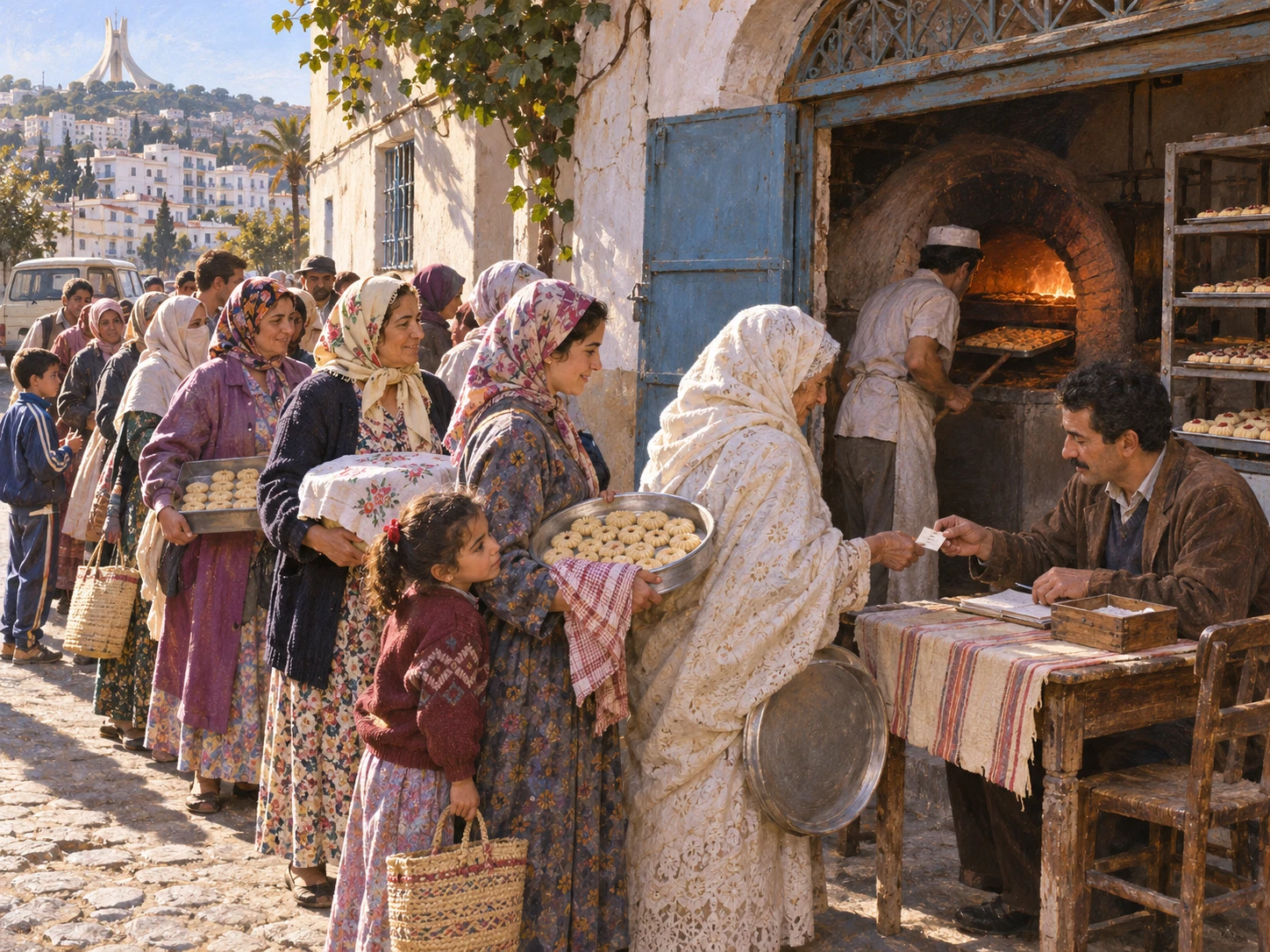
In the days before Eid, Algerian households prepare several kinds of pastries. National radio has documented women buying ingredients and working late around jobs and domestic responsibilities. Where homes lacked sufficient ovens, trays of dough could be taken to a neighbourhood baker or communal oven, requiring families to share the same source of heat.
Historic Algiers had public ovens known as kushas, where residents brought their own bread dough. Because the oven remained hot and handled one household’s trays after another, someone had to track what entered, in which order, and what came out. Before Eid, ordinary bread was joined by pastries, turning sequence at the oven into part of festival preparation.
The exact ticket system used by particular bakeries in the 1980s and 1990s has not been established by the present sources, so this article stays with the documented communal oven and seasonal wait. Behind the sweetness of the holiday lay practical work: translating many households’ different recipes into time inside one shared fire.
The communal oven let households produce varied pastries without owning the equipment. Waiting was inconvenient, but it was also the price of sharing heat, fuel and skilled baking across a neighbourhood.