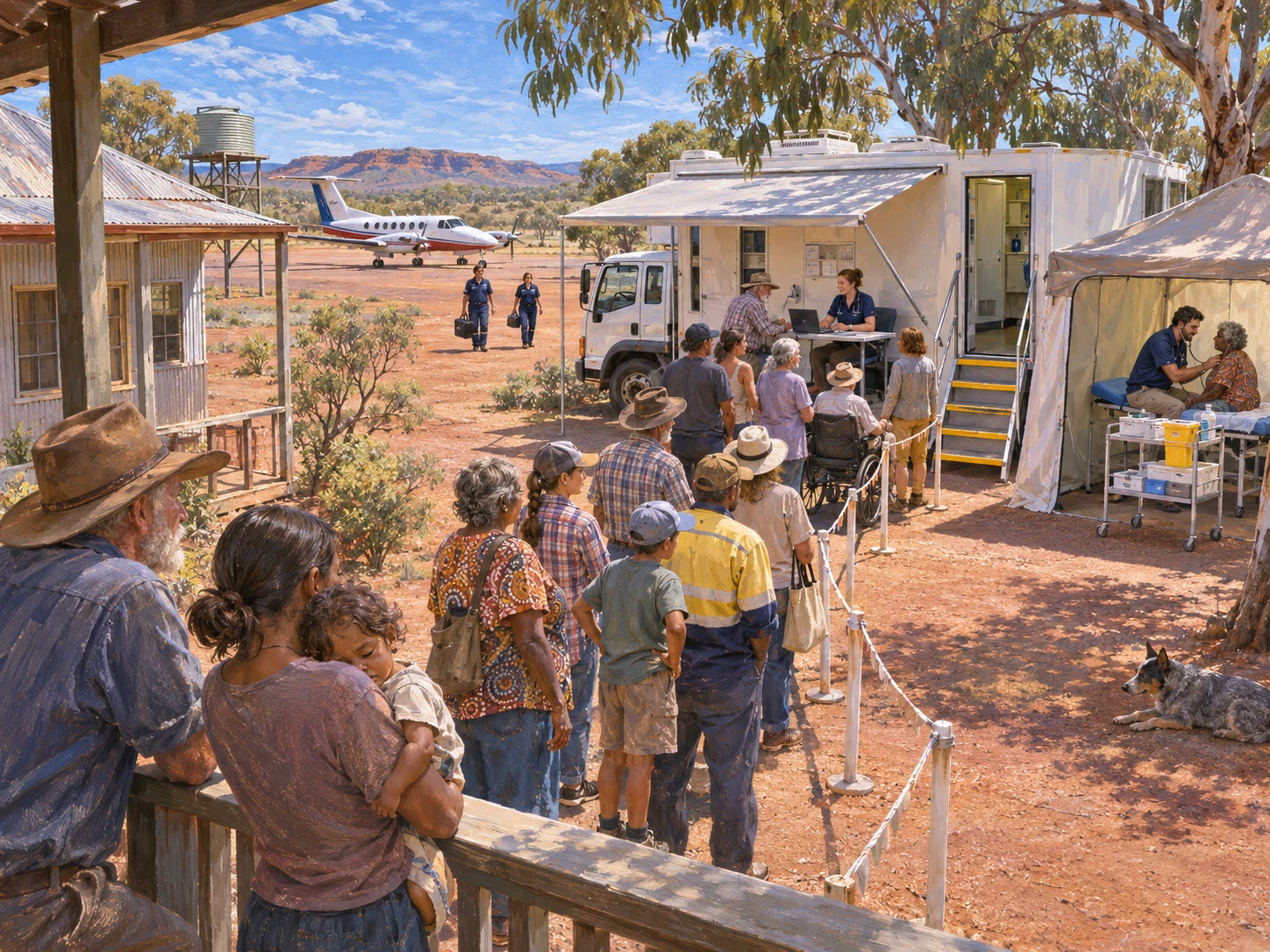
In Australia’s vast interior, distance changes the meaning of access to healthcare. The Royal Flying Doctor Service (RFDS) is known for delivering medical care to remote communities, including through aviation. In some settings, instead of every patient travelling to a clinic, medical professionals travel toward the patients.
Waiting in such places may begin long before anyone receives a ticket at a reception desk. People can be waiting for the next scheduled visit, for travel conditions to allow a service to operate, or simply for an opportunity to be examined. Yet the existence of RFDS outreach does not itself prove that residents formed a physical queue on a particular day. The candidate’s proposed clinic line still needs a documented location and date.
In a city, the challenge may be to shorten the line outside a clinic. In a remote community, having a clinic arrive at all may be the more consequential event. The number of people visibly waiting tells only part of the story of access.