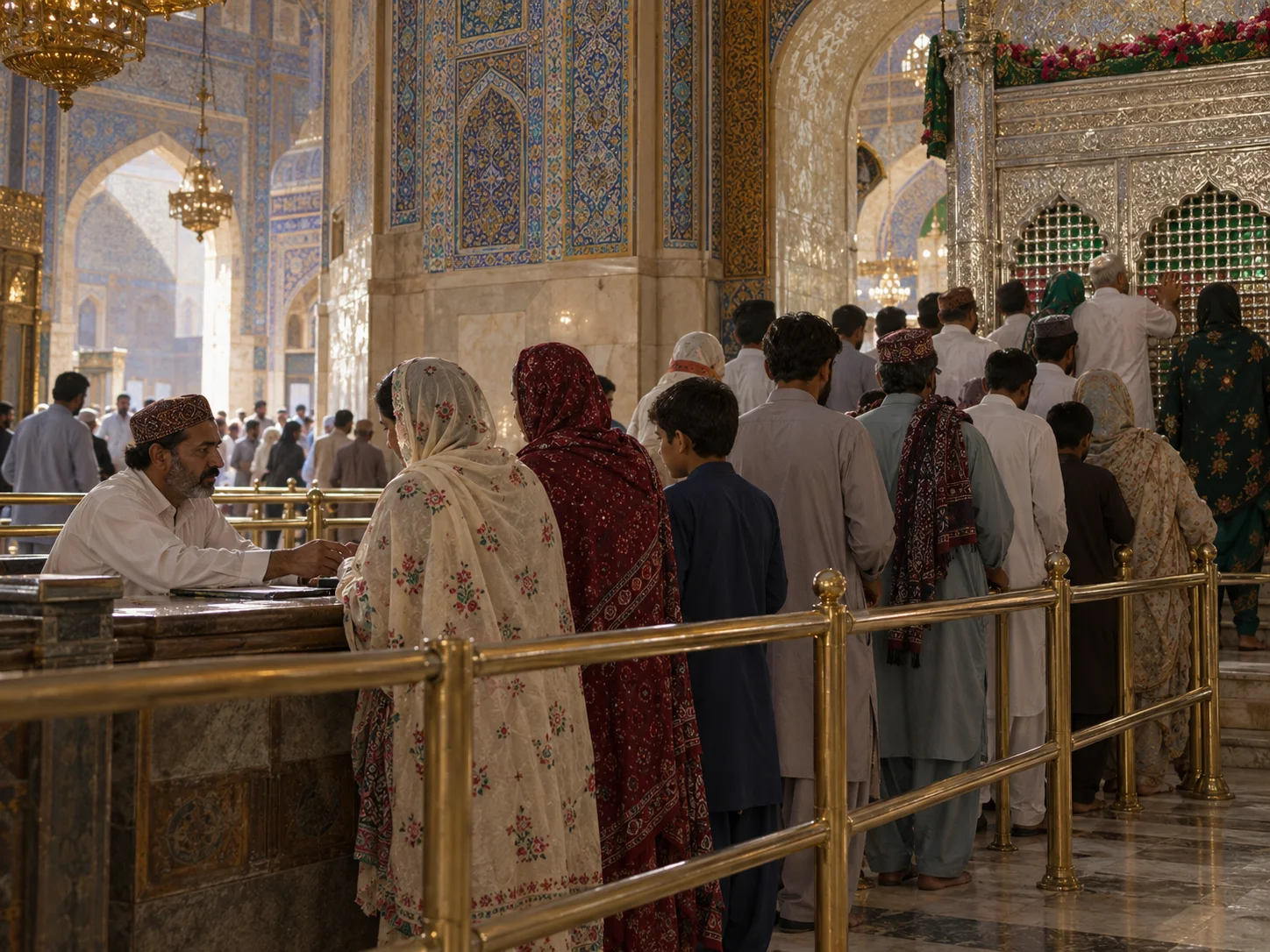
In March 2024, an estimated half-million people gathered in Sehwan, Pakistan, for the 772nd urs of the Sufi saint Lal Shahbaz Qalandar. Pilgrims passed security checks, entered the shrine in a disciplined sequence, prayed near the grave for a few minutes, and then made space for those following. Walk-through gates and metal-detector checks operated at the entrances and exits.
The immense pilgrimage depended on a shared practice of yielding time and space. Groups carrying green chaddars, families, and visitors who had travelled by special train all moved through the same constrained entrances in turn. The queue did not merely restrict devotion; it distributed access so that as many pilgrims as possible could approach the saint’s resting place.