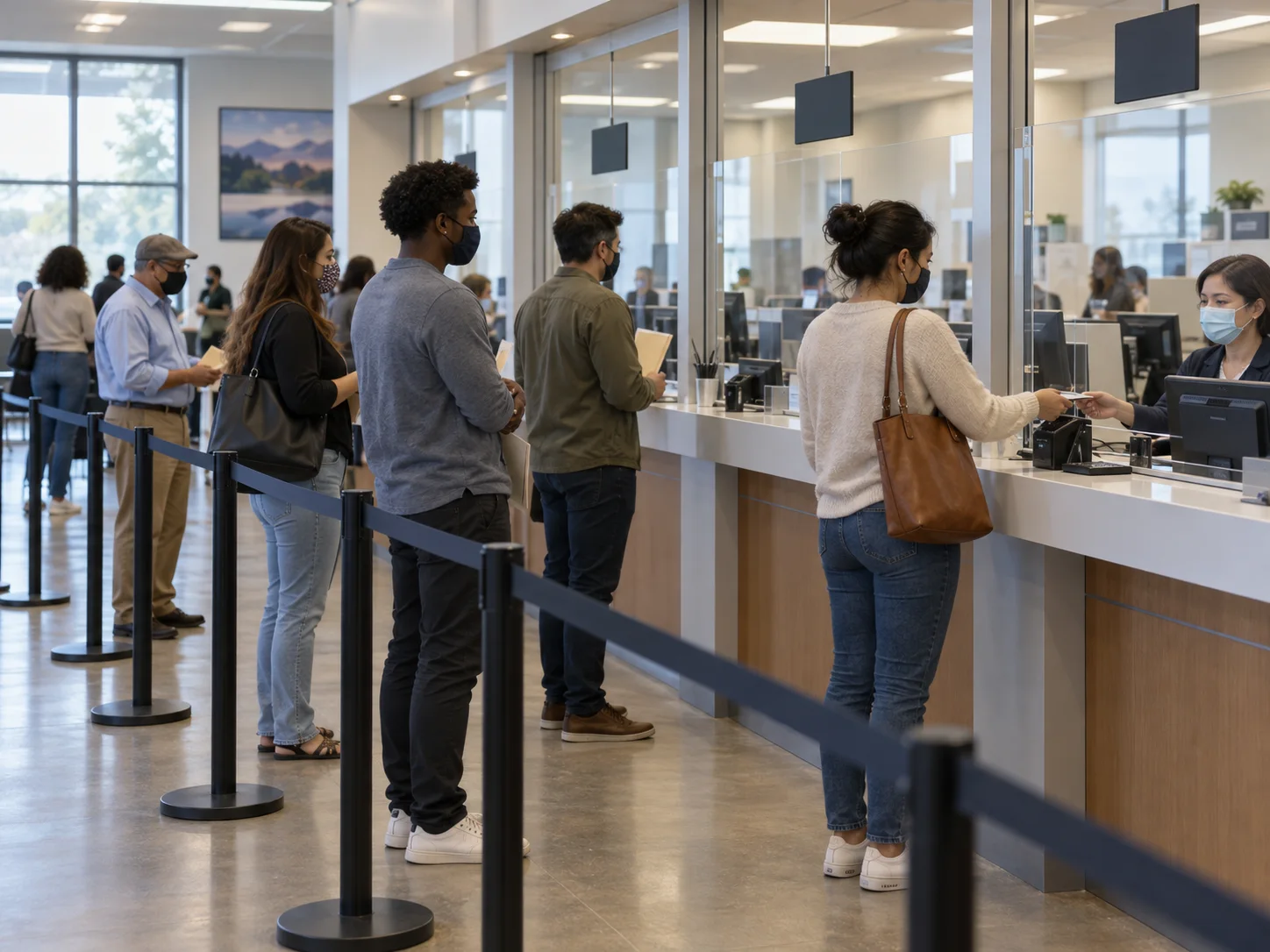
On 29 June 2020, Denver reopened motor-vehicle offices that had been closed for months during the coronavirus pandemic. Drivers seeking licence plates, registration and other services formed a line that ran around a building and past a recreation centre down the block. Reaching the front did not mean entering. Customers first waited to check in and provide a telephone number, then waited again for a text message granting permission to go inside.
The city limited the interior to no more than five customers at a time, excluding staff. Glass dividers separated public-facing counters, distancing markers organized movement, and cleaning was more frequent. Each safety measure reduced the number of people the building could absorb. CBS Colorado reported that some customers who arrived at 8 a.m. were still waiting at noon for plates or registration.
The queue showed that “reopening” did not restore the old waiting room. The outdoor line and the mobile phone divided the work once done by indoor seating. The first wait registered the person and the transaction; the second held that person outside until physical capacity became available. Text messages did not eliminate the queue. They transferred part of it from a visible line to individual phones. With only five customers allowed inside, the pace of service was governed not by the speed of the notification system but by the rate at which one person completed a transaction and freed a place for the next. Splitting the wait reduced indoor crowding, but it did not increase the number of transactions the counters could complete. Visible queue time and phone-waiting both remained part of the administrative process.