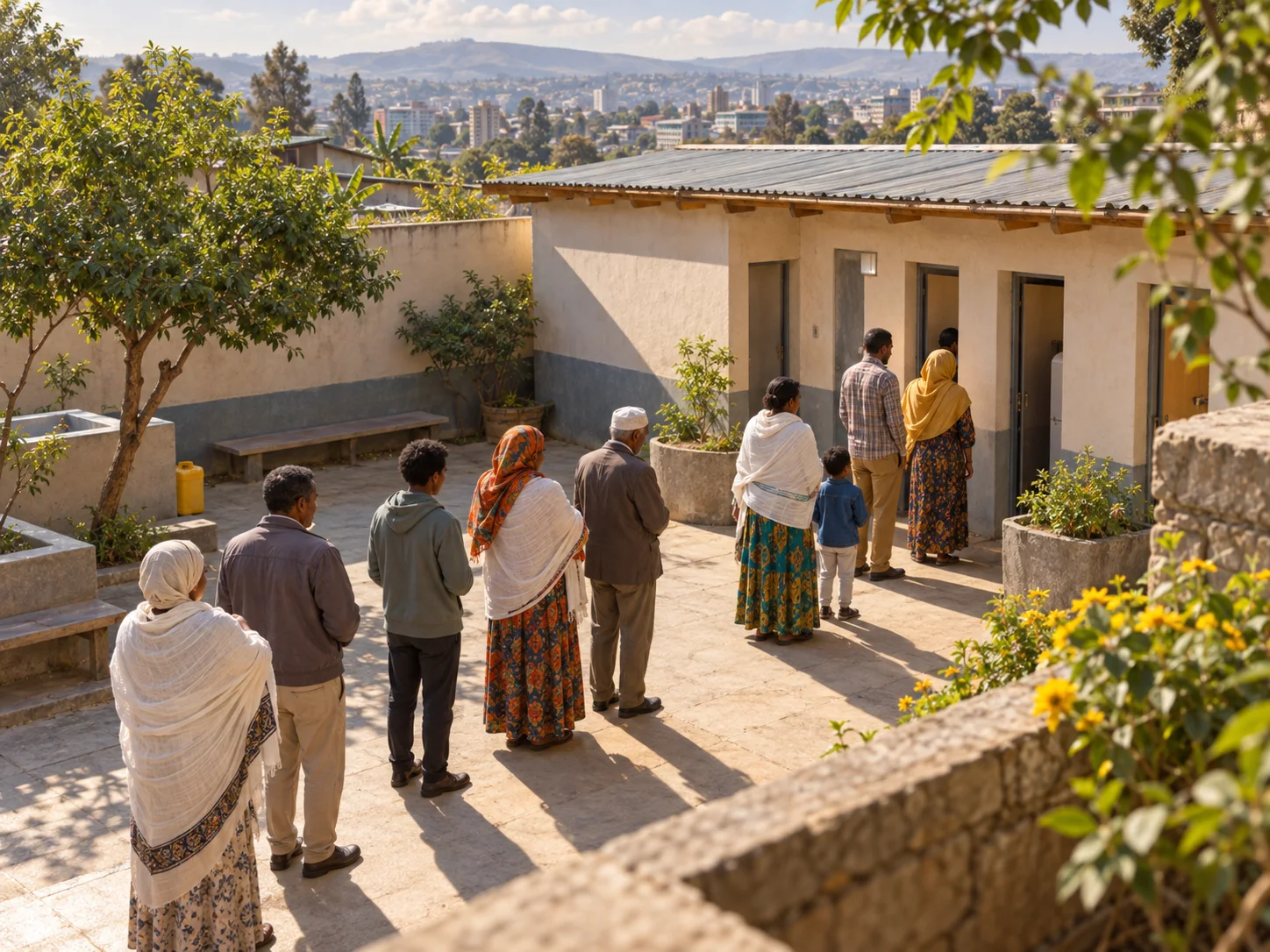
When Zebura Adane's family reached the China internally displaced persons camp in Debre Berhan, Ethiopia, residents shared only two latrine pits and one water tap. Access to a toilet required a wait of one to two hours, with men and women crowded outside. Women lacked privacy and had no safe place to change menstrual pads.
Later, separate trench latrines and bathing shelters for women and men were built, waste facilities added and water supply improved. Community volunteers helped clean the facilities and communicated hygiene guidance. Zebura said women could then use the latrines without fear or shame.
This was not a queue for leisure or shopping. Where bodily needs could not simply be postponed, two facilities translated into a one-to-two-hour wait. The improvements shortened not only the line but also the exposure and loss of dignity attached to it.