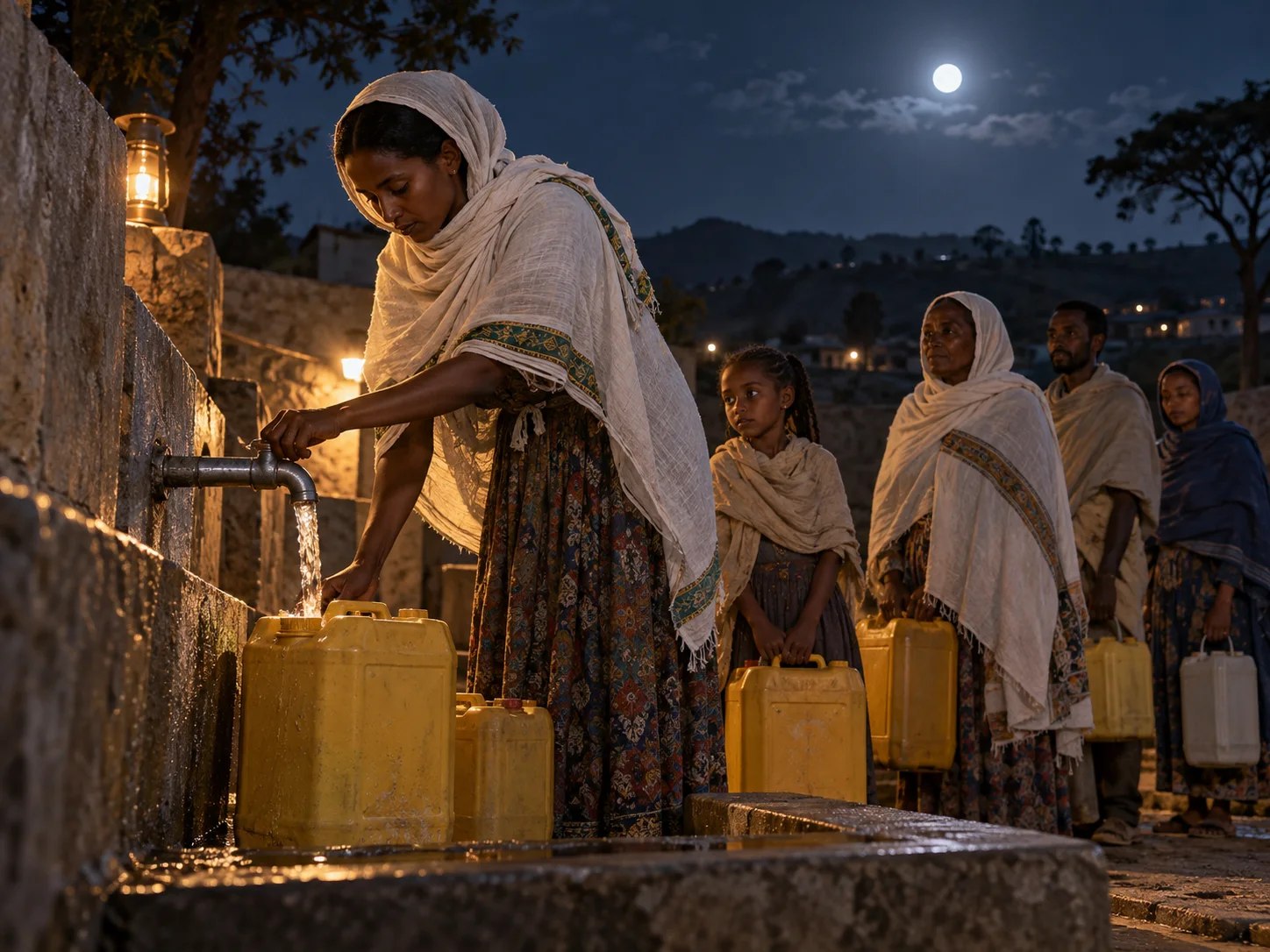
Water can take up the hours after dark. In Yelem Gej, a community in Basoliben district of Ethiopia’s East Gojjam Zone, Abesha Goshu once carried a torch to the water source at night. The daytime line had become too long. In an account published by UNICEF in November 2022, she remembered waiting at least two hours for a single container, not counting the journey to and from the source. Fridays were worse.
Abesha supports her children by making and selling tella, a local beer. Water is both a household necessity and an ingredient of her livelihood. She told UNICEF that her household used more than thirty jerrycans on Fridays and more than ten on other weekdays. A queue at a water point was therefore not merely a delay before doing the washing or cooking. It determined how much of the day could be spent earning money, caring for children and doing everything else. With so many containers to fill, the waiting came back again and again.
Where piped water is reliable, getting a drink begins with a turn of a tap. Where collection points are scarce, the same essential resource arrives only after a journey and a place in line. UNICEF’s account described the difference made by a new water scheme. That improvement matters: the old queue should not be romanticised as an admirable ritual of patience. Abesha did not go out into the darkness because night-time waiting was a custom to treasure. She did it because the daytime hours were already being consumed by the search for water.
Waiting through the night was not simply a consequence of distance. When flow could not match demand, families exchanged hours of sleep for the chance to fill their containers.
UNICEF recorded that the daytime queue became so long that one woman fetched water at night by torchlight; on Fridays, one jar required at least two hours of waiting, excluding travel. The improved scheme returned time for work and school as well as water.