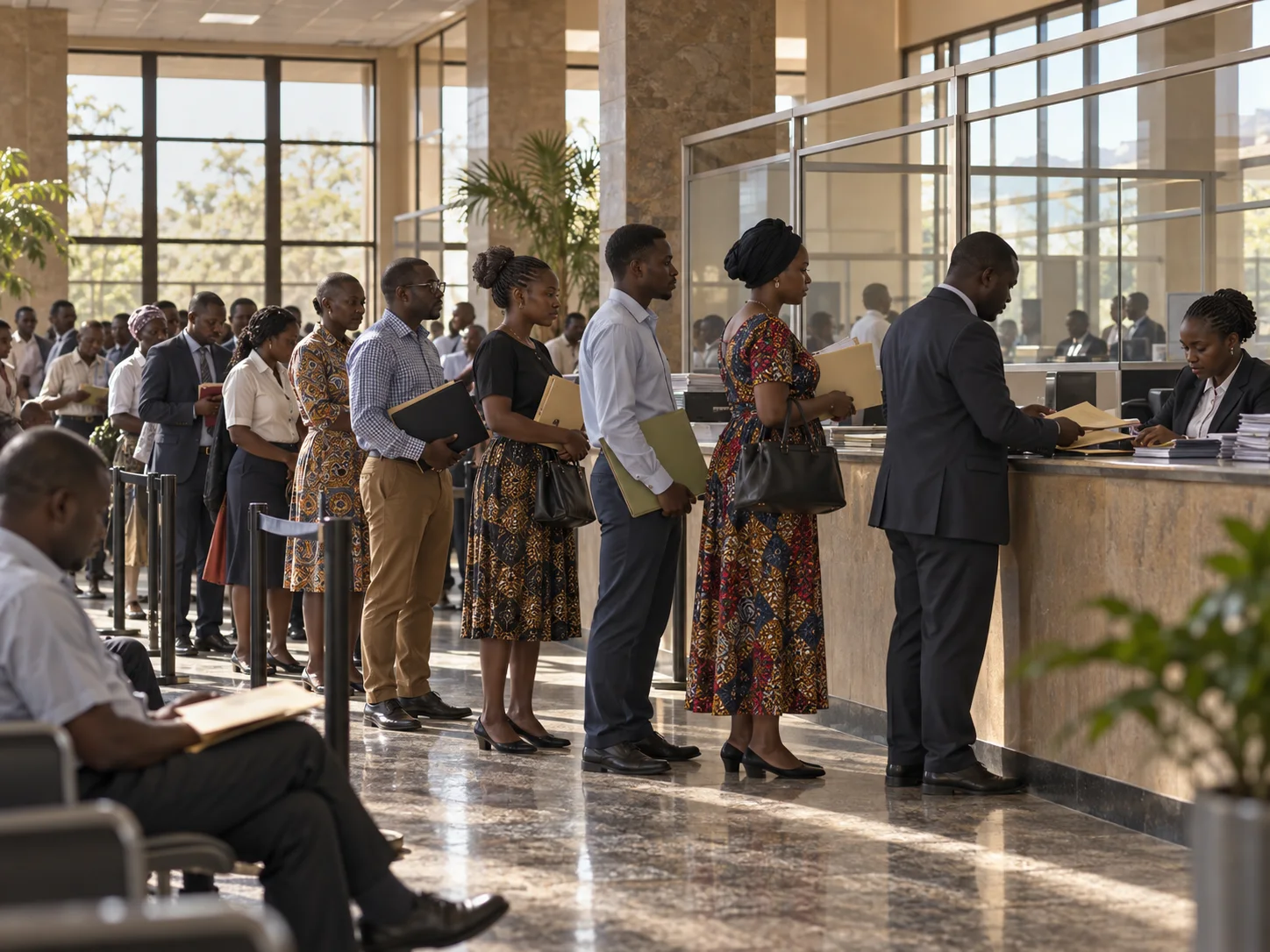
In July 2019, passport applicants formed long queues outside Zimbabwe's central passport office in Harare. The Guardian reported that Eldah Makuvise had gone there almost every morning for two months. She and her husband took turns spending nights in the queue so that their place would not be lost, yet she still had not reached the point of submitting an application. The report put the national backlog at about 280,000 while the office was processing roughly fifty applications a day.
A shortage of foreign currency needed to import passport paper and ink constrained production. Some applicants for ordinary passports were said to have waited close to a year. The line was therefore not merely a daily ordering mechanism; it was the visible entrance to an administrative delay measured in months. Officials proposed raising output first to 3,000 and later to 8,000 passports a day, figures far removed from the pace described outside the office.
A passport is a document intended to enable movement across borders. Before obtaining one, however, applicants were spending nights outside a government building. The booklet that certified mobility stood at the far end of a queue that barely moved.