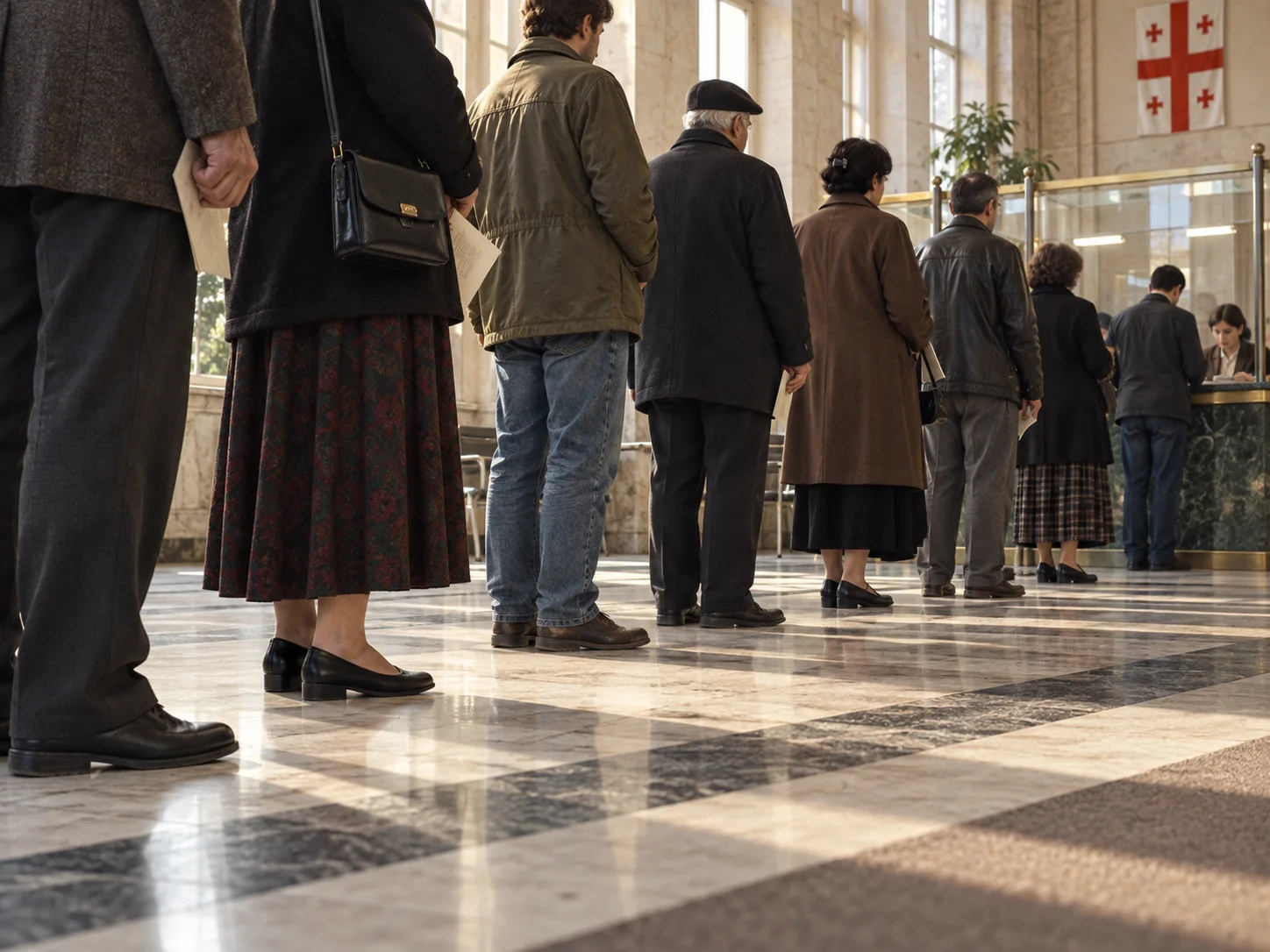
Georgia's Public Service Halls bring identity documents, passports, registrations and many other government procedures into one building. A World Bank assessment explains that collection of passports and identity cards is assigned to a prompt-service area, while applications belong to a prolonged-service area. The sequence of visitors is regulated by an integrated electronic queue-management system.
A visitor receives a number for the required procedure and waits until a screen directs that number to a counter. Instead of maintaining one long physical line, the hall divides applications, collections, photographs and other tasks into separate flows. The queue becomes less visible, but the promise of who is next remains encoded in the ticket.
The design does more than shorten waiting. It sorts people according to what they need. Citizens gathered in the same building no longer compete for one common place; they enter the order associated with their particular service. Architecture and a digital number make the uncertain wait for an identity document a little more predictable.