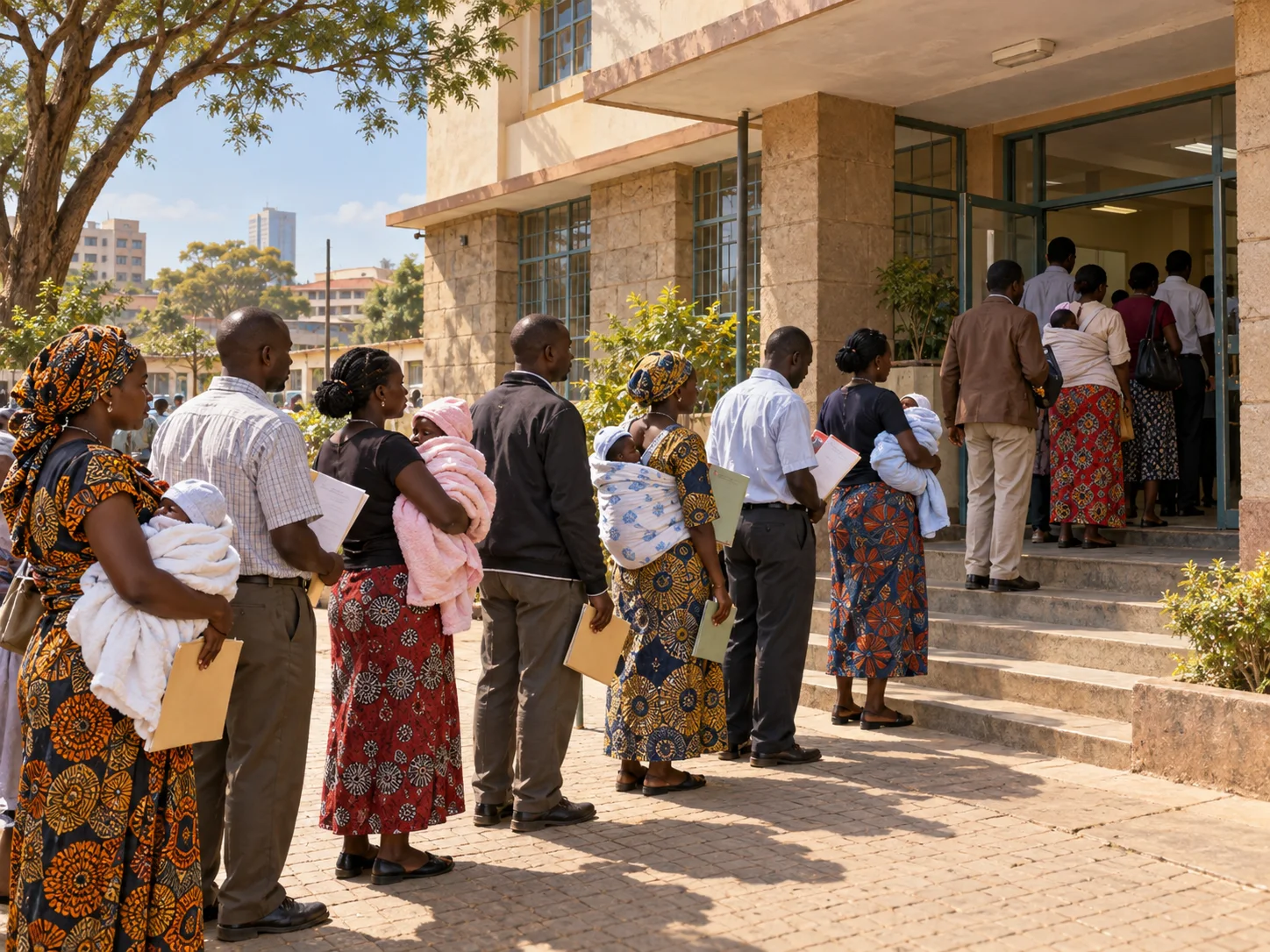
In January 2018, more than 300 residents were already in a long line at Kikoneni Chief’s Camp in Kenya’s Kwale County by 10 a.m., seeking civil-registration services. Business Daily reported that some parents were applying for their children’s birth certificates, while many middle-aged residents had come to register their own births late.
A birth certificate is a sheet of paper, but it opens routes to school examinations, identity cards, bank accounts, health coverage, inheritance, and travel. For people in remote villages, reaching the ordinary registration offices could be costly. When civil registrars and Plan International brought the service closer to the community, people long absent from official records converged on a single counter. The queue measured not only demand for documents, but the scarcity of a chance to be officially recognized as present.