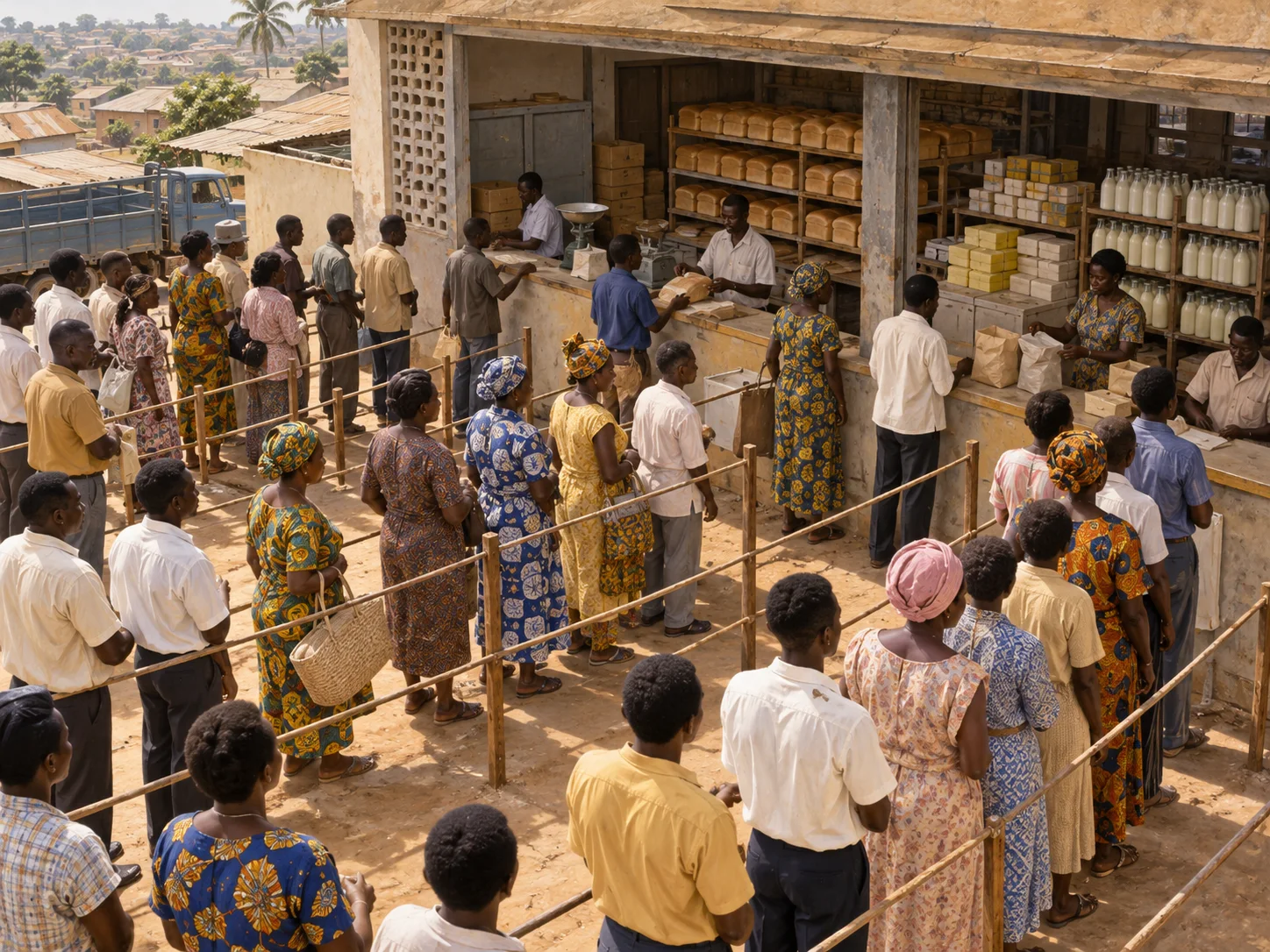
In the early 1980s, everyday goods including bread, soap and canned milk were scarce in Ghana. The May–June 1982 issue of Africa Report noted that queues formed around Accra each day whenever news spread that one item or another was on sale. A later personal recollection adds a close view of waiting at state PDC outlets for maize-flour bread, soap and milk, including the use of a separate line to move older customers through.
Shortage did not remain an abstract national statistic. For a household, it meant learning that goods had arrived, travelling to the outlet and waiting to see whether anything would remain by the time one's turn came. Bread, soap and milk served different needs, yet uncertain supply made each of them something for which people had to surrender part of a day.
The recollection of a separate order for older customers also shows people adapting the queue from within. Scarcity gathered the crowd; those in the crowd still had to negotiate what fairness looked like. Accra's queues turned an economic crisis into a daily timetable of listening, travelling and waiting.