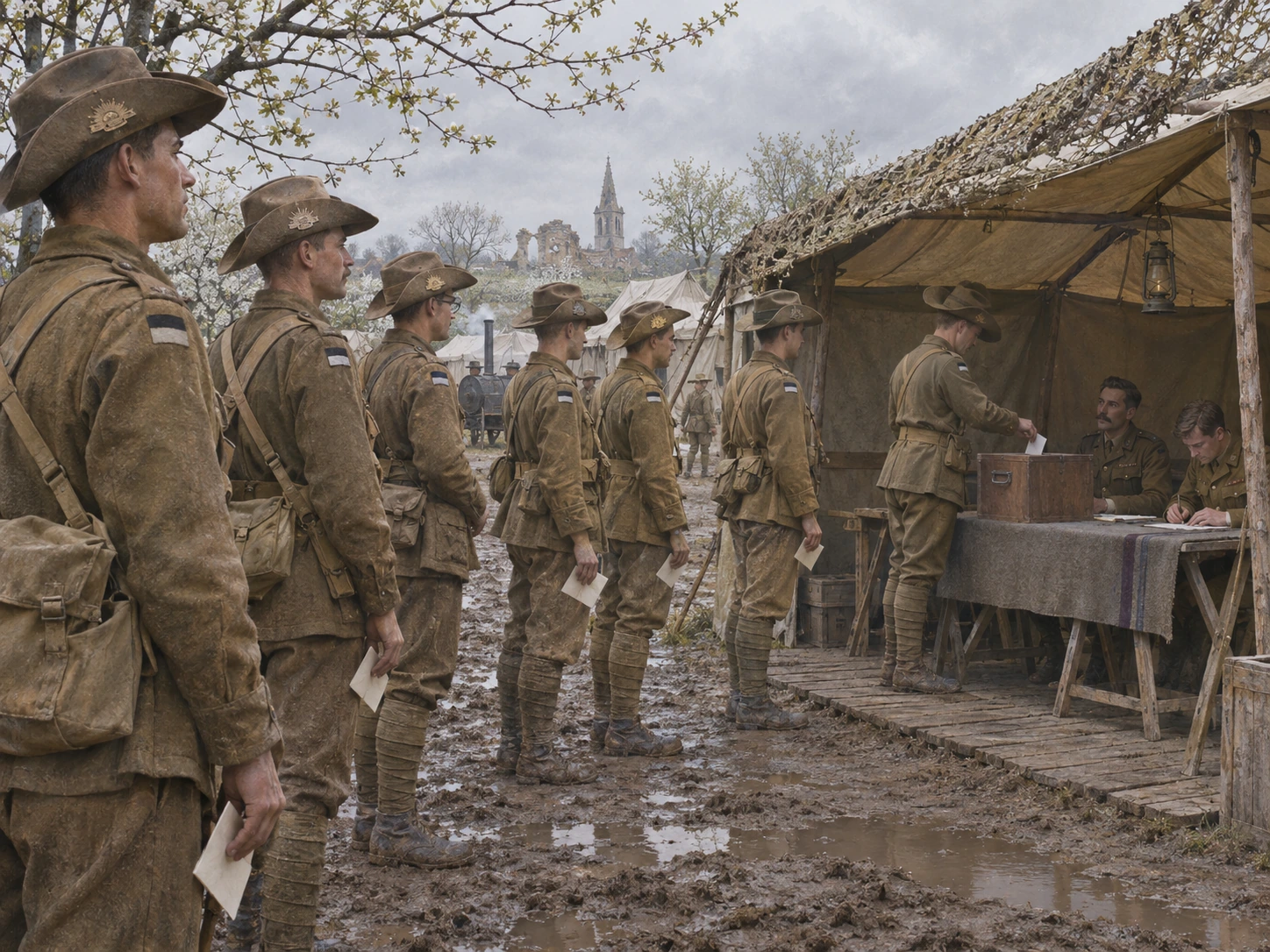
On 29 April 1917, a line of Australian soldiers was photographed near Bullecourt in northern France. They were not waiting for rations or equipment. They were waiting to vote in an election thousands of miles away. The Australian War Memorial identifies the men as members of the 21st Battalion. At the front of the queue, an unidentified private was having his name recorded before receiving a ballot paper.
The battalion was then serving in front-line support trenches near Vaulx-Vraucourt, in the Bullecourt sector of the Western Front. The vote was no accidental pause from history. Australia had passed wartime electoral legislation to make voting possible for servicemen and other people away from home, using modified ballot papers. The apparently mundane act visible at the head of the line—checking a name before handing over a piece of paper—connected men at the front to the machinery of a civilian election on the other side of the world.
Two kinds of time meet in this photograph. The soldier's day was organised around orders, danger and the demands of the front. The election followed a political calendar set at home. For a moment, those schedules met in the simple instruction to wait one's turn. We cannot tell from the image what the men believed, how they voted, or what the future held for them. We can see something both smaller and more concrete: even in wartime, a vote did not cast itself. Someone had to record a name, issue a ballot, and make room for the next person.
For soldiers at the front, the polling place was not a civilian space removed from war. The queue in uniform shows electoral time being created inside an organisation still engaged in combat.