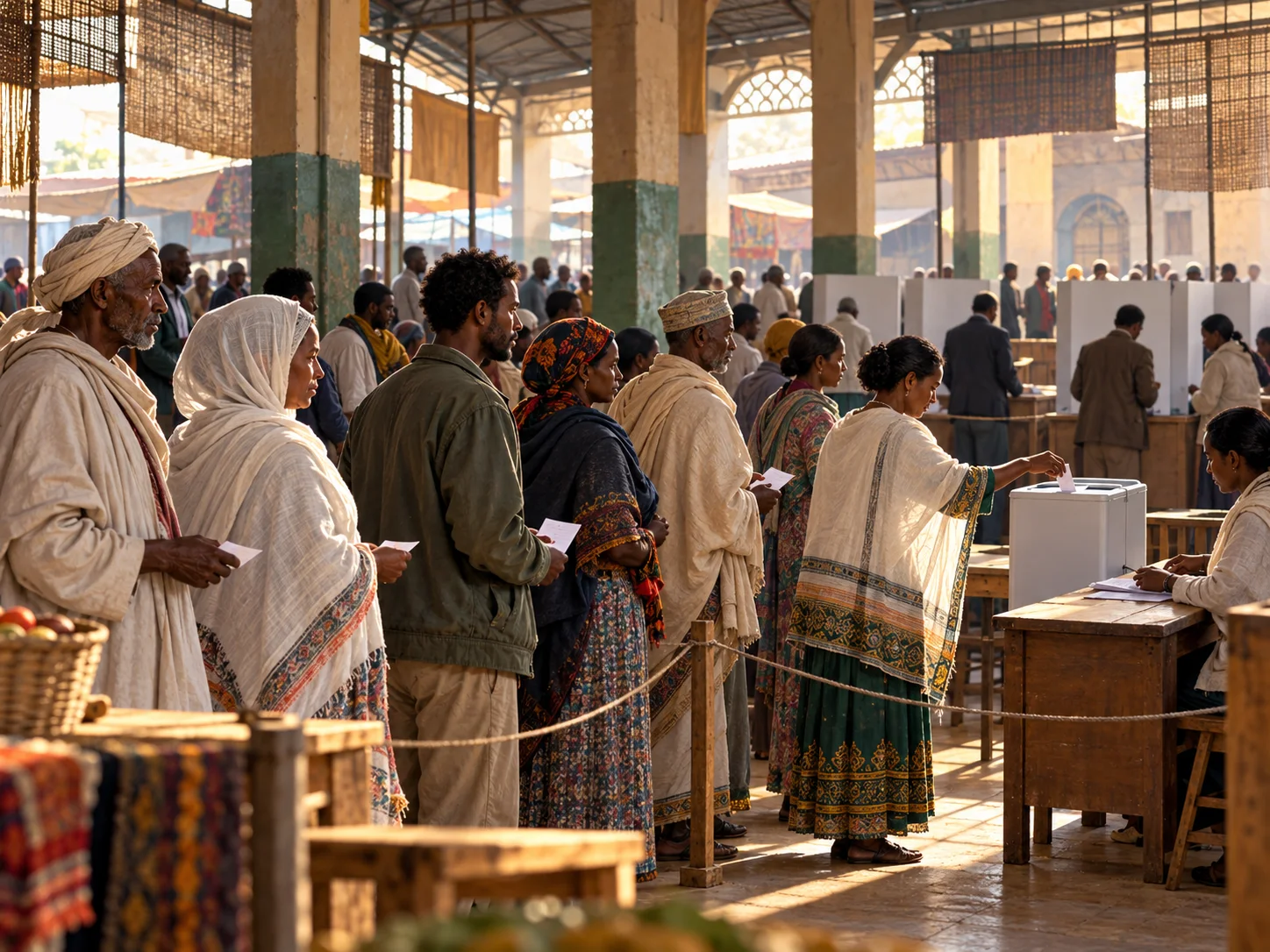
During Ethiopia's general election on 1 June 2026, an African Union mission observed 495 polling stations in 38 constituencies. Many stations provided seats for people waiting and officials guided voters through the queue. Sustained turnout and facilities that were too small for their caseload nevertheless produced long lines and delays. At the official 6 p.m. closing time, 88 per cent of observed stations still had queues.
Voting was extended by six hours, until midnight. The decision protected the vote of people already waiting, while creating further problems of staff fatigue, lighting and delayed counting. A voting line is therefore more than a picture of democratic enthusiasm. It translates room size, staffing and procedural capacity into time borne by individual citizens. In some places, local people brought refreshments to those waiting—a small civic response to the strain placed on the formal system.