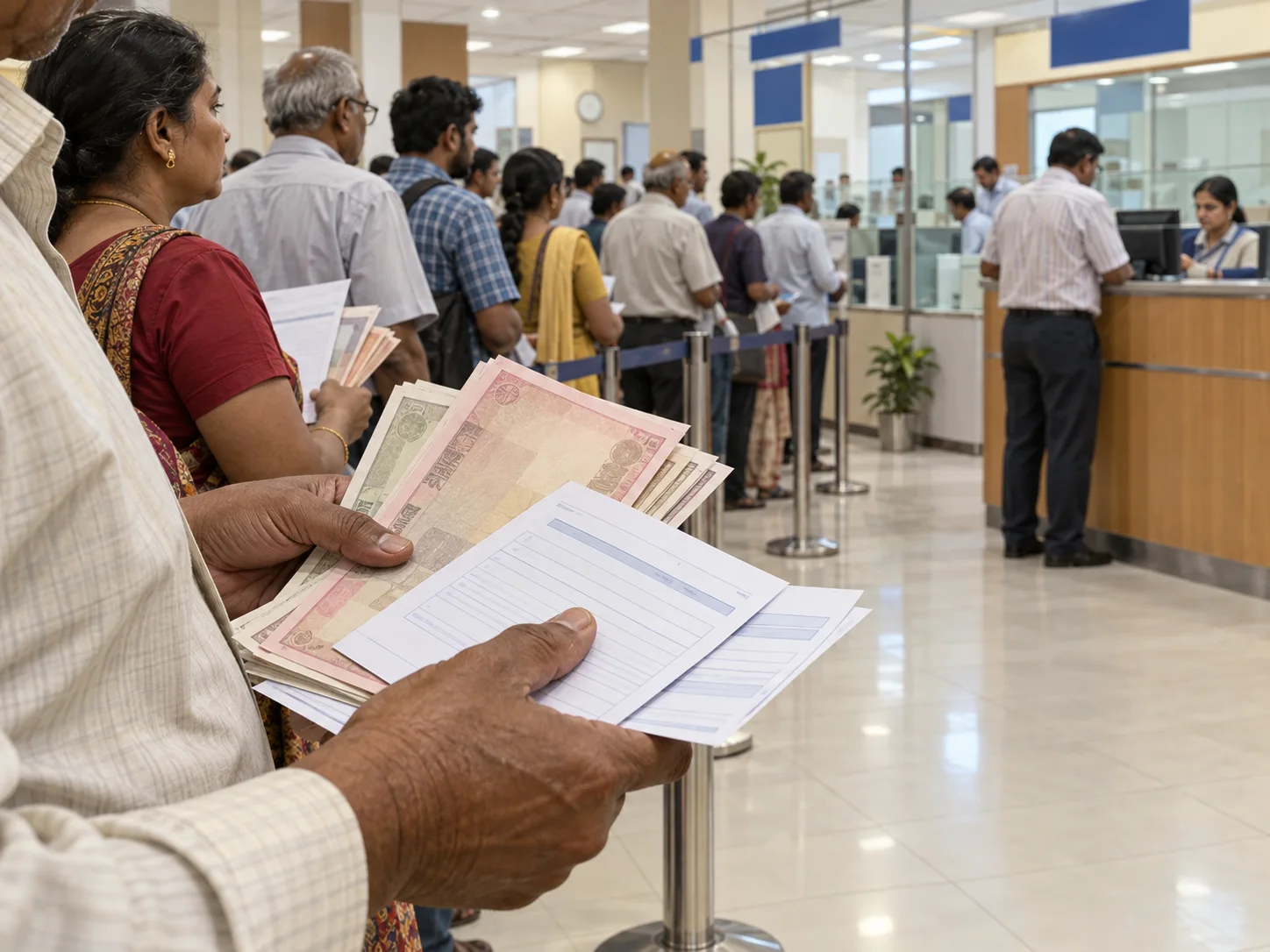
In November 2016, India's government abruptly withdrew the legal-tender status of the existing 500- and 1,000-rupee notes. People lined up at banks and ATMs to deposit or exchange their old currency. A note could carry the same printed denomination as the day before yet no longer work in an ordinary purchase. A national monetary decision had collided with something stubbornly physical: branch opening hours, cash supplies and the number of people a teller could serve.
The government cited objectives including combating counterfeit notes and illicit money; the results remain debated. For those standing in line, the immediate question was often simpler: could they obtain usable cash before work, a journey or a shop's next transaction? Waiting was not equally costly for an urban account holder and someone travelling from a village. Money is both a store of value and a tool for getting through the day. When those functions come apart, policy can become visible as time spent outside a bank.