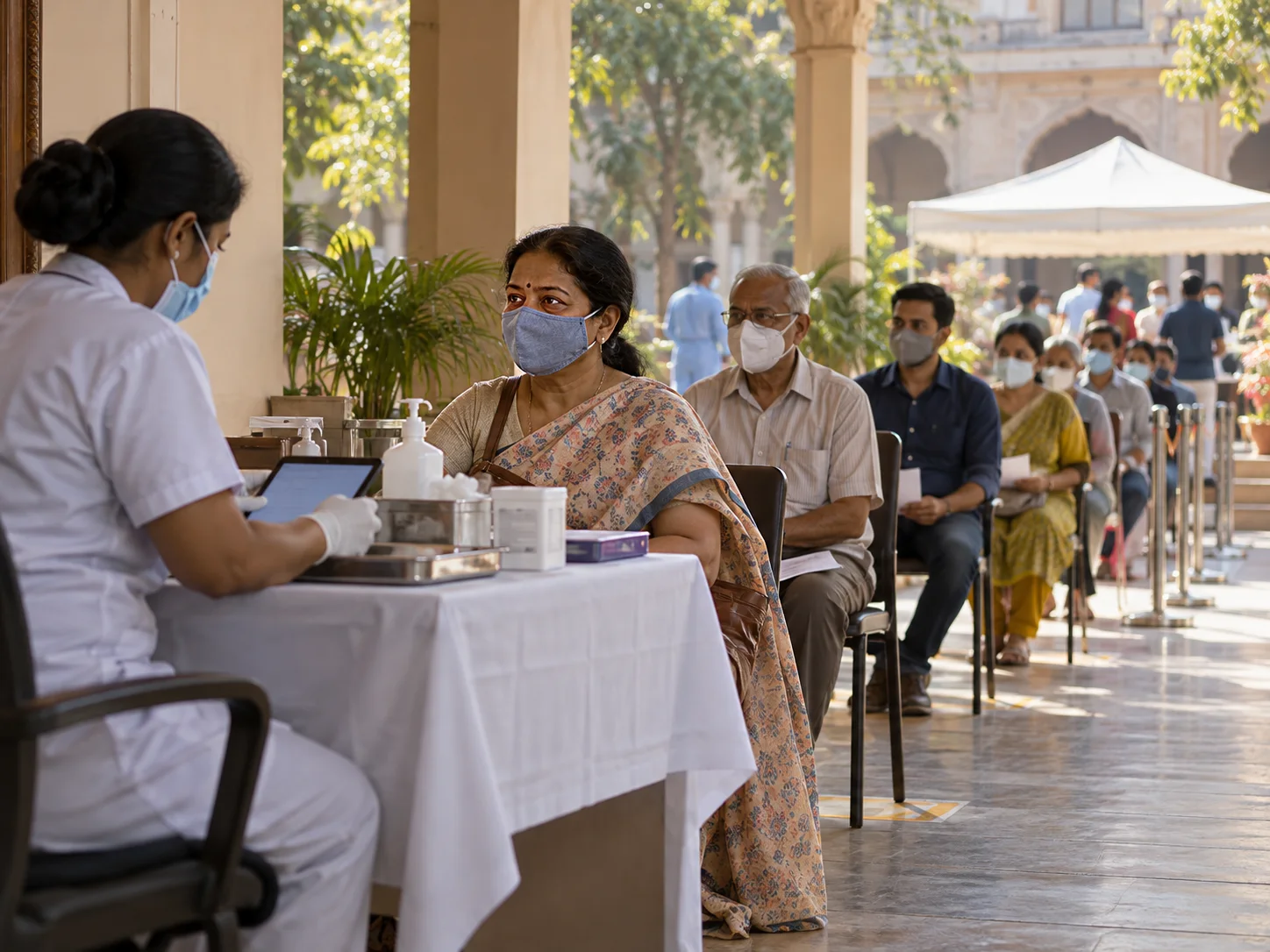
As COVID-19 spread severely in India in 2021, reports showed people waiting at vaccination sites. The injection took little time, but appointments, identity checks, travel and limited supply could make the journey to a dose much longer.
An opportunity to be vaccinated was not equally accessible to everyone. Could someone leave work, reach a clinic or use the required booking information? Fair access depended not only on the length of the line but on the barriers to joining it.
An available vaccination slot does not mean everyone can reach it on equal terms. Can they leave work, connect to a booking system, or travel to the centre? The visible length of a line cannot measure equal access. Vaccination teams also faced competing needs: prevent crowding while reaching many people quickly. Making the wait safe was itself part of public health.
The defining feature of A Momentary Injection, a Longer Wait is the way a specific procedure turned 感染拡大期のワクチン接種 into ordered waiting. The line was not background scenery: it determined access, timing and the burden placed on the people involved. The revised account keeps those mechanics visible and separates the documented scene from assumptions that the source does not support.