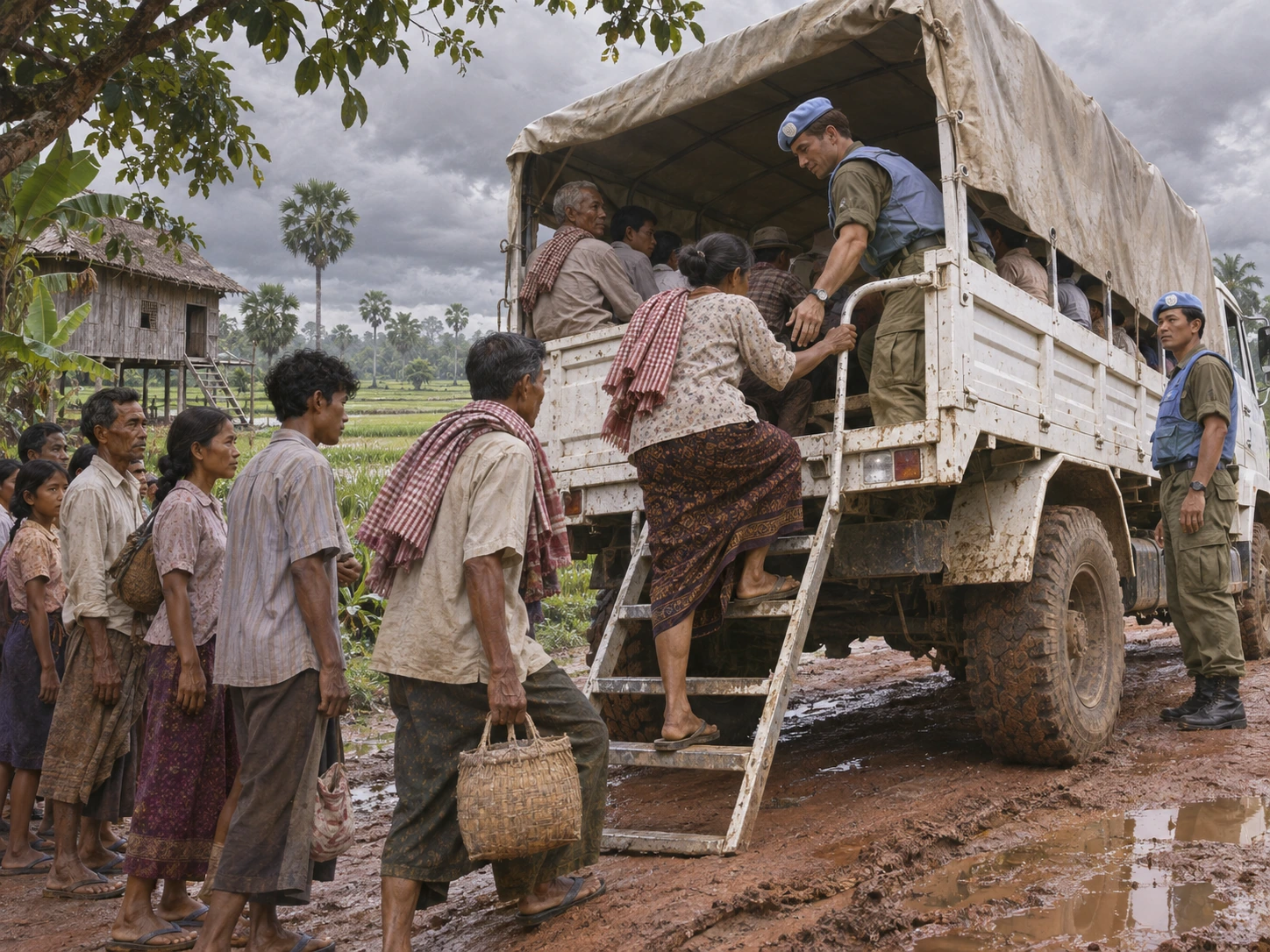
On 30 May 1993, voters in a remote rural area of Cambodia queued outside a polling station housed in a white United Nations truck. An Australian War Memorial photograph records civilians climbing a ladder into the vehicle while a soldier serving with the United Nations Transitional Authority in Cambodia checked identity papers. Where no suitable building was available, the polling place itself had been made mobile.
What makes this queue distinctive is that not only the voters but also the room containing the ballot box and officials had travelled to the site. About 2.2 million people—46 percent of registered voters—cast ballots on the first day, with long early-morning queues also reported at Phnom Penh's Olympic Stadium and elsewhere. The UN-supervised election depended on institutions, but also on the practical order of people climbing a ladder one by one.