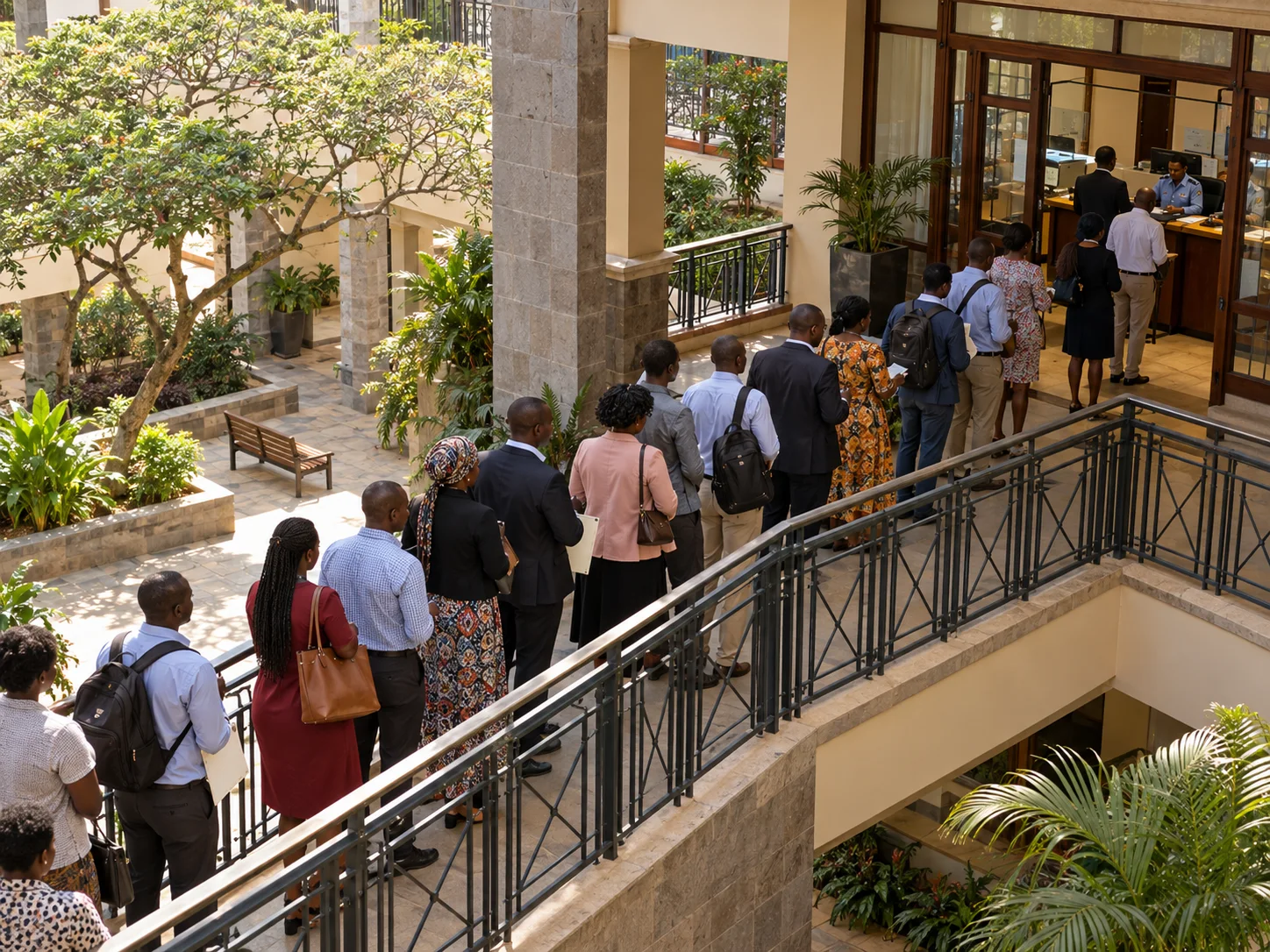
In June 2019, applicants were still queuing at Nyayo House, the immigration headquarters in Nairobi, Kenya, to obtain or renew passports. Hoping to escape the crowds, a woman named Joy Wambui travelled with her two daughters to the regional immigration office in Embu. She needed to replace her own passport and get the girls their first electronic passports. They missed a day of school for the trip.
The plan unraveled before 10 a.m. By the time the family arrived, the day’s appointments had already been taken. The Embu branch could handle only about 100 applicants a day, according to Business Daily’s contemporary report. It is a reasonable guess that an office outside the capital might have a shorter line. But distributing service points does not necessarily remove a queue when demand keeps outrunning the number of applications each office can process.
A passport may be associated with the moment someone crosses a border. For applicants, however, the border is only the distant endpoint of a much longer sequence: gathering documents, visiting an office, proving identity, and waiting for the document to be issued. A journey scheduled months ahead can require transport fares, time off work, or a missed school day now. A wasted visit can cost more than its place in the line suggests.
The curious thing about this queue is that an attempt to avoid it created another journey. Before this family could travel internationally, they had to travel within Kenya for a chance to obtain the paper that would permit them to leave. The passport trip began long before the airport.
Opening regional offices did not guarantee that applicants would use them; many trusted the place known to process cases. The displaced queue showed that confidence in a procedure can matter more than the number of counters.