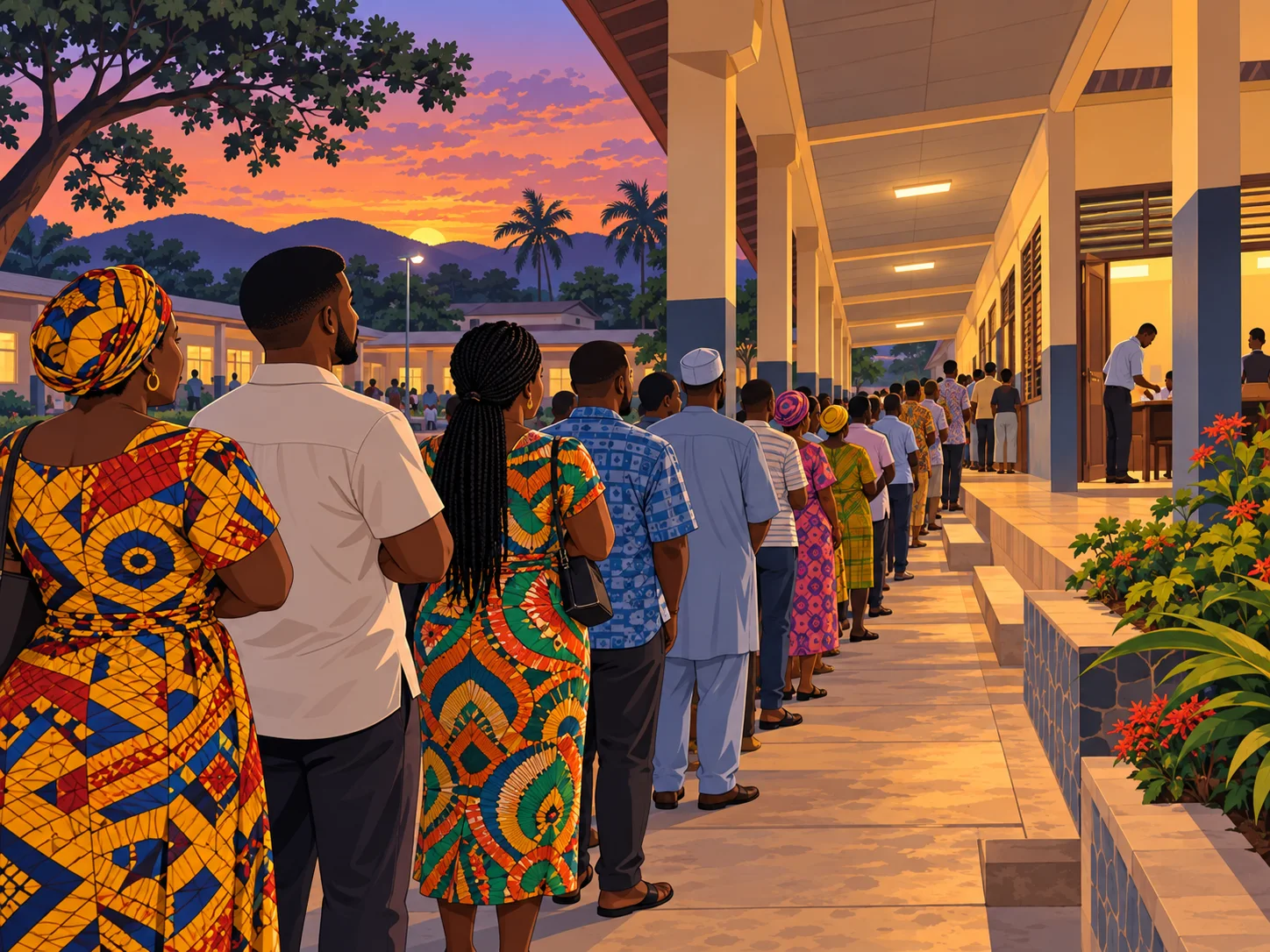
Before Ghanaian voters choose representatives in a national election, political parties decide whom to nominate. In July 2026, the Ghana News Agency reported long queues and voting beyond the scheduled closing time during an internal New Patriotic Party (NPP) poll in Ho Central. Those waiting were eligible participants in a party contest, not the entire electorate.
The revealing detail is the clock. A deadline is intended to keep an election orderly and fair. But what happens when someone arrives on time and cannot reach the ballot before it expires? A queue turns an abstract rule into a practical decision. Registration checks, directions at the entrance, available waiting space and treatment of the last person in line all become part of the democratic process.
It would be too easy to praise every long voting queue as proof of enthusiasm. A long wait can also reveal administrative strain and impose real costs on participants. Yet this scene offers a useful correction to how elections are pictured: casting a ballot takes moments; making that moment accessible can take much longer.
Allowing those already waiting to vote after closing transformed the deadline from a locked door into a marked final position. Arrival before the clock, not completion before it, preserved the franchise.