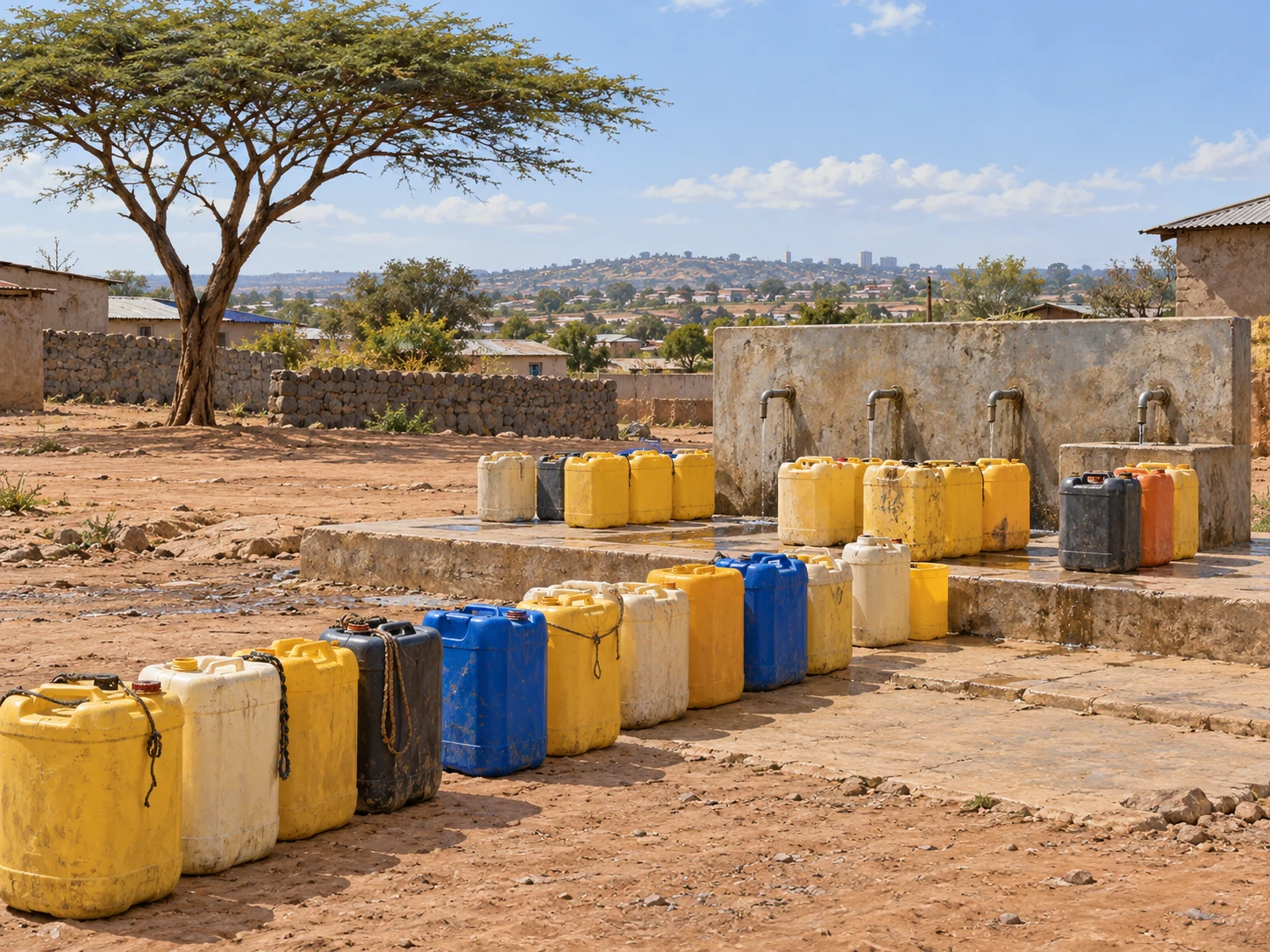
At water points in southeastern Kenya, containers may form the line before their owners arrive. A 2025 field report by The Water Project documented empty jerrycans lined up for filling at a kiosk in Kalinza. Earlier rural fieldwork likewise described children placing empty cans in a kiosk queue so that a parent could collect them once filled.
The containers stand in line, but the households need the turn. Collecting water competes with school, paid work and domestic chores. Instead of holding a heavy vessel throughout the wait, a jerrycan marks the family's place.
The neat row of yellow cans reveals more than inadequate infrastructure. It is also a practical way to share scarce water without constant argument. The gesture resembles saving a place with a bag or chair, except that what waits at the end is the day's essential water.