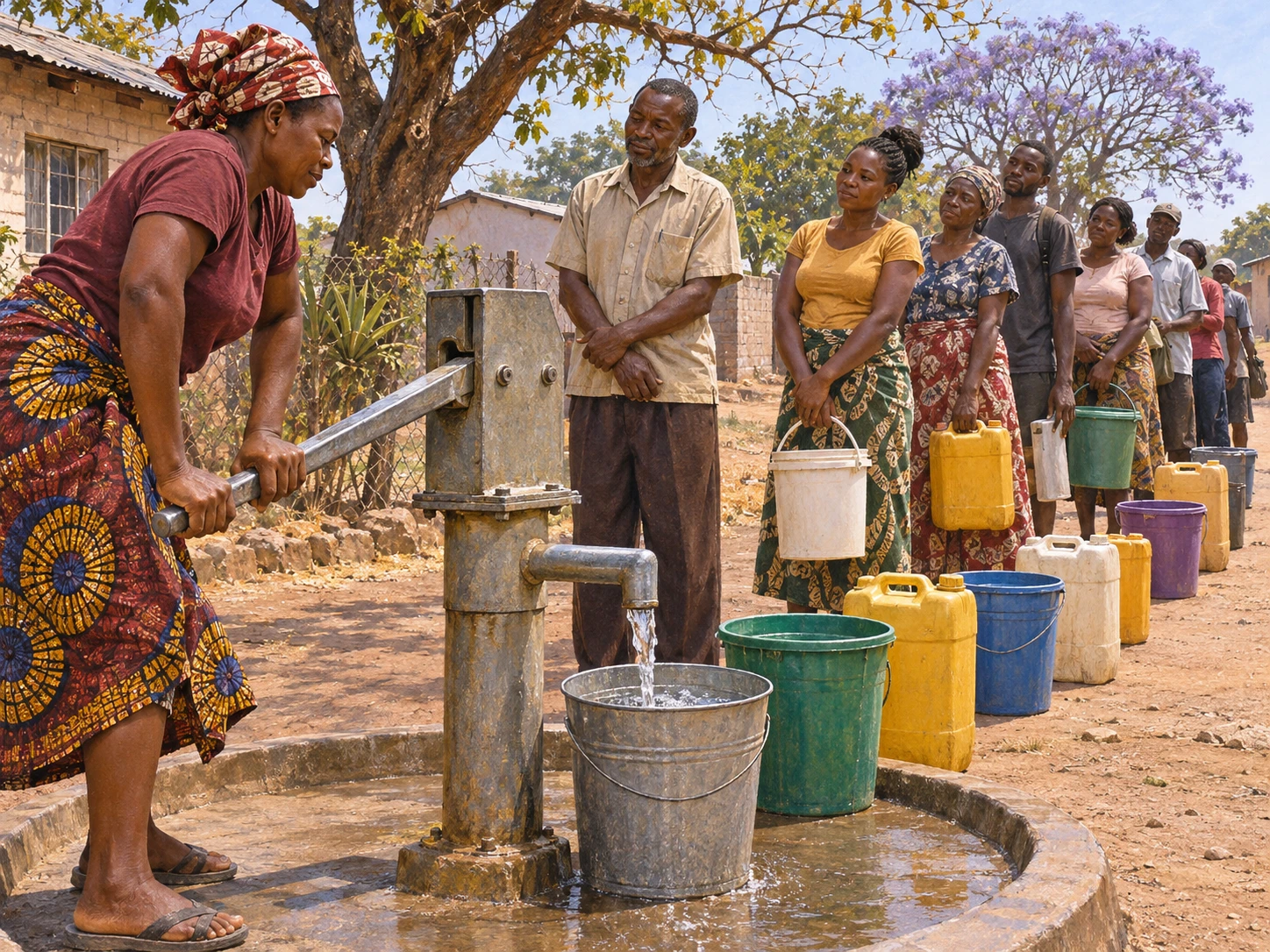
In Harare, Zimbabwe, communal boreholes support neighbourhoods where piped water is unreliable. Reporting from the Budiriro area in 2020 documented a queue of more than three dozen people at a borehole, with residents filling plastic buckets and other containers. This was not an abstract description of scarcity; it was a physical order for sharing one water source.
The pace of the queue depended on how quickly each container could be filled. Water poured into one plastic bucket, then another empty vessel took its place. For the people waiting, a container determined how much water could be carried home and made one turn in the queue physically visible.
The source does not prove a broader custom in which unattended containers held places for absent owners, so the article does not claim one. What it directly confirms is a line of people with containers receiving limited water in turn. Harare’s water crisis appeared not only as a dry tap, but also as household time gathered around a communal borehole.