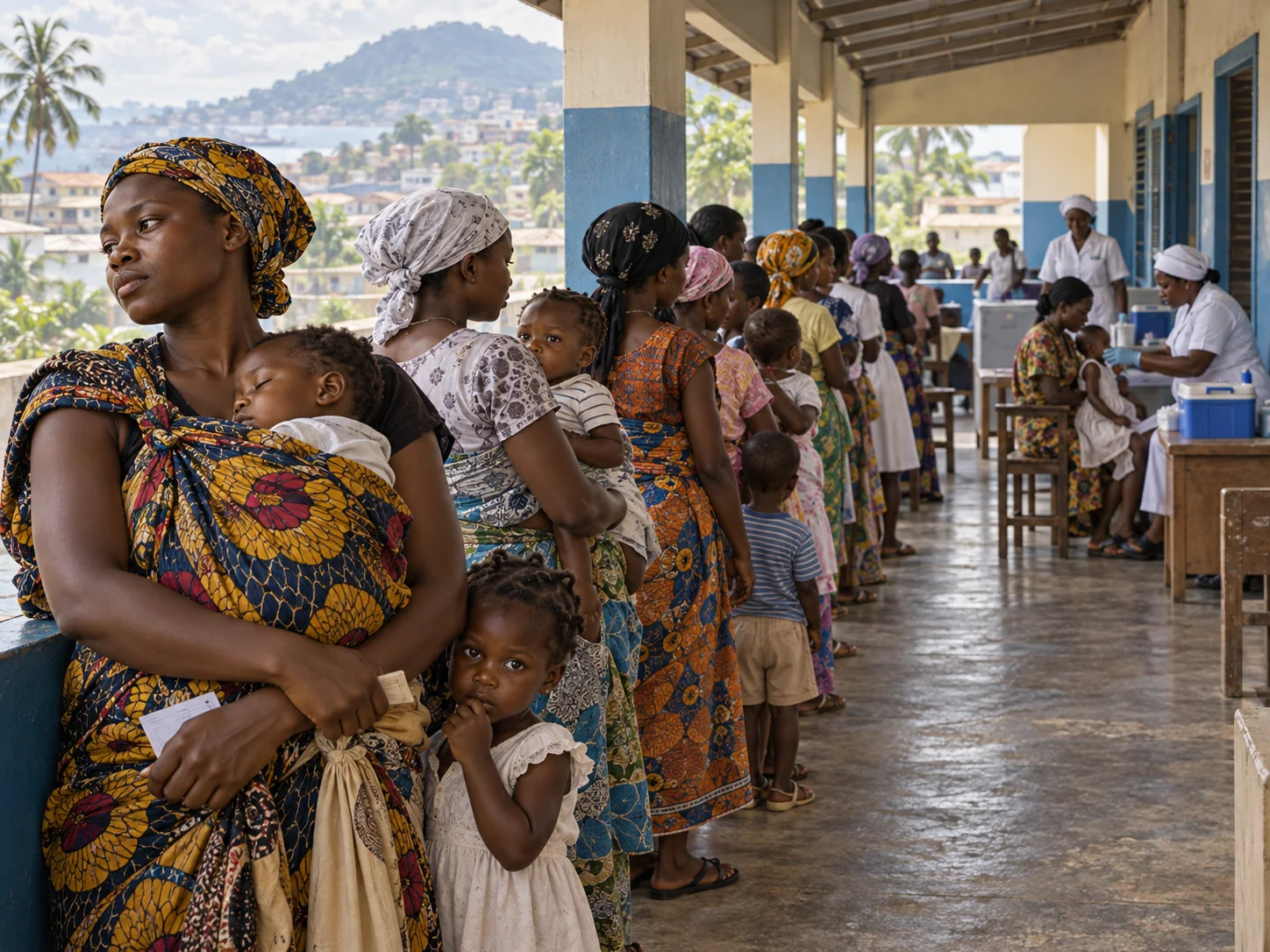
In 2020, mothers and children in Freetown, Sierra Leone, were documented waiting for hours for vaccination. A photovoice study—participants photographed community barriers and discussed what the images meant—includes a caption for Figure 6 describing a long line of mothers and children who had been “on queue for some hours waiting for vaccines.”
The research examined access to childhood immunisation, including the second dose of measles-containing vaccine introduced into Sierra Leone’s routine schedule in 2015. Participants said facilities sometimes waited until a minimum number of children were present before vaccinating, while health workers could be occupied with other duties. Poor ventilation made waiting rooms uncomfortable, and caregivers could be turned away after a long wait when vaccines were unavailable.
The study involved eleven caregivers of children aged 15 to 24 months and six healthcare workers. Mothers were also balancing domestic labour and income-earning work, so hours in line were not a minor inconvenience; they could discourage a later visit. The queue did not simply demonstrate demand. Staffing, rules about when to vaccinate, stock availability and the physical waiting environment combined to place a cost in time between a free vaccine and an actual injection.